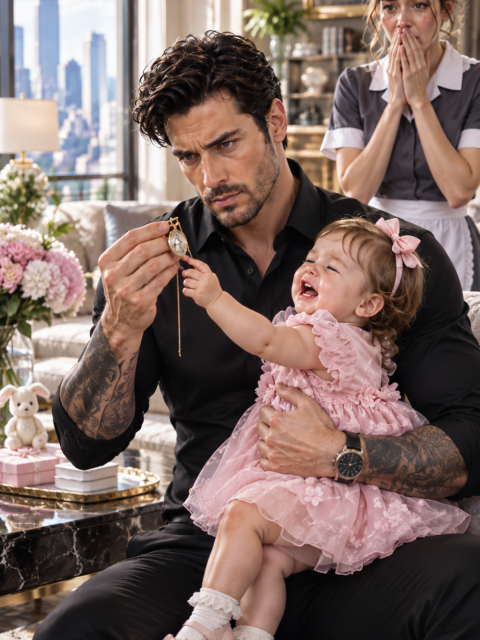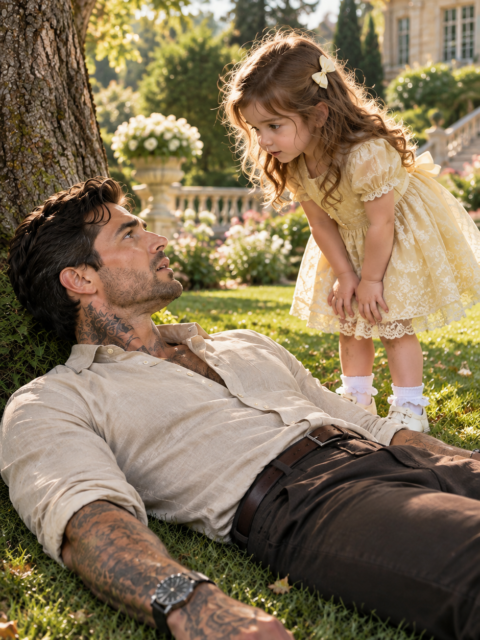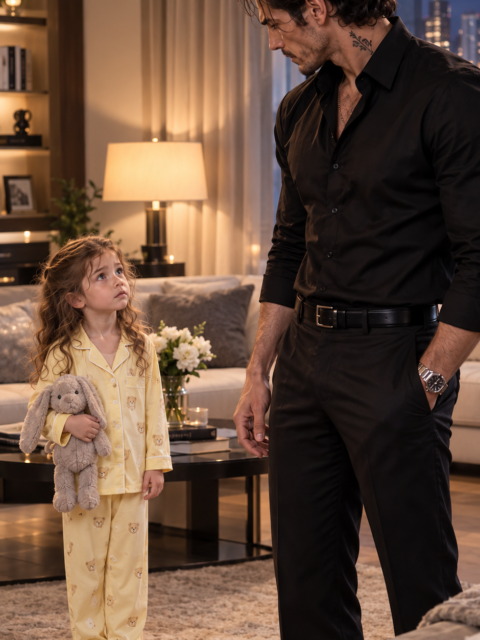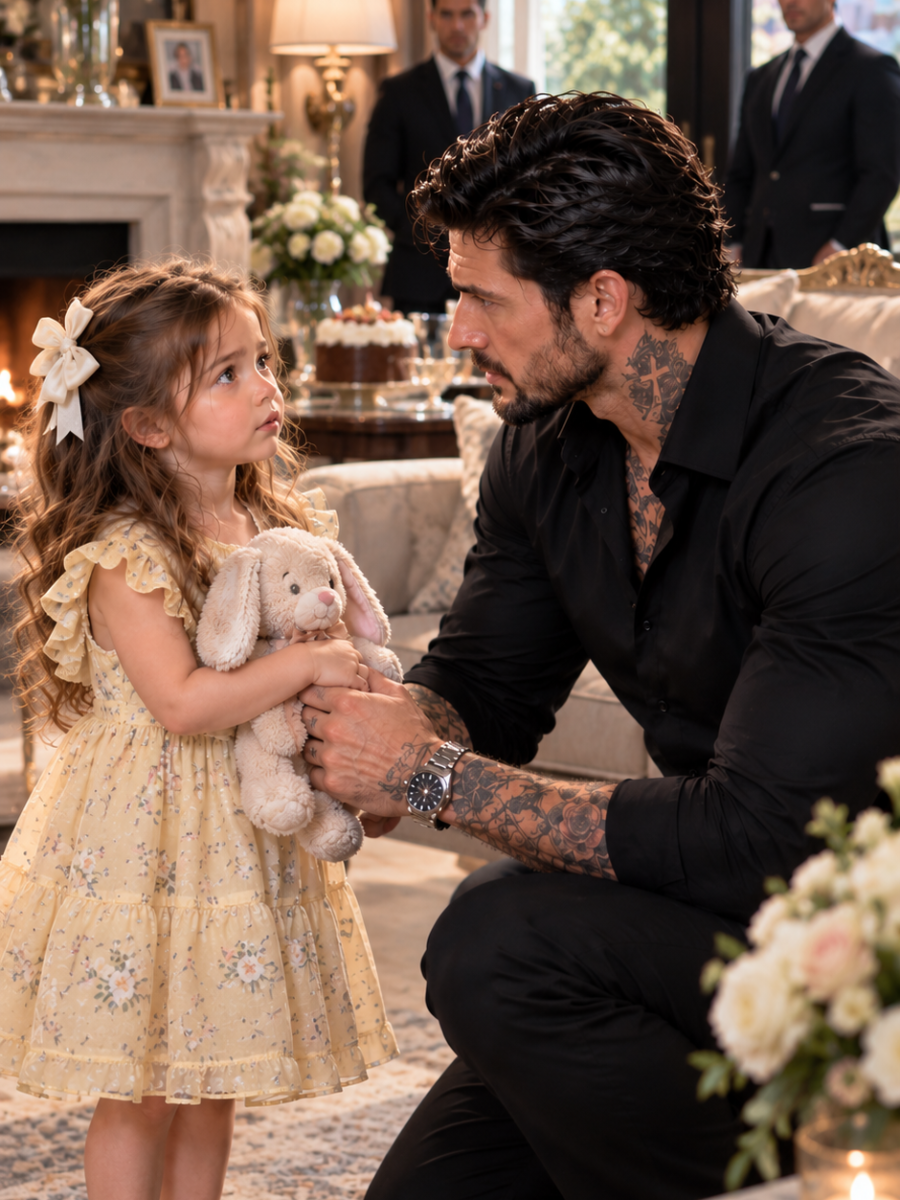
“Would You Like to Be My Daughter?” A Dying Mafia Boss Asked a Homeless Girl. Then His Brother’s Fear Revealed the Diagnosis Was Never the Real Threat.
Given four to six weeks to live, Dominic Moretti refused treatment and offered a homeless nine-year-old seven days as his daughter — a promise he trusted himself to keep when a lifetime felt impossible. Then he told his brother Enzo he was reconsidering treatment after all, and Enzo’s face didn’t show relief. It showed fear. This story of hope and quiet revenge follows a grieving father who stopped wanting tomorrow, a fearless girl who gave him a reason to want it again, and a diagnosis that turns out to have been managed considerably more carefully than any illness should be. Read all nine chapters to find out what Enzo was actually afraid of.
Chapter One
Seven Days
“Would you like to be my daughter?” I asked the homeless girl, knowing I might be dead in a month. She stared at me as if I were insane. Maybe I was.
My name is Dominic Moretti. In New York, my name opened doors, silenced arguments, and made dangerous men reconsider their choices. But inside Dr. Enrico Falcone’s office, it meant nothing.
“Four to six weeks, Dominic.” Cancer had spread through my liver, lungs, and lymph nodes. “There’s an experimental treatment,” Enrico said. “Aggressive, but you’re strong enough to fight.” “No.” “Dominic, you’re thirty-eight.” “For what?”
Three years earlier, a drunk driver had killed my wife, Isabella, and our six-year-old son, Mateo. I should have been in that car. Instead, I stayed behind because of a shipment problem. Isabella kissed me goodbye. Mateo reminded me I’d promised him pancakes. They never came home.
Since then, I had survived. But surviving isn’t the same as wanting to live.
I left the hospital and refused the car waiting outside. Rain soaked through my coat as I wandered downtown alone. That was when I saw her.
A little girl, maybe nine, sat beneath the awning of a closed bakery, hugging a battered backpack. Her thin coat was soaked. Beside her lay a cardboard sign: I DON’T NEED MONEY. I NEED SOMEWHERE SAFE TONIGHT.
“What’s your name?” I asked. “Lily.” “Where are your parents?” Her eyes hardened. “Dead.” One word reached somewhere inside me that cancer couldn’t.
“You hungry?” She nodded. “Somewhere to sleep?” She shook her head.
I should have called social services. Instead, I thought of Mateo. “Would you like to be my daughter?” Her eyes widened. “What?” “Just for seven days.” “Why seven?”
Because doctors had given me weeks. Because seven days was a promise I might actually keep.
“I have an empty house,” I said. “You need one.” She studied me carefully. “Are you dangerous?” “To some people.” “And to me?” “No.” For the first time, her grip on the backpack loosened.
I didn’t know it yet, but Lily would give me something doctors, money, and fear couldn’t. A reason to want tomorrow.
A few nights later, my younger brother came to dinner. The moment he saw Lily sitting at my table, his wineglass stopped halfway to his mouth. Then I told him I was reconsidering treatment.
His face changed. Not relief. Not hope. Fear.
And suddenly, a terrifying thought entered my mind: why did my own brother look more frightened by my survival than by my death?
Chapter Two
The Wrong Kind of Fear
“You’re reconsidering,” Enzo repeated, setting his wineglass down with a care that felt, in hindsight, entirely too deliberate. “Dominic, that’s — that’s good news. I’m just surprised. You seemed so certain at the hospital.”
“I met someone who reminded me certainty isn’t the same as wisdom,” I said, glancing at Lily, who was methodically arranging her peas into a smiley face and paying no attention whatsoever to the tension suddenly filling the room.
“Of course,” Enzo said, recovering his composure with practiced speed. “Whatever you decide, I support it completely.”
But I’d known my brother for thirty-five years. I’d watched him negotiate territory disputes, funerals, and family betrayals with the same careful, unreadable face he was using right now. And underneath it, for just a fraction of a second before he mastered it, I’d seen something considerably more honest than support.
Fear.
Not the fear of losing a brother. I knew that fear intimately — I’d worn it myself for three years, grieving Isabella and Mateo. This was different. Calculated. The fear of a man watching a plan he’d built carefully begin to wobble.
After Enzo left that night, I sat in my study long after Lily had fallen asleep in the guest room, turning the moment over and over, until a question surfaced that I couldn’t make myself stop asking: what exactly did my brother stand to lose if I actually lived?
Chapter Three
Pancakes
Lily settled into my house with a caution that reminded me, painfully, of exactly how careful a child becomes once the world has taught them not to trust good things too quickly.
She didn’t ask questions about the empire I ran, the men who guarded the gates, or the wealth surrounding her in every room. She asked, instead, whether she was allowed to eat breakfast before getting dressed, whether the bedroom door needed to stay open, whether it was really true she could stay all seven days or whether that number might shrink without warning the way promises sometimes did.
On the third morning, I made pancakes myself, badly, the kitchen staff watching with poorly concealed alarm as I burned the first two before managing something edible on the third attempt.
“Why are you doing this?” Lily asked, watching me plate the slightly charred results with more ceremony than they deserved.
“I promised someone pancakes once,” I said. “I never got the chance to keep that promise. I find I’d like to keep this one instead, even if it’s seven years and one entirely different breakfast late.”
Lily considered this with the grave seriousness children sometimes bring to adult grief they don’t fully understand yet. “Who did you promise?”
“My son,” I said, the word still catching in my throat after three years. “He was six. I lost him and his mother the same day, a car accident, months before you were probably even old enough to understand what that word means.”
“Is that why you were going to let the cancer win?” Lily asked, with the blunt, uncomplicated honesty only children seem capable of delivering without cruelty, and I found I didn’t have a ready answer for a question that cut so directly to a truth I’d spent three years avoiding examining too closely.
Chapter Four
The Second Opinion
I didn’t answer Lily directly that morning, but her question stayed with me long enough that, three days later, I found myself doing something I hadn’t seriously considered since walking out of Dr. Falcone’s office.
I called for a second opinion — quietly, through a contact entirely outside Falcone’s network, an oncologist at a research hospital in Boston who had no professional or personal connection to my family, my organization, or anyone in my life who might have reason to shape what she told me.
Dr. Priya Anand reviewed my original scans and bloodwork with a careful thoroughness that made clear, within the first twenty minutes of our consultation, that something about my case troubled her.
“Mr. Moretti, I want to be direct with you,” she said, pulling up my original imaging alongside notes she’d requested from Dr. Falcone’s office. “Your cancer is real. It is serious. But the staging described in your original diagnosis doesn’t fully match what I’m seeing in these scans.”
My chest tightened. “What do you mean?”
“I mean the spread described in your chart is more extensive than what these images actually show,” Dr. Anand said carefully. “I’m not suggesting Dr. Falcone is incompetent. I’m suggesting someone may have presented this diagnosis to you in language considerably more dire than the actual clinical picture supports — and I’d like your permission to request your full, unedited file directly from the hospital’s records department, rather than relying on the summary Dr. Falcone’s office originally provided you.”
Three days later, the full hospital records arrived, and buried in the detailed pathology report was a staging classification considerably less advanced than the one Falcone had told me to my face — a discrepancy Dr. Anand confirmed, gently but unmistakably, was not the kind of error that happens by simple oversight.
Chapter Five
Dr. Falcone’s Ledger
I didn’t confront Falcone directly, not yet. Instead, I had my head of security, a careful and thorough man named Tomas, quietly investigate exactly how a physician who’d treated my family for over a decade might have reason to present my prognosis more grimly than the actual pathology supported.
The answer arrived within a week, delivered with the particular grimness Tomas reserved for findings he knew would be difficult to hear. “Falcone’s private practice has been running a significant deficit for the past two years,” he said, spreading financial records across my desk. “Malpractice settlement from an unrelated case, considerably larger than his insurance covered. He’s been three months from losing the practice entirely.”
“And?” I asked, already suspecting where this was heading.
“Six weeks ago, a payment cleared into an account connected to Falcone’s practice — three hundred thousand dollars, routed through two shell companies before landing there. The originating account traces back to a holding company I’ve confirmed is controlled by Enzo.”
The room went very quiet. “My brother paid my doctor three hundred thousand dollars,” I said slowly, “the same month I received a terminal diagnosis that turns out to have been exaggerated.”
“I can’t prove intent yet,” Tomas said carefully. “It’s possible the payment is unrelated, a loan or an investment Falcone needed for other reasons.”
“Find out,” I said, my voice gone flat and absolutely certain in a way that hadn’t been present in my body since before the hospital ever told me I was dying. “Because if my own brother paid to have my diagnosis inflated badly enough to make me stop fighting for my life, I intend to understand exactly why he needed me gone quietly instead of simply waiting for cancer to finish the job honestly.
Chapter Six
What Lily Never Said
While Tomas continued digging, life in the house settled into a strange, tentative rhythm — Lily’s seven days quietly extending into something neither of us had formally renegotiated, both of us simply behaving as though the arrangement would obviously continue without either of us needing to say so directly.
She told me, slowly and in fragments over several evenings, what had actually happened to her parents — a father who’d left before she could remember him clearly, a mother who’d died of an overdose eight months earlier, foster placements that hadn’t worked out, a group home she’d run from twice before deciding the street, at least, let her control her own risks.
“I’m not planning to send you back to any of that,” I told her one evening, the promise arriving more firmly than I expected from myself. “Whatever happens with my treatment, with my brother, with any of it — you have a home here for as long as you want one.”
Lily studied me with the careful skepticism she’d apparently learned to apply to every adult promise she’d ever been given. “Even if you die?”
“I’m not planning to die anymore,” I said, and realized, saying it out loud, that I meant it completely for the first time since the hospital. “I have a considerably better reason to fight for the treatment now than I did the day I met you under that bakery awning.”
She didn’t smile exactly, but something in her posture eased, the particular loosening of a child slowly allowing herself to believe a promise might actually hold — and I understood, watching it happen, that whatever Enzo had done to try to keep me from fighting for my life, he’d inadvertently handed me, through Lily, a reason considerably stronger than fear of dying to make sure his plan failed completely.
Chapter Seven
Enzo’s Arrangement
Tomas’s continued investigation confirmed, within two more weeks, exactly what I’d feared understanding fully. Enzo hadn’t simply paid Falcone out of some unrelated financial arrangement. He’d paid him specifically, according to an encrypted message thread Tomas’s people managed to recover, to “present the diagnosis in the most discouraging terms medically defensible” — language vague enough to maintain deniability, specific enough to make his intent unmistakable to anyone who found it.
“He didn’t want you dead outright,” Tomas said, laying out the full picture. “Poisoning you, arranging an accident — either of those invites scrutiny, the same way it would for anyone in our world. He wanted you to give up voluntarily. A boss who quietly declines treatment and dies of natural causes draws no investigation at all. It hands him control of the organization cleanly, sympathetically, without a single person ever thinking to look at him twice.”
“Why now,” I asked. “Why this particular moment to move against me?”
“I found a second piece,” Tomas said grimly. “Enzo’s been quietly negotiating a merger with the Castellano organization for the past four months — a deal that requires sole authority to finalize, authority he doesn’t currently have while you’re alive and actively running things. Your diagnosis gave him a clean, deniable path to that authority, on a timeline that happened to align suspiciously well with the merger’s own deadline.”
I sat with the full shape of my brother’s betrayal, three years of grief-fueled distance apparently giving him exactly the opening he needed to manipulate a doctor into accelerating my death by manipulating my own will to fight it — and understood that whatever came next needed to happen carefully, because a man who’d already shown this much patience wouldn’t simply fold the moment he realized I’d found him out.
Chapter Eight
The Real Prognosis
I began treatment the following week, quietly, under Dr. Anand’s care in Boston rather than anywhere connected to Falcone’s practice, while Tomas continued building a complete case against both my brother and the physician who’d taken his money.
The actual prognosis, once treatment began and the true staging was properly addressed, proved considerably more hopeful than Falcone’s original terminal timeline had ever suggested — aggressive, difficult, but with a realistic chance at genuine remission that four to six weeks had never once allowed room for.
I confronted Enzo only once treatment was fully underway, timing the conversation carefully to ensure he understood exactly how much ground he’d already lost before he had any chance to react to losing it. “Dr. Falcone has confirmed, in a signed statement, exactly what you paid him to do to my diagnosis,” I told him, in the same study where he’d once looked at Lily with poorly concealed fear. “The Castellano merger. Sole authority. I understand the motive completely now, Enzo. I simply don’t understand how you convinced yourself I wouldn’t eventually find out.”
Enzo’s carefully maintained composure finally collapsed entirely. “I didn’t want you to suffer through false hope on top of everything else you’ve already lost,” he said, an excuse so thin even he seemed to hear how hollow it sounded once spoken aloud. “I told myself I was sparing you a fight you couldn’t win.”
“You told yourself that to justify manipulating a grieving man into giving up his own life,” I said, “so you could finalize a merger that required my death to complete cleanly. Those are not the same thing, Enzo, whatever story you’ve been telling yourself to make it easier to live with.”
His exile from the organization, negotiated quietly through the family’s senior capos once the full evidence was presented, proved a considerably gentler consequence than his actions arguably deserved — a mercy I extended, I told him honestly, entirely because of a nine-year-old currently waiting for me at home who deserved to grow up in a family that solved its problems with something other than the same violence her own short life had already taught her too much about.
Chapter Nine
Tomorrow
Treatment continued over the following eight months, difficult in exactly the ways Dr. Anand had honestly prepared me for, but steady, the scans slowly, unmistakably showing the kind of progress Falcone’s original diagnosis had never given me room to hope for.
Lily’s adoption finalized during month six, a legal process I pursued the moment my own health stabilized enough to make the commitment with a clear conscience rather than a dying man’s impulsive kindness. She kept her name. I gave her mine alongside it, and she wore both, she informed me seriously, “because Lily Moretti sounds like someone important.”
She was right about that, though not for the reasons she meant.
Dr. Falcone lost his medical license once the full extent of the falsified diagnosis became part of a formal board complaint, his financial desperation offering context for his choices but never quite excusing them fully, not to a state medical board and not, honestly, to me.
On the one-year anniversary of the morning I’d offered a homeless nine-year-old seven days as my daughter, I made pancakes again — considerably less burned this time, practice having improved what grief alone never could.
“You know,” Lily said, watching me plate them with the same overblown ceremony I’d used that very first morning, “you still can’t cook very well.”
“I’m working on it,” I said. “I find I have considerably more tomorrows to practice in now than I expected.”
Lily smiled, uncomplicated and entirely certain in a way she hadn’t been capable of that first rainy night beneath a bakery awning, and reached for the syrup without waiting to be offered it — the particular, ordinary confidence of a child who had finally, completely, stopped bracing for the promise to disappear.