In This Story
Chapter One
Pretending
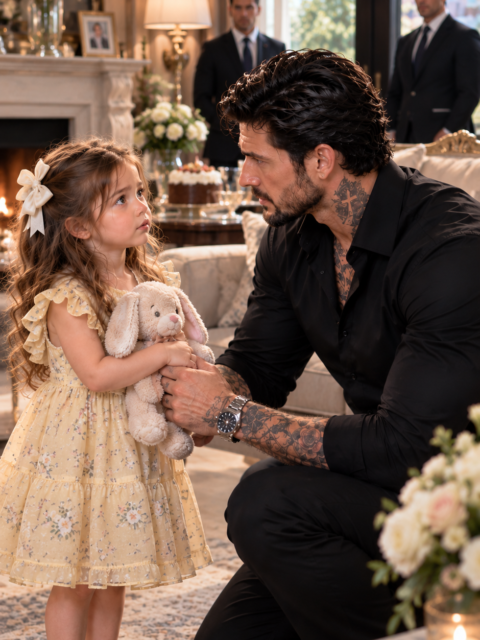
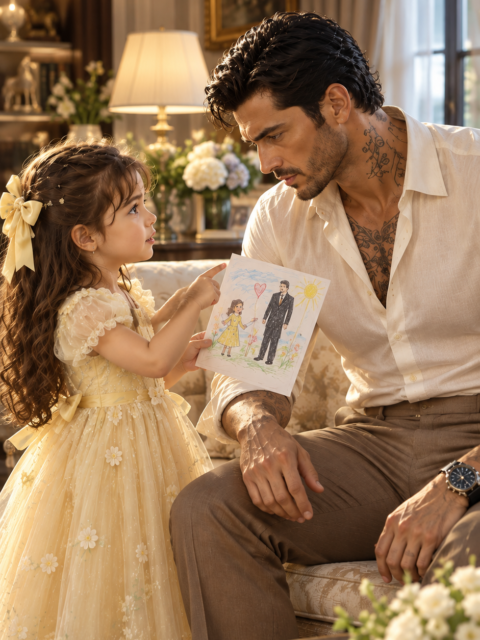
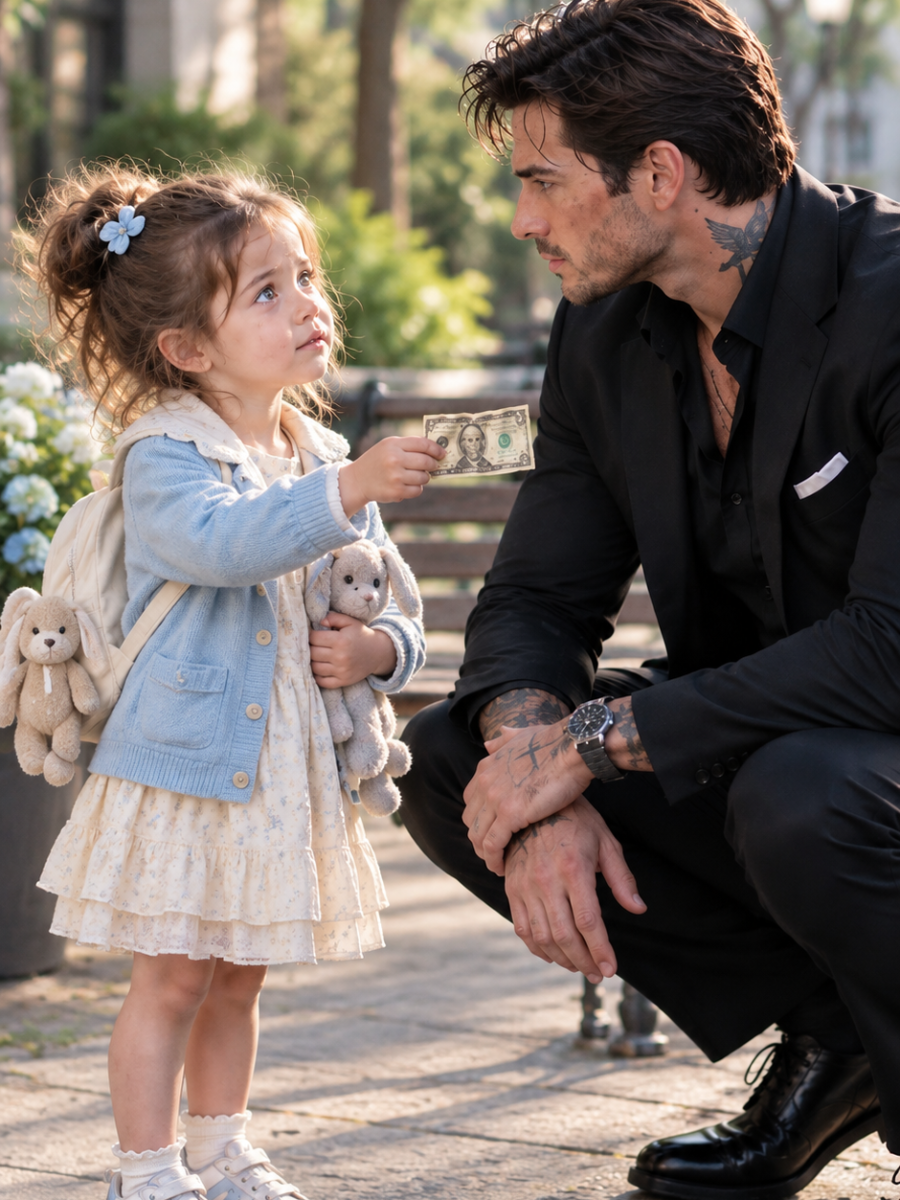
The little girl was lying over Ethan Cole’s heart before he even knew her name, and her mother was already begging him not to destroy their lives.
At thirty-four, Ethan owned three technology companies, a private jet, and a seventeen-bedroom mansion overlooking the Hudson River. His name appeared in financial magazines beside words like visionary, untouchable, and self-made. None of the articles mentioned that he sometimes escaped meetings to lie beneath a tree and pretend he had disappeared.
His phone vibrated beside him. His chief financial officer needed authorization for a merger. His attorney wanted to discuss a lawsuit. His mother had sent six messages about a charity dinner. Ethan ignored them all.
Then a tiny hand pressed against his chest. His eyes opened.
A barefoot little girl with brown curls and honey-colored eyes was sprawled across him as comfortably as if he were a sofa in her own home. Grass clung to the hem of her yellow dress.
“Hi,” she whispered. “Hi.” “You sleeping?” “Pretending.” Her forehead wrinkled. “Why?”
The word pierced deeper than it should have. Why did he live in a mansion that echoed? Why did every relationship feel like a negotiation? Why did people laugh more loudly when he entered a room but speak more honestly after he left?
Ethan looked into the child’s trusting eyes. “I don’t know.”
She accepted his answer without judgment and placed her cheek against his chest. For several seconds, neither moved.
Then a scream ripped across the lawn. “Lily!”
A young woman came running around the hedge, her dark hair slipping from its clip, her black maid uniform creased from work. Her face was pale with terror. She reached the tree and snatched the girl into her arms.
“Mr. Cole, I’m so sorry,” she gasped. “The kitchen door was open. I turned away for one second. Please don’t fire me.”
Her apology came too quickly. Too naturally. Like fear had taught her the words long ago.
Ethan rose slowly. “What’s your name?” “Maria Alvarez.” “You work in the east wing?” “Yes, sir. Tuesdays and Thursdays.”
He recognized the name from payroll reports. He knew her hourly wage, her tax status, and the date she had been hired. He had never known she had a daughter.
“You’re not fired.” Maria blinked. “You’re not even in trouble.”
Lily twisted in her arms and reached toward Ethan. “Down.” Maria hesitated before placing her on the grass. Lily immediately ran back and wrapped both hands around Ethan’s trouser leg. His throat tightened. “How old is she?” “Three.” “She’s beautiful.”
Maria’s expression softened for an instant before anxiety returned. “The sitter canceled. I couldn’t miss work again. I kept her in the staff kitchen, but she slipped away.”
Ethan looked toward the mansion. Seventeen bedrooms. Three guest suites. A ballroom used twice a year. An entire wing preserved like a museum.
And Maria had hidden her child beside industrial refrigerators because she feared asking for help.
Chapter Two
This House Needs Her
“There’s an old playroom upstairs,” he said. “She can stay there while you work.”
Maria stared at him. “If she needs anything, tell the estate manager.” “I wasn’t asking for charity.” “I know.” “Then why?”
Lily was trying to blow seeds from a dandelion. Only two escaped, but she laughed as though she had scattered stars.
Ethan answered quietly. “Because I think this house needs her more than she needs it.”
The following morning, the marble corridor filled with the sound of something the house had not heard in years. Laughter.
Ethan left his bedroom without checking his phone. He found the east-wing playroom flooded with daylight. Dust covers had been removed. Wooden blocks covered a faded rug. Lily sat in the center, carefully constructing a crooked tower.
When she saw him, her face lit up. “Efan!” She ran into his knees.
No one ever ran toward Ethan without wanting money, access, influence, or approval. Lily only wanted him to sit down.
So he did.
Maria stood near the doorway, gripping a cleaning cloth. “You have work,” she said. “I always have work.”
Lily handed him a purple block. “Horse.” Ethan studied it solemnly. “Obviously.”
It became, over the following weeks, the first genuinely ordinary routine Ethan had allowed himself in years — mornings in a dust-free playroom, a toddler’s confident mislabeling of geometric blocks, and a locket around Maria’s neck that he’d started to notice she touched, absently, every single time Lily said the word “Daddy.”
Chapter Three
The Locket
“Where’s your daddy?” Ethan asked Lily one afternoon, watching her build a tower with careful, deliberate concentration, the question arriving before he’d fully decided whether it was his to ask.
Lily didn’t look up from her blocks. “In Mommy’s necklace.”
Ethan glanced toward Maria, who had gone very still near the doorway, her hand rising instinctively to the small gold locket she wore every single day, tucked usually beneath her collar, visible now only because she’d rolled her sleeves up for cleaning.
“She doesn’t usually explain it that plainly,” Maria said, her voice careful. “I’m sorry if that was confusing.”
“It wasn’t confusing,” Ethan said. “I take it her father isn’t in the picture.”
Maria’s hand tightened around the locket. “He died. Before she was born, actually — she never met him. I keep his photograph in here so she has some sense of him, even if it’s just a picture and the stories I tell her.”
“I’m sorry,” Ethan said, and meant it, though he didn’t push further, understanding instinctively that Maria’s guarded posture suggested a grief still considerably rawer than the careful, composed way she managed everything else in her life.
It would be another three weeks before Ethan actually saw what was inside that locket, and when he finally did, the recognition that crossed his face left Maria more frightened than she’d been the day he found Lily asleep against his chest.
Chapter Four
The Photograph
The moment happened almost by accident. Lily, playing with the locket’s clasp while sitting on Ethan’s lap during one of their now-regular afternoon block sessions, managed to pop it open before Maria could stop her, the small oval photograph inside catching the playroom’s afternoon light.
Ethan looked down out of simple curiosity, expecting nothing more than an ordinary snapshot of a young man he’d never have reason to recognize.
Instead, something cold moved through his chest.
The man in the photograph wore a company polo shirt Ethan recognized immediately — the specific navy blue with the small circuit-board logo his manufacturing division had used for exactly eighteen months before a rebrand phased it out. He was smiling, arm slung around a piece of industrial equipment Ethan also recognized, considerably more precisely than he wanted to in that moment.
“Where did you take this photo?” Ethan asked, his voice carefully controlled despite the alarm building underneath it.
Maria’s face had already gone pale, watching him study the image with an intensity she clearly hadn’t anticipated. “At his job. He worked at one of your manufacturing facilities. Why does that matter?”
Ethan closed the locket gently and handed it back to her, his mind already racing backward through two years of paperwork, settlements, and incident reports he’d signed off on without ever learning the names attached to them.
“What was his name, Maria?” he asked quietly. “I need you to tell me his full name.”
Chapter Five
Marco Alvarez
“Marco,” Maria said slowly, watching Ethan’s face for whatever reaction was clearly building behind his careful composure. “Marco Alvarez. My husband. He died two years ago, six months before Lily was born, in an accident at the Poughkeepsie assembly facility. Why are you asking me this like it matters to you specifically?”
Ethan sat with the name for a long moment, memory reluctantly surfacing details he’d spent two years successfully not thinking about too closely — an incident report, a settlement figure, a signature he’d provided quickly during a week consumed by a much larger acquisition, trusting his operations team’s assessment that the matter had been handled appropriately.
“I remember the incident,” he admitted. “Not the details, and I’m ashamed to say I never learned the name of the man who died. A conveyor system malfunction. I signed off on the settlement my legal team recommended without reviewing it personally.”
Maria’s composure, held together through months of careful, guarded interactions with the man who owned her paycheck, finally cracked. “You’re telling me you’ve been letting my daughter climb into your lap for weeks, and you didn’t even know you were the one who signed the papers that decided what our family’s entire future was worth after his death?”
“I didn’t know,” Ethan said. “I want you to understand I’m not saying that to excuse it. I’m saying it because it’s true, and because I think the fact that I could sign off on something that significant without learning a single detail about the man it happened to is exactly the kind of corporate distance I need to actually reckon with.”
“The settlement wasn’t enough,” Maria said, her voice shaking now with two years of carefully suppressed anger finally surfacing. “It covered funeral costs and perhaps four months of the income we lost. I’ve spent two years working double shifts and hiding my daughter behind industrial refrigerators because your company decided that was sufficient for what happened to my husband.”
Chapter Six
What the Company Buried
Ethan requested the complete incident file the following morning, overriding his own operations director’s visible reluctance to reopen a matter the company had, from a legal standpoint, already fully closed.
What he found, reading through two years of paperwork with an attention he hadn’t given it the first time, painted a picture considerably more damning than the clean, procedural summary his legal team had presented at the time. The conveyor system that killed Marco Alvarez had failed a safety inspection eleven months before the accident, a failure documented and flagged by an outside inspector but never fully remediated due to a maintenance budget decision made two levels below Ethan’s direct oversight.
“We knew,” Ethan said, staring at the flagged inspection report with a growing, sick certainty. “Someone in this company knew that system was unsafe nearly a year before it killed him, and decided fixing it wasn’t worth the cost.”
His operations director, called in to explain the decision chain, offered justifications that sounded, to Ethan’s ear, considerably more hollow than they might have two months earlier, before a three-year-old girl had spent every afternoon calling him by a mispronounced version of his own name. “The budget cycle that year was tight. The inspection flagged a moderate risk level, not an immediate shutdown requirement. These are judgment calls that get made constantly across a manufacturing operation this size.”
“A man died,” Ethan said flatly. “A judgment call resulted in a three-year-old growing up without her father, and a widow hiding her own child at work because the settlement your team calculated wasn’t enough to cover both childcare and rent.”
“I want a complete safety audit of every facility we operate,” Ethan said, “conducted by an outside firm with no financial relationship to this company, starting immediately. And I want to understand exactly who made the decision to defer that maintenance, and why.”
Chapter Seven
Maria’s Fear
Maria, watching this unfold from the careful distance of someone still uncertain whether honesty had actually been safe to offer, finally asked the question she’d been most afraid of since Lily popped open that locket. “Am I going to lose my job over this? Over you finding out who I actually am?”
“No,” Ethan said, with a firmness he hoped conveyed how seriously he meant it. “If anything, I owe you the opposite of losing anything. I need you to understand something, Maria. I took this housekeeping job listing at face value when HR filled the position. I never once cross-referenced new hires against outstanding settlement cases, which is its own kind of institutional failure, but it also means you weren’t hired here as some calculated scheme, and neither was I aware of any connection until Lily’s curious fingers popped open that locket.”
“I applied for this job because I needed steady work close enough to Lily’s daycare,” Maria admitted. “I didn’t realize, until my first week, that the estate belonged to the same company. By then, I was too afraid of losing the position to say anything, certain that revealing the connection would look like I was trying to leverage sympathy, or worse, that you’d see me as a liability the moment my name registered.”
“I understand that fear,” Ethan said. “I don’t think it was unreasonable, given how the situation was actually handled two years ago. I’d like the chance to prove that fear isn’t necessary going forward.”
“What does that actually look like?” Maria asked. “Because I’ve learned not to trust promises from people who sign settlement papers without reading them.”
Chapter Eight
Ethan’s Reckoning
“It looks like this,” Ethan said, and spent the following hour laying out, in specific and binding terms rather than vague reassurance, exactly what he intended to do — a reopened settlement review conducted by an independent third party, considering the full scope of what Marco’s death had actually cost their family rather than the minimum figure his legal team had calculated two years earlier.
The outside safety audit, once completed across all three manufacturing facilities, confirmed what the Poughkeepsie incident had already suggested: a pattern of deferred maintenance decisions made under budget pressure, with safety flags routinely downgraded in priority when the cost of remediation competed against quarterly targets.
Ethan terminated the operations director responsible for the original deferral decision, along with two other managers whose names appeared in similarly concerning patterns across different facilities, and implemented a company-wide policy removing safety remediation decisions from any budget authority below his own direct office.
“I built three companies on being called a visionary,” he told his board, in a meeting considerably more contentious than any merger negotiation he’d conducted, “and it took a three-year-old falling asleep on my chest to make me actually look at what my own operations were doing to the people who make that vision profitable. I’m not interested in continuing to operate the way we have been.”
The board’s resistance to the resulting costs was significant. Ethan’s resolve, for the first time in longer than he could remember, was considerably more significant than their objections.
Chapter Nine
Making It Right
The revised settlement, finalized six weeks later, reflected considerably more than funeral costs and four months of lost income — a sum calculated properly against Marco’s full expected lifetime earnings, ongoing support for Lily through her education, and an acknowledgment, formal and public within the company’s own safety records, of exactly what had caused his death and why it should never have happened.
Maria accepted it slowly, still cautious after two years of learning not to trust generosity that arrived without scrutiny, working through the details with an attorney Ethan insisted she retain independently, at his expense, specifically so she’d never have reason to wonder whether the terms actually served her interests or simply his own guilt.
“I don’t want this to feel like I’m buying my way out of what happened,” Ethan told her, once the paperwork was finalized. “I understand no amount of money actually returns what you lost. I want it to be right by the standard of what should have happened two years ago, not generous by the standard of what my legal team originally thought they could get away with.”
Maria studied him for a long moment, something in her guarded composure finally, cautiously easing. “That’s the first time anyone from this company has actually said something that sounded like an apology rather than a legal strategy.”
“I intend for it to be the first of several,” Ethan said. “Starting with actually learning my employees’ names before something forces me to.
Chapter Ten
What Grew Between Them
The weeks that followed settled into something neither Ethan nor Maria fully planned but neither resisted either — Lily’s afternoons in the east-wing playroom continuing exactly as before, though Maria no longer needed the job to survive, choosing to stay on in a role considerably better compensated and considerably less precarious than the one she’d started in.
Ethan found himself looking forward to those afternoons with an anticipation that had nothing to do with escaping his phone and considerably more to do with the particular, uncomplicated way Lily still greeted him — “Efan!” — utterly unaware of settlements, safety audits, or the guilt her father’s death had quietly reshaped in a stranger’s entire approach to his own company.
“You don’t have to keep showing up every afternoon,” Maria told him once, watching him fail spectacularly at a game whose rules Lily had apparently invented and revised without notice. “The settlement is finalized. You don’t owe us this specifically.”
“I know,” Ethan said. “I want to.” It was, he realized as he said it, exactly the same phrase Lily’s simple, uncomplicated presence had taught him to mean rather than perform, the difference between obligation and genuine desire finally distinguishable to him after years of not being entirely sure there was one.
Maria’s careful guardedness, held in place through two years of grief and two months of cautious professional distance, finally began, slowly, to soften into something neither of them rushed to name.
Chapter Eleven
What Remained
Two years after Lily’s small hand first pressed against his chest beneath the old oak tree, the mansion Ethan had once described only to himself as echoing had filled with a permanent, ordinary warmth he’d stopped believing his life had room for.
He and Maria built their relationship slowly, deliberately, neither of them interested in rushing past the careful trust two years of grief and corporate betrayal had made necessary. They married eventually, in a small ceremony in the same east-wing playroom, dust covers long since removed permanently, wooden blocks still scattered across a rug Lily refused to let anyone put away.
The company’s safety practices, restructured entirely in the aftermath of Marco’s case, became something Ethan personally reviewed each quarter, unwilling to ever again sign a settlement without knowing the name and story of the person it concerned.
Lily kept her father’s locket, though it lived now in a small keepsake box rather than around anyone’s neck daily, its story told to her gradually, honestly, in pieces suited to a child’s understanding — a father she never met, a mother who loved her enough to survive two impossible years alone, and a company that had finally, if two years too late, learned to see the people behind its own paperwork.
Some afternoons, Ethan still lies beneath that old oak tree, no longer pretending to have disappeared, simply resting, while a little girl who calls him “Efan” builds increasingly ambitious block towers beside him, utterly certain, the way only a child can be, that this was always exactly where their family belonged.