A Little Girl Under My Staircase Handed Me a Photo of the Woman My Family Made Vanish Four Years Ago — On the Night of My Engagement Party
Dominic Moretti’s engagement party was in full swing when a three-year-old girl beneath his staircase handed him a photograph that stopped his heart. Sophia Carter had vanished four years earlier, and Dominic had spent six months trying to find her before finally accepting she’d simply left. She hadn’t left. His mother’s wall safe held the proof: payments, a relocation, a confidentiality agreement, and a signature that turned his understanding of his family inside out. The final page explained why Sophia disappeared — and exactly who the little girl under the staircase really was. Read every chapter to find out how far the Moretti family went to keep the truth buried.
The Girl Under the Staircase
“Tell me where your mother is, Lily.”
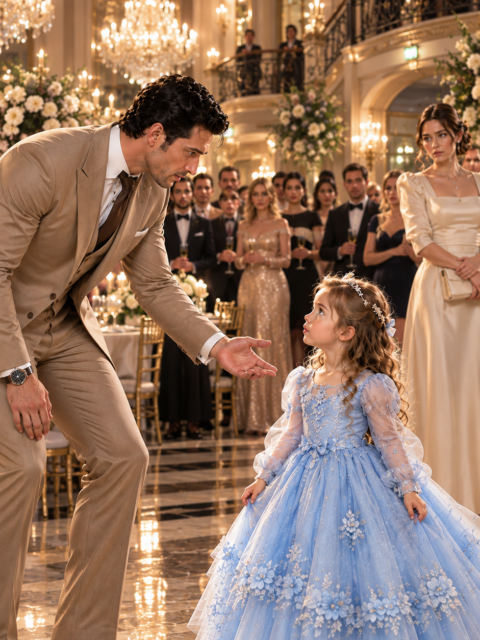
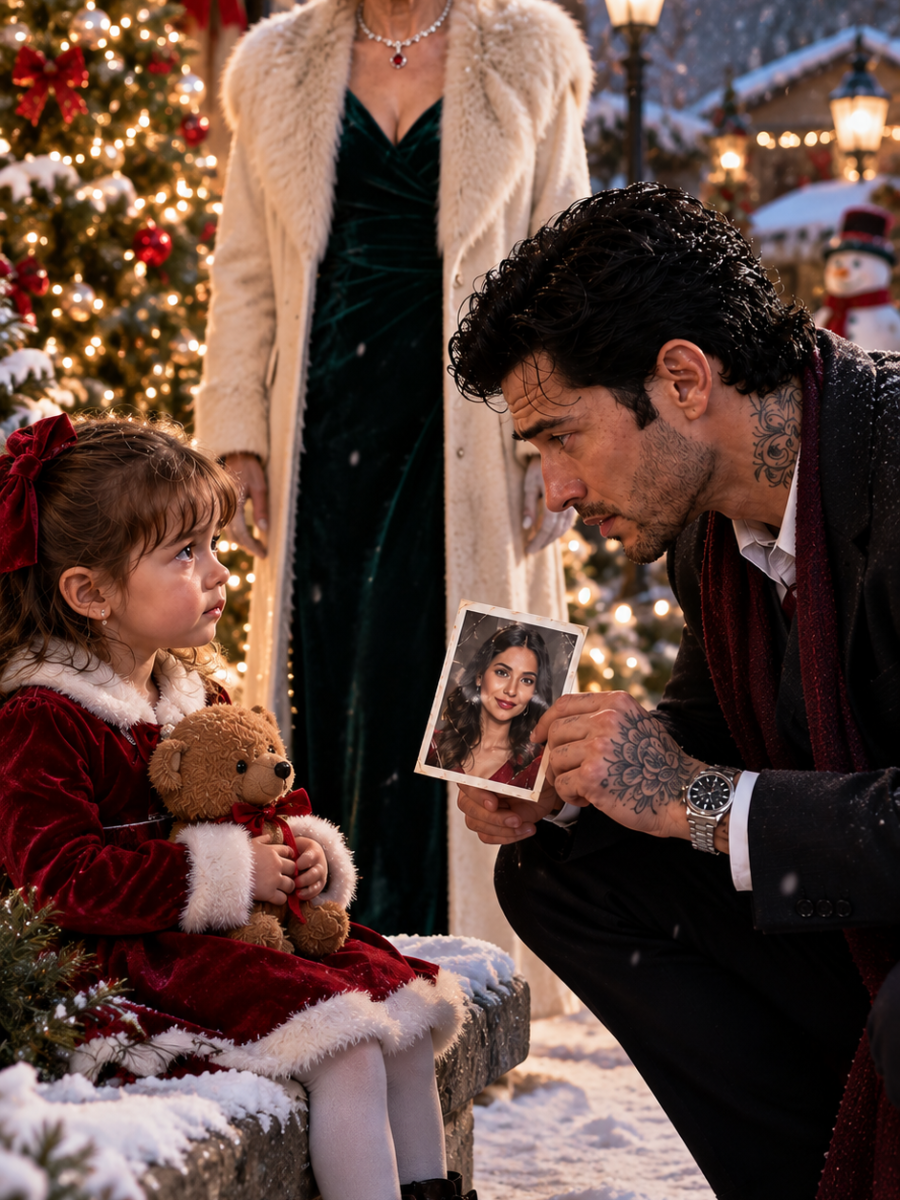
The little girl beneath my staircase stared up at me, clutching a teddy bear in one hand and a photograph in the other. It was 10:17 on Christmas Eve, and two hundred people were celebrating my engagement downstairs. Champagne flowed beneath six thousand white lights. A string quartet played beside the fireplace. Snow pressed against the ballroom windows while politicians, businessmen, attorneys, and people who preferred never to appear in photographs toasted my future with Isabella Vitale.
Everything looked perfect. My life had become very good at looking perfect.
Then I saw the photograph.
“Can I see that?”
Lily hesitated before turning it toward me, and the entire ballroom seemed to disappear.
Sophia Carter was smiling back at me.
Four years earlier, Sophia had vanished without warning. No fight. No goodbye. One night we were planning dinner. By morning, her apartment was empty, her phone disconnected, her job abandoned. I searched for six months — investigators, hospitals, rental records, airline manifests, favors called in from men who could find almost anyone in this city if the price was right. Nothing. Eventually I accepted the explanation I hated most: Sophia had chosen to leave me.
Now her photograph was in the hands of a three-year-old girl.
“Where did you get this?”
“My mommy,” Lily said.
My blood went cold. “Sophia is your mother?”
Lily nodded, solemn in the particular way small children get when they sense an adult’s world tilting around them.
Three years old. Sophia had disappeared four years ago. Before I could finish the arithmetic forming in my chest, a voice came from behind me.
“Dominic.”
My mother stood three steps away. Victoria Moretti feared almost nothing. I had watched her face down federal agents, funeral processions, and threats against her sons without ever losing her composure. But when she saw Sophia’s photograph in my hand, the color drained completely from her face.
Not surprise.
Fear.
Ten minutes later, I had locked my mother and my brother Enzo inside my father’s old study, the ballroom’s noise reduced to a muffled hum through the heavy oak door.
“Start talking.”
“There is nothing to discuss tonight,” Victoria said, her voice steady in a way that told me exactly how much effort the steadiness was costing her.
I laughed without humor. “You knew where Sophia went.”
Silence. Then I noticed my mother’s eyes flick, almost involuntarily, toward the painting covering my father’s old wall safe. That was enough.
I crossed the room. “Dominic, don’t,” Victoria said, but I had already entered the combination — my father’s birthday, the same six digits I’d known since I was twelve — and the lock clicked open.
Behind property deeds and trust documents sat a thin gray file I had never seen before. Across its cover, two words: SOPHIA CARTER.
My mother whispered my name. I opened it.
A date from four years earlier. Three days before Sophia vanished. Payments. An unfamiliar address in a town I’d never heard of. A confidentiality agreement, signed and notarized. Someone had tracked Sophia. Someone had paid money. Someone inside my own family had known exactly where she went, every single day for four years, while I tore the city apart looking for her.
I turned the page. There was a signature at the bottom — elegant, controlled, impossible to mistake.
VICTORIA MORETTI.
I looked slowly at my mother. For the first time in my entire life, Victoria Moretti looked terrified of her own son.
Sophia hadn’t abandoned me. My family had made sure she stayed away.
My fingers moved toward the next page. My mother lunged across the desk. “Dominic, DON’T READ THAT.”
But I already had — and the first sentence explained not only why Sophia disappeared, but exactly who Lily really was, and exactly how much of my own life had been quietly, deliberately rearranged without my knowledge.
Before Sophia Vanished
Five years earlier, I had been twenty-nine years old, three years into running the legitimate side of my family’s real estate and logistics empire, and doing everything in my power to keep Sophia Carter as far from the other side of that empire as I possibly could.
She was an emergency room nurse at Lenox Hill, a woman who had never once heard the Moretti name and reacted to it the way most educated New Yorkers eventually did, and who fell in love, she told me once, with a man who kept unusual hours and never fully explained his family’s businesses, not with the name attached to buildings across three boroughs. I had told myself, for two years, that I could keep those two versions of my life permanently separate. I had been wrong.
My family had, since before I was born, maintained an understanding with the Vitale family — old, patient, and entirely unromantic, the kind of arrangement built by grandfathers to end a territorial conflict that had cost both families more than either wanted repeated. Dominic Moretti would marry into the Vitale family eventually. It had never been a question of if, only when, and I had spent my twenties treating the eventual as distant enough not to require confronting.
Sophia had made the eventual feel, for the first time, like something I might actually be able to refuse.
I never told her the extent of what refusing would mean. I told her I loved her, which was true, and I let her believe our future was a simple thing two people in love could simply choose, which was not.
The night before she vanished, we’d argued — a small, ordinary argument, the kind couples have and forget within a week, about a dinner reservation and my constant unexplained absences. I remember being annoyed. I remember leaving her apartment irritated rather than afraid. I had no idea it was the last real conversation we would have for four years.
What I hadn’t known — what the file in my father’s safe was about to force me to understand in devastating detail — was that Sophia had, three weeks before she vanished, accidentally witnessed something at a warehouse she’d come to meet me at early, a delivery she wasn’t supposed to see and two men she wasn’t supposed to recognize later on the news. She had never told me. She had, apparently, told my mother instead — walked directly into Victoria Moretti’s office, terrified, asking what she should do with what she’d seen.
And my mother, rather than telling me any of it, had made a decision entirely on her own — one that had shaped the next four years of my life, and Sophia’s, and a daughter’s, without my knowledge or consent.
The File
The first sentence of the page my mother had lunged across the desk to stop me from reading was simple, clinical, and utterly devastating: Subject is approximately eight weeks pregnant; relocation and confidentiality agreement executed prior to disclosure to D.M.
I read it twice before the meaning fully landed. “You knew she was pregnant.”
Victoria’s composure had finally, completely cracked. “I knew within a week of her coming to me about the warehouse. She hadn’t told me about the pregnancy herself — I had her medical records pulled the moment I understood how much danger she was actually in, and how much more complicated that danger had just become.”
“You had her medical records pulled,” I repeated, the words tasting foreign and cold in my mouth. “Without her consent. Without mine.”
“Dominic, listen to me.” My mother’s voice had dropped into something I had genuinely never heard from her before — not command, not control, but something close to pleading. “Sophia witnessed two men from the Castellano crew moving something at that warehouse that she was never meant to see, three weeks before your engagement to Isabella was set to be formally announced. If word had reached Salvatore Castellano that a civilian outside our family had seen his men, and that she was also pregnant with your child—”
“Say it,” I said. “Finish the sentence.”
“She would have been killed,” Victoria said, the words coming out of her flat and final. “Both of them would have been killed, Dominic, quietly, the way these things are always handled when the people involved aren’t protected by a name. I did not have that kind of time to explain the danger to you and wait for you to process it emotionally. I made a decision in an afternoon that saved two lives, and I have lived with the cost of that decision every day since.”
I stared at her, my entire understanding of the last four years of my life rearranging itself violently around a single fact. “You could have told me. We could have protected her together.”
“You were three weeks from a public engagement announcement that both families had spent a decade building toward,” my mother said. “An engagement that kept an armed conflict between two families from resuming after your father’s death nearly restarted it. Do you understand what would have happened if you had chosen a pregnant civilian nurse over that arrangement, publicly, three weeks before the announcement? Salvatore Castellano would have read it as weakness at the exact moment we could least afford to look weak. I chose to save Sophia’s life and yours in the only way I believed was actually available to me.”
Enzo, silent until now, finally spoke from the corner of the room, his voice quiet. “She’s not wrong about Castellano, Dominic. You know she’s not.”
I turned back to the file, my hands unsteady, and found the relocation address on the final page — a small town in upstate New York, a name I didn’t recognize, dated four years ago and never updated since. “Is this where she still is?” I asked, and my mother’s silence, stretching one second too long, told me the answer before she spoke it. “No, Dominic. She hasn’t been at that address in six weeks. And I don’t know where she is now.”
The Reason
“What do you mean you don’t know where she is?” My voice had gone dangerously quiet, the particular quiet my mother had taught both her sons to fear more than shouting.
“I maintained contact through an intermediary,” Victoria said. “A monthly check-in, funds transferred through the confidentiality arrangement, never direct communication between us. It was safer for everyone that way — for her, for you, for the arrangement to remain deniable if it was ever discovered. Six weeks ago, the check-in stopped. The intermediary reported the address empty, no forwarding information, no explanation.”
“Six weeks,” I said. “And you told no one.”
“I was handling it.”
“You were handling it the way you handled everything for the last four years,” I said. “By deciding, alone, what the rest of us were allowed to know.”
Lily, who had been quietly playing with her teddy bear in the corner of the study under Enzo’s distracted watch, looked up at the sound of raised voices, her small face uncertain. I crossed the room and crouched in front of her, forcing my voice back into something gentler, though everything in my chest was still in freefall.
“Lily, sweetheart. How did you get here tonight? To my house?”
She considered the question with the enormous seriousness only a three-year-old brings to something she’s been told is very important. “Mommy’s friend brought me. She said I had to give you the picture and stay very quiet until you found me.”
“What friend? Do you know her name?”
“Miss Renee,” Lily said. “She takes care of me sometimes when Mommy has to go places.”
I looked up at Enzo. “Find her. Now. However long it takes tonight, I don’t care whose party is happening downstairs — find whoever dropped this child at my door and get her here.”
It took less than an hour. Renee Kessler, it turned out, hadn’t dropped Lily off and left — she’d been waiting in a car three blocks away, under instructions, she explained shakily once Enzo’s men brought her in, to make sure Lily reached “Mr. Moretti directly” before leaving the city herself, per Sophia’s explicit instructions given four days earlier.
“She was scared,” Renee said. “More scared than I’d ever seen her. She said someone had found the house. She said if anything happened to her, I needed to get Lily to her father, no matter what it cost, because he was the only person left who could actually protect her.”
The word father landed in the room like a verdict I’d already half-accepted and still hadn’t fully absorbed.
“Where is Sophia now?” I asked, and Renee’s hands began to shake as she answered. “I don’t know. She said she was going somewhere to try to fix things herself, before it got worse. She said something about Castellano finally finding the paper trail. That was four days ago, Mr. Moretti. I haven’t heard from her since.”
The Empty House
By two in the morning, I was standing in Sophia’s abandoned upstate house with Enzo and two of our most trusted men, the party downstairs long since ended, Isabella sent home with a version of the truth diplomatic enough not to detonate the Vitale arrangement before I understood the full shape of the danger myself.
The house told its own story. A child’s drawings still taped to the refrigerator. A calendar on the kitchen wall with the last six weeks left blank, as though time itself had simply stopped being tracked the day Sophia disappeared. And in the back bedroom, a filing cabinet forced open, its drawers emptied, papers scattered across the floor in the particular chaos of a search conducted without concern for whether anyone noticed it had happened.
“Someone was looking for something specific,” Enzo said, crouching over the scattered papers. “Not a robbery. Nothing valuable was taken — there’s a laptop still sitting on the desk, jewelry still in the bedroom. Whoever did this wanted documents.”
I found, half-hidden beneath an overturned drawer, a torn corner of paper with a partial name still legible: …tellano Logistics — invoice.
My stomach dropped. “She kept evidence. From four years ago. The thing she witnessed at the warehouse.”
“Or something more recent,” Enzo said grimly. “Dominic, think about the timeline. Salvatore Castellano is currently under federal investigation — racketeering, the same task force that’s been circling our family for two years. If Sophia witnessed something back then that connects Castellano to activity relevant to that current case, and if she’s been quietly holding onto proof of it for four years as insurance—”
“Then she just became the single most valuable and most dangerous witness in New York,” I finished, the full shape of it landing with sickening clarity. “To the feds. To Castellano. And to us, if it turns out our name is anywhere near what she’s holding.”
One of our men, searching the house’s small detached garage, called out from the doorway, his voice tight. “Mr. Moretti. You need to see this.”
Inside, tucked beneath a loose floorboard, was a small fireproof lockbox, forced open and emptied — save for a single item left behind, deliberately, as though whoever had taken everything else wanted this particular piece found.
A photograph, identical to the one Lily had carried to my staircase, except this one had writing on the back in Sophia’s handwriting, dated four years earlier: For Lily, so she always knows her father’s face, even if I can never let her meet him.
Beneath the photograph, someone had left a single folded note, unsigned, in handwriting none of us recognized: “Tell Moretti we have what she was hiding. Tell him the price for both of them is a meeting. Twenty-four hours.”
Isabella
Icalled Isabella Vitale myself the next morning, rather than let the situation reach her through anyone else’s version of events, and found, to my considerable surprise, that she had already guessed most of it.
“Dominic, I’ve known about your Sophia Carter for three years,” she said, settling into a chair across from me in my study with the composed practicality that had made her, in my private estimation, considerably better suited to running a criminal empire than I was. “Not the details. But I knew there was a woman before me who mattered more than the arrangement our families built, and I knew you well enough to know you’d never fully let her go. I assumed she’d genuinely left. I didn’t know your mother had a hand in it.”
“I need to be honest with you,” I said. “There’s a child. Lily. She’s mine.”
Isabella received this with far less shock than I’d braced for, studying me for a long moment before she spoke. “Dominic, I’m going to tell you something I probably should have told you two years ago, when our families first finalized this arrangement. I’ve been in love with someone else since I was twenty-three. His name is Marco, he manages a restaurant in Bensonhurst, and my father would have had him disappeared quietly if he ever suspected the relationship was serious rather than a passing indulgence he chose not to notice.” She met my eyes steadily. “I agreed to marry you because it was what both our families needed, and because you were, at minimum, someone I respected and could imagine building a peaceful life beside. But I have never once loved you, Dominic, and some part of me has always suspected you never quite loved me either.”
The relief that moved through me was so sudden and so complete that I nearly laughed, an entirely inappropriate response to the crisis currently unfolding around Sophia’s disappearance, but Isabella only smiled, understanding it perfectly.
“Find your Sophia,” she said. “Find your daughter’s mother, and let’s find a way to end this arrangement that doesn’t restart the exact war it was built to prevent. I imagine, given everything else currently happening with the Castellanos, our fathers may have considerably bigger problems to worry about than one broken engagement.”
She was still speaking when my phone buzzed with a message from the unknown number that had sent the ransom note the night before — a single photograph attached, timestamped an hour earlier: Sophia, visibly exhausted but alive, sitting in what looked like the back room of an industrial building, holding up that morning’s newspaper as proof of the timestamp, her expression carrying a message that needed no caption at all — get Lily somewhere safe, and don’t trust anyone in your own family until you know exactly who leaked this address.
The Castellano Problem
The photograph’s message was clear enough that I called an emergency meeting within the hour — myself, Enzo, my mother, and Antonio Ferraro, our family’s longtime consigliere, a man who had served my father for thirty years before serving me.
“Someone inside this family told the Castellanos where to find that house,” I said, laying the accusation on the table without softening it. “The relocation address was known to exactly four people. My mother. The intermediary who handled the monthly transfers. Antonio, who I understand approved the original arrangement’s legal structure. And whoever Antonio may have needed to loop in to execute it properly four years ago.”
Antonio’s face had gone carefully neutral in the way of a man who had spent three decades learning to control every visible reaction. “Dominic, I would never—”
“I’m not accusing you yet,” I said. “I’m telling you the circle of people who could have leaked this is small enough that we will find the answer today, one way or another.”
My mother, uncharacteristically quiet through most of the meeting, finally spoke. “There’s a fifth person who knew, Dominic. Someone I haven’t mentioned, because I hoped it would never become relevant.” She met my eyes with an expression of genuine, unguarded shame — the first I had ever seen from her. “Salvatore Castellano’s sister, Marguerite, handled a portion of the original real estate transaction used to fund Sophia’s relocation, through a shell company neither of us realized, at the time, connected back to her family. I used a property management firm I trusted for the paperwork. I didn’t learn until eighteen months later that the firm’s silent partner was Castellano money.”
The room went very still.
“You’re telling me,” I said slowly, “that the Castellanos have known where Sophia was for at least eighteen months, and simply chose not to act until now?”
“I believe,” Antonio said carefully, entering the conversation for the first time with something closer to his usual measured authority, “that Salvatore has held that knowledge in reserve deliberately, as leverage against this family, waiting for the moment it would be most useful. And given the current federal investigation into his own operation, I suspect that moment has finally arrived. If Sophia’s evidence from four years ago could implicate Castellano in something the federal task force is actively pursuing, taking her now serves two purposes at once — silencing a witness against him, and using her as leverage against us in the same move.”
“Then we don’t have twenty-four hours to negotiate,” I said, standing. “We have twenty-four hours to find her before Salvatore Castellano decides a dead witness is safer for him than a living hostage — and I am not losing her again, not after four years, not to a man who’s been holding this over my family since before I even knew there was anything to hold.”
Enzo’s Vote
The meeting that followed was the closest thing to open warfare I had ever witnessed within my own family, conducted entirely through careful, controlled voices in a locked study rather than raised fists, which somehow made it more frightening rather than less.
Antonio argued for the traditional response — a formal meeting with Salvatore Castellano through established channels, a negotiated exchange, leverage traded for leverage in the careful, ritualized language two families used when neither wanted a war they couldn’t fully control the outcome of.
Enzo argued for something faster and considerably more dangerous. “We know approximately where that warehouse district photo was taken, based on the visible signage in the background. I can have six men there within two hours. We don’t negotiate with someone holding a woman and threatening a three-year-old’s mother. We take her back.”
“And if that starts the war the arrangement with Isabella was specifically designed to prevent?” Antonio countered. “Dominic, think carefully. An armed incursion into Castellano territory, over a civilian woman with no formal standing in this family, could reignite a conflict that cost twelve men on each side the last time it happened, twenty years ago.”
“She’s not just a civilian woman,” I said, my voice carrying a finality that silenced the room. “She’s the mother of my daughter, and she has been for three years without my knowledge, because decisions were made about her life and mine that I was never given the chance to weigh in on. I am done letting other people decide what risks are acceptable on my behalf.”
My mother, who had said very little since her confession about the shell company, finally spoke, her voice quieter and more uncertain than I had ever heard it. “Dominic. I have spent four years making decisions I believed were protecting this family, and I have watched, in the last twelve hours, exactly how much damage that protection actually caused. I am not going to tell you what to choose tonight. But I am going to stand beside whatever choice you make, and I am going to personally call in every favor this family has ever been owed to make sure it succeeds.”
It was, I realized, the first time in my adult life my mother had ever fully deferred to me rather than around me.
“Enzo,” I said, “get your men ready. Antonio, open a channel to Castellano — not to negotiate a surrender, but to tell him exactly what happens to his federal case if anything happens to Sophia before we arrive, because I intend for him to understand, within the hour, that killing his own leverage is the single worst decision he could make tonight.”
The Warehouse in Red Hook
The warehouse district in Red Hook, once Enzo’s team narrowed the search using the photograph’s background details, turned out to be less than a mile from the very warehouse Sophia had accidentally wandered into four years earlier — a detail that felt, standing outside it in the freezing pre-dawn cold, less like coincidence and more like Salvatore Castellano’s particular, deliberate cruelty.
Antonio’s channel to Castellano had produced exactly the leverage I’d hoped for — a carefully worded message reminding Salvatore that harming a federal witness, even one he intended to silence quietly, would draw exactly the kind of scrutiny his ongoing racketeering case could least survive. It bought us the hours we needed. It did not buy us cooperation.
We found Sophia in a small back office on the warehouse’s second floor, unharmed but exhausted, guarded by two men who surrendered without meaningful resistance the moment Enzo’s team made clear how badly outnumbered they were and how little Salvatore Castellano himself was willing to risk his own freedom over two low-level guards.
Sophia looked up when I came through the door, four years and a lifetime of unanswered questions passing between us in a single held breath.
“Dominic.” Her voice broke on my name. “Lily. Is she—”
“She’s safe. She’s with Isabella, actually, who has turned out to be considerably better at comforting a frightened three-year-old than either of us probably expected.” I crossed the room and knelt in front of the chair she was tied to, working the restraints loose with hands that weren’t entirely steady. “Sophia, I know. I know about the warehouse. I know about the pregnancy. I know what my mother did.”
Sophia’s eyes filled, exhaustion and relief and old grief tangling together. “I wanted to tell you so many times. Every year, on her birthday, I wrote you a letter I never sent, because I believed, if I sent it, someone would find us and Lily would never grow up at all.”
“You kept evidence,” I said. “From that night four years ago. That’s what this was about.”
“I kept everything,” Sophia said. “Every document, every photograph I could get of the shipment, because some part of me always understood that the only real protection I had was making myself more valuable alive than dead — a witness who could hurt Castellano in court, rather than just a loose end he could quietly eliminate. I was right, for four years. Until he decided the federal case made me worth the risk of grabbing anyway.”
As I helped her stand, her legs unsteady beneath her, she gripped my arm with sudden, urgent intensity. “Dominic, the evidence — it’s not just about Castellano anymore. There’s something in those files about your family too, from around the same time. I never told your mother I saw it. I don’t think she knows what else was in that warehouse that night.”
What Victoria Chose
The detail Sophia had carried alone for four years, once she finally laid it out for the full family two days later, reshaped the entire crisis into something considerably more complicated than a single rival family’s leverage attempt.
The shipment she’d witnessed that night hadn’t belonged solely to the Castellanos. It had been a joint operation — an uneasy, temporary alliance between the two families, brokered years earlier by my father and Salvatore’s father, that neither side had ever wanted publicly connected to either name. Sophia’s photographs, taken in a moment of panicked instinct rather than calculated intent, showed men and cargo from both operations in the same frame, at the same location, on the same night.
“If this reaches the federal task force,” Antonio said grimly, reviewing the photographs Sophia had finally surrendered, “it doesn’t just implicate Castellano. It implicates us in the same conspiracy, potentially reaching back to your father’s own involvement, Dominic. This is not a piece of leverage we can simply use against Salvatore without exposing ourselves to identical charges.”
My mother studied the photographs for a long time in silence, and when she finally spoke, her voice carried a weight I had never heard from her before — not the careful control of Victoria Moretti managing a crisis, but something closer to genuine reckoning. “Then perhaps,” she said slowly, “it’s time this family stopped being something that requires this kind of protecting at all.”
The room went silent.
“I have spent thirty years making decisions to shield this family from consequences,” Victoria continued. “I made one four years ago that cost my son four years with the woman he loved, and cost that woman four years of safety she should never have had to sacrifice, and I told myself it was necessary because the alternative was violence. I am tired, Dominic, of decisions that are only ever necessary because of the world we’ve built for ourselves to survive in.”
She turned to Antonio. “I want to speak with counsel about a cooperation agreement. Not to protect the family from every consequence — I don’t believe that’s possible anymore, and I’m not sure it should be. But to protect Dominic, and Lily, and whatever legitimate businesses this family actually has left to build a future around, once the rest of it is finally allowed to end.”
Antonio’s face had gone pale. “Victoria, if you cooperate with federal prosecutors, you understand exactly what that could mean for you personally. There may be no protecting yourself from what comes next.” My mother’s answer came without hesitation, steadier than I had heard her sound in the entire crisis. “I understand completely. I have spent thirty years protecting the wrong things. I would like, before I run out of time to matter to my grandchildren, to try protecting the right ones instead.”
Next Christmas
The following year brought more change than the previous four combined. Victoria’s cooperation agreement, negotiated carefully over months by attorneys who specialized in exactly this kind of delicate unraveling, resulted in reduced charges in exchange for testimony that helped federal prosecutors finally build a case against Salvatore Castellano solid enough to end his operation for good. My mother served eighteen months in a minimum-security facility upstate — a sentence that felt, to all of us, both entirely deserved and strangely merciful, given what it could have been.
The Moretti family’s legitimate businesses — the real estate holdings, the logistics companies operating entirely within the law — survived the restructuring that followed, though considerably smaller and, for the first time in three generations, entirely separate from anything Antonio Ferraro or anyone like him would ever again have reason to manage.
Isabella Vitale’s engagement to me ended amicably, in a joint statement both families agreed served everyone’s interests, and I heard, through mutual acquaintances, that she and Marco from the Bensonhurst restaurant were now living together quite happily, entirely out of either family’s shadow.
Sophia and Lily moved into my home permanently within a month of the Red Hook warehouse, not because either of us rushed toward something we weren’t ready for, but because four years apart had taught us both exactly how much time we didn’t want to waste being cautious about the thing we’d already lost once.
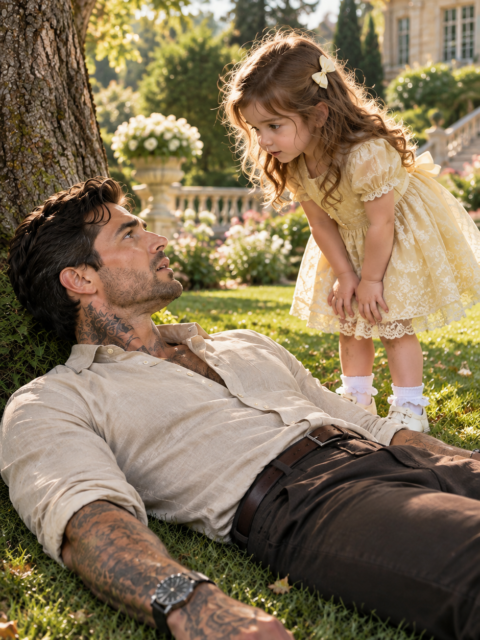
On Christmas Eve, one year to the day since a three-year-old girl had appeared beneath my staircase holding a photograph that changed everything, I found Lily in almost the exact same spot, now four years old, carefully arranging a small collection of ornaments she’d deemed too fragile for the actual tree.
“Daddy,” she said — a word that had taken months to feel entirely natural in her mouth, and still, every single time, undid something in my chest — “can Grandma Victoria call today? Mommy said maybe, if the prison lets her.”
“We’ll try,” I told her, kneeling beside her on the floor. “I know she’d want to hear your voice.”
Sophia appeared in the doorway, watching us with the particular soft expression that had, over the past year, slowly replaced the exhausted vigilance she’d worn for so long it had once seemed permanent. “The quartet’s setting up downstairs,” she said. “Considerably smaller party this year. No arrangements. No enemies waiting under the chandeliers.”
“Just us,” I agreed, standing to cross the room toward her. “Finally, actually just us.”
Lily tugged at both our hands, impatient with adult sentimentality, already pulling us toward the stairs and the smaller, warmer gathering waiting below — a Christmas Eve with no secrets left in any wall safe, no file with anyone’s name across the cover, and nothing hidden beneath the staircase except, this year, simply a very determined four-year-old’s carefully guarded collection of ornaments.