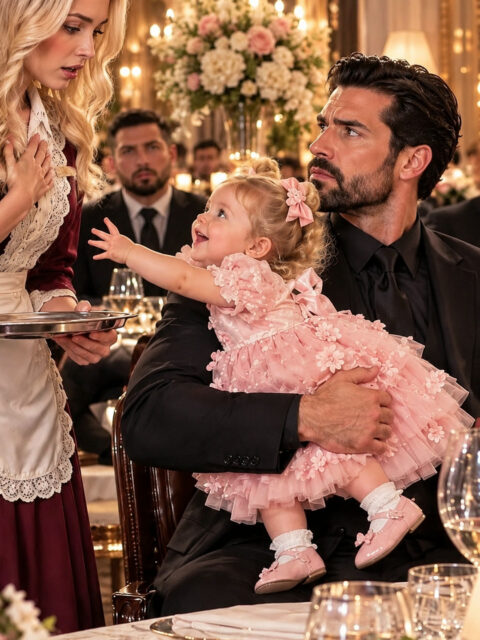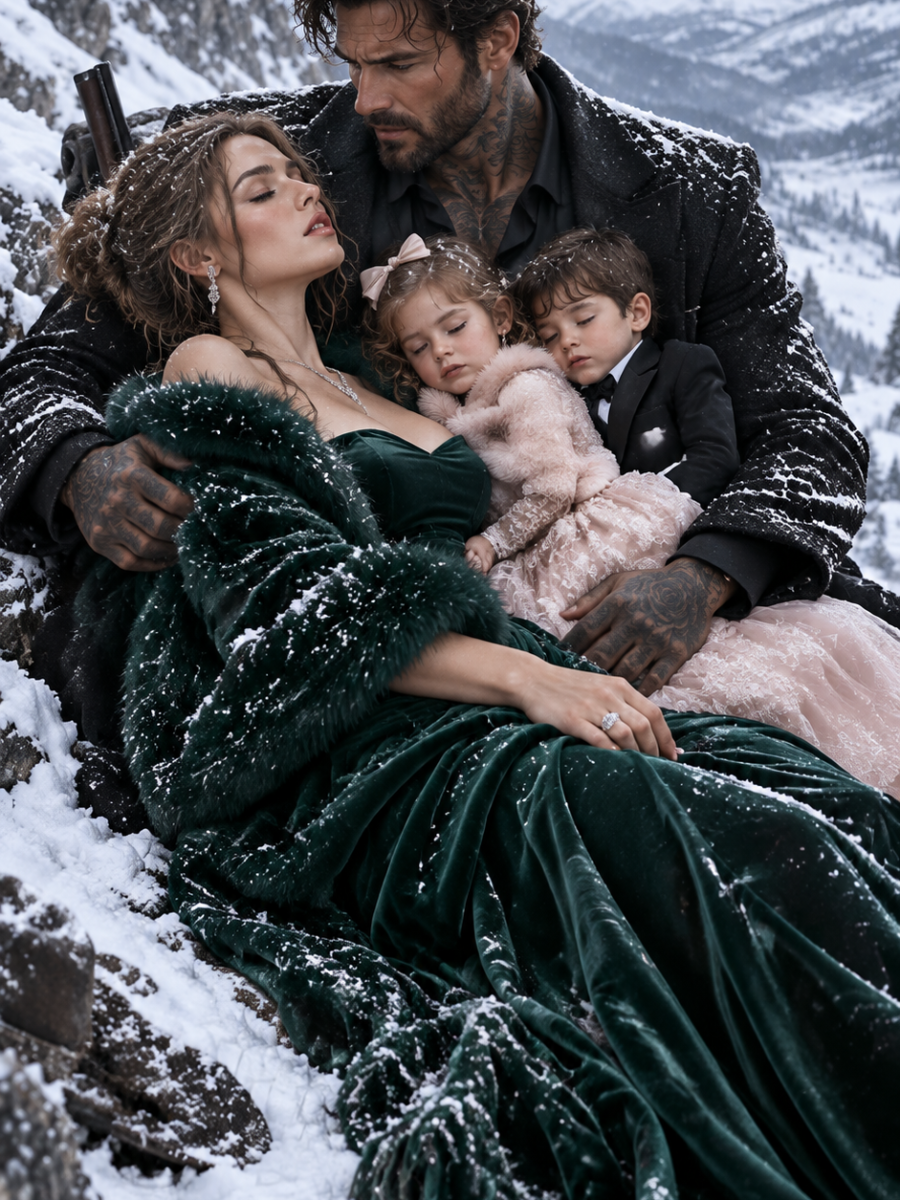
Cast out into a brutal mountain blizzard by a ruthless frontier family for giving birth to daughters instead of a male heir, a broken mother shielded her newborn twins with her dying breath—until a scarred, solitary trapper pulled them from the snow and took a deadly stand against the men who came to finish what they started.
Table of Contents
- Chapter 1: The Red Stains in the Drift
- Chapter 2: The Hearth and the Wooden Crate
- Chapter 3: The Fever and the Vigil
- Chapter 4: The Mark of Blackwood Ridge
- Chapter 5: Whispers in the Lower Valley
- Chapter 6: Shadows on the Timberline
- Chapter 7: The Reckoning on Whispering Bluff
- Chapter 8: The Price of Cowardice
- Chapter 9: The Thaw and a Mountain Vow
Chapter 1: The Red Stains in the Drift
Elias Vance found her where the ancient ponderosa pines surrendered to the howling emptiness of the frozen plateau.
At first glance through the swirling curtain of sleet, he mistook the shape for nothing more than a downed timber elk or a torn windbreak dropped by summer drovers. But the mountain did not leave square bundles in the snow, and the ravens circling low over the ridge did not wheel with such relentless hunger for rotting cedar.
Then the metallic stench of fresh blood cut through the bitter sub-zero bite of the wind.
Elias unslung his heavy Sharps rifle, his frost-crusted boots crunching into the knee-deep crust. As he drew near, the shape resolved into human misery. A woman lay half-buried on her side, curled into a desperate, rigid crescent against the white drifts. Her threadbare calico dress was torn to ribbons across her shoulders, soaked in dark crimson that had already frozen into jagged, glass-like ridges.
Someone had whipped her. Not in a fit of passing domestic fury, but with deliberate, ceremonial savagery—the measured cruelty of a town elder or a cattle baron delivering a public lesson before exiling the offender into the teeth of an oncoming blizzard.
Elias knelt in the drift, the ice biting through the buckskin of his trousers. His rough, calloused hand reached out to check the hollow beneath her jaw for a pulse. Her skin was like tallow, icy and gray, but beneath the rigid jawline, a faint, fluttering rhythm fought against oblivion.
Then, muffled beneath the curve of her ribs and the sodden rags of her wool shawl, something shifted.
A faint, breathy whimper reached his ears, so delicate it was nearly swallowed by the roar of the gale.
Elias pushed aside the stiff folds of frozen fabric. Tucked against the woman’s bare chest, warmed only by the final, dwindling embers of her failing body, lay two newborn infants. Their faces were flushed a dangerous, dusky blue, their tiny fists tucked beneath their chins. They were wrapped in scraps of flannel, smeared with the birth fluids and mother’s blood that had barely begun to dry before she was driven out into the wilderness.
Twin girls.
Elias felt a cold rage settle into the pit of his stomach. In the high valleys of the Colorado territory, winter had no pity, but men had even less. To whip a mother in the throes of labor and cast her out with newborn twins was not an exile—it was an execution designed to let the mountain do the butcher’s work.
“Hang on, little mother,” Elias murmured, his deep voice scraping like river gravel against the wind. “The cold doesn’t get you today.”
He did not hesitate. Dropping his mittens, Elias unbuttoned his massive shearling coat. Working with swift, deliberate precision honed by years of surviving timber wolves and flash freezes, he gently lifted the two infants from the dying woman’s chest and tucked them deep inside his own heavy wool shirt, pressing their freezing limbs directly against the furnace heat of his own skin. He buttoned the shearling over them, leaving only enough space beneath his chin for them to draw air.
Then he slid his thick forearms under the woman’s knees and shoulders. When he hoisted her into his arms, he was shocked by how light she was. She had starved long before the whips fell on her flesh. Her head rolled back limp against his shoulder, dark hair frozen in brittle tangles against his beard.
A wolf let out a long, mournful cry from the timberline three miles north.
Elias turned his back on the open wastes and began the punishing climb toward the ridge where his stone-and-timber cabin sat sheltered beneath the granite overhang of Whispering Bluff.
Chapter 2: The Hearth and the Wooden Crate
The two-mile trek back to the cabin was a war of endurance. Every step demanded that Elias drive his boots through waist-high drifts while shielding the precious bundle inside his coat from the stinging ice needles. The woman’s breathing grew shallower with every hundred yards, a wet rattle settling into her chest.
When he finally shoved his shoulder against the heavy oak door of his homestead, the latch dropped shut with a heavy thud, cutting off the shriek of the tempest.
Elias moved without pausing to catch his breath. The cabin was warm, insulated by thick sod and chinked spruce logs, the central hearth still glowing with the dense red embers of ironwood logs. He laid the unconscious woman gently upon his narrow rope bed, wrapping her instantly in heated wool blankets pulled from the iron rack near the chimney.
Unbuttoning his shearling, he reached inside his shirt. For one terrifying moment, neither baby stirred.
“Breathe, damn you,” Elias gritted out, his thick thumbs gently rubbing the small of their backs.
A thin, reedy squeak broke the silence, followed by a sudden, indignant wail. The second infant kicked her feet against the flannel, her cheeks flushing from dusk to a vibrant, living pink. Elias exhaled a ragged breath he hadn’t realized he was holding.
He fetched an empty pine apple crate from the storage corner, lining it with sheepskin pelts and clean flour sacks warmed by the hearth. He nestled the twins side by side in the crate, placing it directly within the circle of radiant heat, just far enough from the sparks.
Then he turned his full attention to their mother.
He set a kettle of snow to boil upon the iron crane and gathered clean strips of linen and a crock of dried yarrow, comfrey, and wintergreen salve he kept for bear scratches and axe bites. Carefully, using his skinning knife to slice away the blood-crusted calico without tearing her skin further, he exposed the woman’s back.
What he saw made his jaw clench until the muscles ached.
Seven horizontal lacerations scored the pale flesh from shoulder blade to hip, deep enough to have split the muscle. Around the cuts were yellowing bruises from earlier blows—blunt force delivered weeks before the lash. This was not the work of a bandit or a passing rogue. This was systematic, calculated punishment inflicted within the walls of a homestead.
Working with steady, patient hands, Elias bathed away the dirt and dried gore with warm pine-bark tea. The antiseptic stung, causing the unconscious woman to moan and thrash weakly on the straw tick, her fingers clawing at the rough quilt.
“Easy now,” Elias whispered, pressing a firm, warm palm against her temple. “You’re off the ridge. No one touches you in this valley.”
He dressed each wound with thick herbal salve, binding her torso securely with broad linen strips. When he turned her gently onto her side to spare the lacerations, he found a tin cup, melted some bear tallow and clean honey into warm spring water, and trickled it between her cracked, feverish lips.
She swallowed instinctively, a fragile reflex of life clinging to the rock.
Outside, the blizzard slammed into the timber walls, shaking the cedar rafters. But inside the cabin, for the first time in ten solitary years, Elias Vance listened to three distinct heartbeats keeping rhythm with the crackle of the hearth fire.
Chapter 3: The Fever and the Vigil
For three days and three nights, the mountain cabin hovered between life and death.
The blizzard stalled over the pass, locking the valley in an impenetrable white vault. Snow drifted up to the eaves on the windward side, muffling the world until the only reality was the smell of boiling broth, the scent of burning pine pitch, and the relentless heat of the fever consuming the woman on the cot.
She muttered in her delirium, her voice hoarse and broken.
“Arthur… please… not the children… they’re flesh and blood… you can’t take them to the creek…”
Elias sat by the hearth through the darkest hours, a rifle oil rag in one hand and an eyedropper made from a reed and a bladder in the other. When the infants woke every two hours with hungry, bird-like cries, Elias warmed goat’s milk he had drawn from the nanny goat sheltered in his attached lean-to, sweetened it with clover honey, and patiently fed them drop by drop until their bellies swelled round and they drifted back into warmth.
He was a giant of a man, scarred from a youth spent driving freight wagons and fighting timber wolves, his hands hardened by twenty years of felling spruce and skinning beaver. Yet he held those two-pound infants with the gentle caution of a man carrying blown glass through a rockslide.
On the fourth morning, the wind finally broke. Sunlight burst through the high clerestory window, casting a warm golden bar across the pine floor.
The woman’s fever had broken in the gray hours before dawn. Her skin, though terribly pale, was cool and moist.
Elias was sitting in his low hickory rocker, sharpening his skinning blade on an oilstone with rhythmic, soothing scrapes, when he heard the straw tick rustle.
He didn’t move suddenly. He kept his hands low and his voice level.
“Don’t try to sit up fast,” Elias said quietly. “Your ribs are taped and your back will tear if you jerk.”
A pair of wide, dark amber eyes stared at him from the pillow. Her gaze swept over his hulking frame—the broad shoulders, the salt-and-pepper beard, the scar across his cheekbone—and then shot wildly around the room until they landed on the pine crate sitting by the fire.
“My… my babies…” Her voice was a cracked rasp, full of raw terror.
“Sleeping,” Elias replied gently, pointing with the flat of his honing stone. “Both of them. Strong lungs. They took four ounces of warm milk an hour ago.”
A shudder ran through her entire frame. She pulled the wool blanket up to her chin, her knuckles white, and then the dam broke. Silent tears carved clean paths down her hollow cheeks, pooling on the rough linen pillow.
“Who are you?” she choked out.
“Elias Vance. You’re four miles west of Blackwood Ridge, up on high timber.” He laid the stone down on the table. “You’re safe here. Nobody comes up this bluff without me seeing them an hour before they reach the clearing.”
Chapter 4: The Mark of Blackwood Ridge
Her name was Nora Campbell.
As the days passed and the herbal teas restored her strength, she spoke in hesitant, quiet sentences, revealing the nightmare that had brought her to the brink of death.
She had been the wife of Arthur Campbell, the eldest son of Blackwood Ridge’s wealthiest cattle dynasty. The Campbells owned the general store, the saw mill, and the local magistrate’s ear. For three generations, the Campbell patriarchs had demanded sons to inherit the vast ranch lands sprawling across the lower plateau. Arthur’s father had made it clear: any woman who failed to bear a male heir was a useless mouth eating family profits.
When Nora went into labor during a harsh early winter frost, Arthur’s mother had stood over the bed, demanding a son. When Nora delivered twin girls instead, Arthur’s father had spit on the floorboards in fury.
“Two more burdens,” the old man had snarled. “Two more mouths that will never swing an axe or handle a branding iron.”
Arthur, weak-willed and desperate to prove his ruthlessness to his father, had made a horrific decree. He claimed Nora had brought a curse upon the homestead. Before the afterbirth had even been cleared, he dragged her from the bed, tied her wrists to the hitching post behind the barn, and laid seven stripes across her back with a leather bullwhip to “purge the shame.”
Then they loaded her into an open flatbed wagon, drove her out to the edge of the wilderness line, and dumped her in the snow with nothing but the clothes on her back and the newborn infants in her arms.
“Arthur told me to crawl toward the town or freeze in the drifts,” Nora whispered, her voice shaking with quiet devastation. “He said if I ever showed my face near Campbell land again, he’d bury all three of us under the manure pile.”
Elias listened, his expression impassive, but his gray eyes burned like cold iron in a forge. He knew the Campbell name. They were cattle barons who ran roughshod over small homesteaders, claiming water rights at gunpoint and bribing territorial marshals to look away from their arson.
“Arthur Campbell is a coward who strikes women because he knows a real man would take his teeth,” Elias said, his voice deadly calm.
“He won’t let this go,” Nora said, clutching the wooden side of the crate where baby Rose and baby Clara lay nestled together. “When the thaw comes, they will find out I didn’t die. Old man Campbell will never allow daughters carrying his blood to live in this valley where people might speak of his shame.”
Elias stood up, walking over to the wooden crate. He reached down with his massive index finger, and baby Clara’s tiny hand instantly curled around it, holding on with surprising strength.
Elias looked at Nora, his scarred jaw set like granite.
“You’ll live with me now,” he said simply. “This cabin has stood twenty years against winter and wolves. It will stand against Arthur Campbell.”
Chapter 5: Whispers in the Lower Valley
By late February, the snows began their slow retreat down the southern slopes.
Inside the Vance homestead, life took on a steady, rhythmic peace that neither Elias nor Nora had ever known. Nora’s wounds healed into silvery ridges across her shoulder blades, though her strength was slow to return. She took over the hearth, baking heavy sourdough loaves in the Dutch oven and mending Elias’s flannel shirts with neat, sturdy stitches.
The twin girls, whom Nora named Clara and Rose, grew round and vigorous. Their cries were no longer desperate wails of hunger, but cheerful babble that filled the corners of the log cabin. For Elias, who had lived in bitter isolation since the fever had taken his own brother fifteen years ago, the cabin felt alive in a way that frightened him with its sweetness.
He found himself lingering by the door before going out to check his trap lines, watching Nora hum an old Scottish lullaby while rocking the cradle he had carved for them from fragrant cedar planks.
“You work too hard for strangers, Mr. Vance,” Nora told him one evening, setting a bowl of steaming venison stew before him.
“You’re not strangers,” Elias replied gruffly, blowing across the broth. “You’re people under my roof. That makes you family as far as the mountain is concerned.”
Nora’s eyes softened, a faint blush warming her high cheekbones. “I never knew a man could be gentle without being weak.”
“A man who is cruel to the weak is never strong,” Elias said. “He’s just terrified of being exposed.”
Trouble arrived with the first pack train from the lower trading post.
Elias had ridden his sturdy roan gelding down to Murphy’s Creek to trade thirty prime beaver pelts for coffee, salt, and five bolts of warm flannel. While loading his pack horse behind the general store, he overheard two drovers talking by the livery corral.
“Campbell’s boys have been tearing up the north valley,” one drover said in a low voice. “Arthur’s gone mad. Someone told him they saw woodsmoke rising from the high bluff, and a trapper swore he heard a baby crying up near Vance’s ridge.”
“Why does Campbell care?” the other asked. “Didn’t his wife die of childbed fever months ago?”
“That’s the official story Campbell gave the circuit preacher,” the first drover sneered. “Truth is, Arthur wants to run for territorial council this spring. If folks find out he whipped his wife and left her to die with twins, he won’t get a single vote west of Denver. He’s offering fifty dollars gold to anyone who confirms she’s alive—and another fifty to make sure she isn’t.”
Elias tightened the cinch on his pack saddle until the leather groaned. He didn’t say a word. He swung onto his horse, turned the pack string around, and headed straight back up the mountain at a hard trot.
Chapter 6: Shadows on the Timberline
When Elias returned to the cabin, the sun was sinking behind the jagged peaks, painting the snowfields in bruised shades of purple and amber.
He led the horses into the sturdy log barn, unsaddled them swiftly, and walked into the house with his heavy leather cartridge belt slung over his shoulder.
Nora looked up from the cradle, instantly sensing the tension in his broad frame.
“They know,” she whispered, her hands freezing over the quilt.
“They suspect,” Elias corrected her calmly, leaning his Sharps rifle against the corner near the gun loop carved into the logs. “Campbell heard rumors of woodsmoke and baby cries. He’s got fifty dollars on your head to protect his political ambitions.”
Nora stood up, her face draining of color. “I will take the girls and leave, Elias. You have done too much already. If Arthur comes here with his riders, they will burn this cabin to the ground and hang you from the ridge pole.”
Elias walked across the room until he stood directly in front of her. At six feet four inches, he towered over her, but his hands rested lightly on her trembling shoulders.
“Listen to me, Nora,” he said, his voice rumbling deep and unwavering. “I spent five years in the territorial cavalry. I’ve fought Comanche raiders and Missouri bushwhackers. Four cowardly cattle drovers on Campbell’s payroll don’t scare me. And nobody—nobody—drags a woman or children out of this house.”
Nora looked up into his eyes, seeing no hesitation, only an ancient, unyielding fortress of protection. She leaned forward, pressing her forehead against the rough wool of his shirt, her shoulders trembling as she let out a breath she had held for months.
“Why?” she murmured against his chest. “Why risk everything for us?”
Elias raised a hand, his calloused thumb gently brushing away a stray tear from her cheek.
“Because the day I pulled you from that snowdrift was the first day in ten years I felt like a human being instead of a shadow on these rocks,” he said softly. “You and those girls brought warmth into this grave. I won’t let Campbell blow out that light.”
That night, Elias did not sleep in his bunk. He sat by the darkened window overlooking the only switchback trail that led up the bluff, his Sharps rifle across his knees and three boxes of heavy fifty-caliber brass cartridges lined up on the windowsill.
At three in the morning, a pebble clattered down the rocky slope below the cabin.
Through the moonlit mist, Elias saw four mounted silhouettes emerging from the black spruce shadows, their horses’ breath rising in pale plumes.
Chapter 7: The Reckoning on Whispering Bluff
Arthur Campbell had brought three of his father’s most ruthless ranch hands, men known across the territory for burning homestead cabins and shooting sheep on open range. They carried kerosene cans tied to their saddle horns and Winchester repeating carbines rested across their pommels.
Arthur halted his horse thirty yards from the cabin porch, peering through the frosted moonlight.
“Vance!” Arthur yelled, his voice echoing off the granite cliffs. “Step out on the porch! We know what you’ve got in there! Bring my property out, and we might leave you your hide!”
Silence hung heavy over the clearing. The only sound was the pawing of the horses against the packed snow.
“I’m talking to you, mountain trash!” Arthur shouted again, spurred by whiskey and arrogance. “The woman belongs to the Campbell family! She’s a thief who ran off with family property! Hand her and those two brats over, or we fire the roof and roast all four of you together!”
The sharp, heavy click of an iron hammer cocking back echoed like a gunshot from the shadows of the porch.
“Take one more step toward that door, Campbell,” Elias’s voice cut through the dark, “and I’ll take you out of that saddle before your boot hits the snow.”
One of the hired gun hands raised his Winchester, swinging the barrel toward the porch.
A deafening roar erupted from the cabin entryway. The fifty-caliber slug from Elias’s Sharps struck the hired gunman directly in the chest, lifting him clean out of his stirrups and throwing him backward into the deep drift.
The horses panicked, rearing and whinnying in terror.
“Kill him!” Arthur screamed, scrambling to dismount and use his horse as a shield. “Shoot him down!”
The remaining two gun hands opened fire, levering their Winchesters into the log siding. Splinters flew as lead slammed into the two-foot spruce timbers, but Elias had already shifted behind the stone corner of the chimney.
Working with terrifying speed and calm born of veteran instinct, Elias worked the lever of his heavy rifle. He stepped out just enough to acquire his target. His second shot broke the shoulder of the second ranch hand, sending his rifle flying into the snow with a scream of agony.
The third gunman, seeing two companions drop in under twenty seconds, threw down his gun and bolted on foot into the timberline, vanishing into the darkness like a whipped coyote.
Arthur Campbell was left cowering behind his trembling mare, clutching a silver-plated Colt revolver with shaking hands.
“Don’t shoot!” Arthur shrieked, his arrogant bravado evaporating into whimpering cowardice. “I’m a Campbell! You can’t murder a Campbell in cold blood!”
Elias stepped down from the porch, his massive frame silhouetted against the moonlight, smoke curling lazily from the muzzle of his rifle.
“I’m not murdering anyone, Campbell,” Elias growled, marching forward until he grabbed Arthur by the collar of his sheepskin coat and yanked him into the open air.
Chapter 8: The Price of Cowardice
Elias dragged Arthur Campbell across the frozen yard like a sack of oats, throwing him violently onto his back in the center of the snowy clearing.
The two wounded ranch hands groaned in the drifts, unable to raise a weapon. Arthur scrambled backward on his elbows, staring up at Elias in sheer horror.
“What do you want?” Arthur pleaded, his teeth chattering from terror and cold. “Money? I can give you five hundred dollars! A thousand! Just let me ride out of here!”
The cabin door opened slowly.
Nora stepped out onto the porch. She was wrapped in Elias’s dark wool greatcoat, her chin lifted high, her eyes clear and unyielding. Behind her, through the warm glow of the open doorway, the soft, rhythmic gurgling of baby Clara and baby Rose floated into the night air.
Arthur stared at her as if looking at a ghost returned from the grave.
“Nora…” Arthur breathed. “Nora, tell him! You’re my wife! We took vows before God!”
Nora walked down the wooden steps until she stood beside Elias. She looked down at the man who had ordered her whipped and left to freeze with her newborn daughters.
“You broke those vows the moment you put the lash to my back, Arthur,” Nora said, her voice ringing cold and steady across the valley. “You told me if I ever stepped on Campbell land again, you’d bury me under manure. Well, you stepped onto Vance land tonight. And you are looking at the man who will bury you.”
Arthur turned to Elias, trembling uncontrollably. “Please… Vance… have mercy…”
Elias reached down, seized Arthur’s revolver from the snow, and expertly snapped the cylinder, shaking all six lead cartridges out into the powder. He hurled the empty frame into the dark woods.
“I won’t shoot a dog who grovels,” Elias said coldly. “Here is what you’re going to do, Campbell.”
Elias grabbed Arthur by the coat and hauled him up to his boots, his face inches from the trembling rancher.
“You’re going to load your two bleeding hands onto their horses. You’re going to ride back down to the county seat tonight. By noon tomorrow, you will file deed papers transferring the five hundred acres of bottomland timber at Eagle Creek into the names of Clara and Rose Campbell as their legal inheritance.”
Arthur choked. “My father will never agree—”
Elias tightened his grip on Arthur’s collar until the man’s eyes bulged.
“Your father will agree, or I will ride down into Blackwood Ridge on Sunday morning with Nora, carrying her scars and those two babies straight into the territorial courthouse during the governor’s rally. The whole county will see what kind of men the Campbells are. Your political career will die, your family will be shunned, and the federal marshal will have you behind bars for attempted murder before sundown.”
Arthur swallowed hard, the cold realization crushing his remaining pride.
“Eagle Creek… five hundred acres,” Arthur gasped. “I’ll do it. Just let us go.”
“If I ever see your face, or the face of any Campbell rider, within ten miles of this bluff,” Elias whispered in a tone that promised death, “you won’t get a chance to beg. Now get off my mountain.”
Chapter 9: The Thaw and a Mountain Vow
By late April, the last drifts on Whispering Bluff surrendered to the spring sun.
The mountain slopes burst into carpets of wild blue columbines and golden arnica. Melting runoff rushed through the gorges in singing torrents, carrying away the frozen silence of the long winter.
In town, Arthur Campbell kept his word. Terror of exposure had proven far more powerful than greed. The legal deed transferring five hundred acres of fertile valley land to Clara and Rose Campbell had been signed, sealed by the territorial magistrate, and delivered by courier to the cabin porch three weeks after the shootout. Arthur had quietly withdrawn his candidacy for territorial council and relocated to Kansas, unable to face the whispers that had already begun circulating among the homesteaders.
On the porch of the mountain homestead, two cedar rockers sat side by side beneath the eaves.
Clara and Rose, now five months old, laughed in the warm afternoon breeze, batting their small hands at the sunbeams filtering through the pine boughs. They were thriving, with rosy cheeks, bright dark eyes, and healthy, ringing laughs that brought a constant smile to Nora’s face.
Elias walked out of the barn carrying an armload of fresh-cut cedar shingles to patch the spring roof. He set the bundle down, wiped the sweat from his brow with the back of his forearm, and looked at Nora.
She was wearing a simple, elegant dress of lilac gingham, her dark hair gathered with a leather ribbon. The shadows of fear that had haunted her eyes when he found her half-dead in the snow were completely gone, replaced by a radiant, quiet strength.
“The roof will hold for ten years once I lay these new shingles,” Elias said, leaning against the timber post.
Nora looked up from her mending, a teasing warmth in her eyes. “Only ten years, Mr. Vance? I thought mountain men built things to last forever.”
Elias held her gaze. For months, they had shared meals, shared night vigils over the cradles, and shared the quiet peace of the wilderness. But now, in the brilliant light of spring, what lay between them could no longer be contained in unspoken gratitude.
Elias stepped closer, reaching into the pocket of his buckskin vest. He drew out a small, simple band of carved mountain silver, forged from a nugget he had washed from the creekbed years ago.
“I’m ready to make it forever, Nora,” Elias said, his voice dropping low and tender. “If you’ll have a scarred old trapper who doesn’t know much about polite society, but promises that no harm will ever reach you or our girls as long as he draws breath.”
Nora’s breath caught in her throat. She set her mending aside and stood up, stepping close until her hands rested gently against his broad chest, right over the fierce, steady beat of his heart.
“You’ve been their father since the hour you carried them inside your coat, Elias,” she whispered, tears of joy shining in her eyes. “And you’ve had my heart since the moment I opened my eyes and saw you watching over us.”
Elias slipped the silver ring onto her finger, his rough hand closing over hers. He leaned down, and when their lips met in the fragrant mountain breeze, the long winter of their pasts finally thawed into the promise of an unbroken future.
Across Whispering Bluff, the eagles soared high over the pines, watching over a home that had conquered both the storm and the cruelty of men.