In This Story
Chapter One
Thirty Empty Chairs
“Why are you sitting all alone on your birthday?”
Rowan Hale looked up. Thirty-eight candles were dying on the untouched cake before him. Thirty chairs surrounded the long table inside Boston’s Sterling Court Hotel. Thirty people had promised to come. Not one had shown.
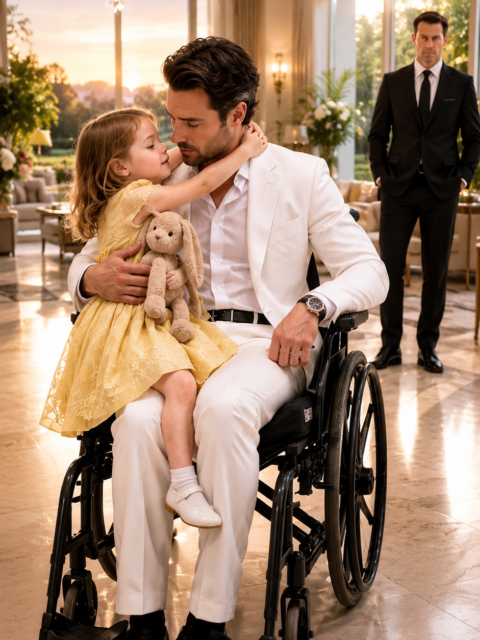
Sixteen months earlier, before a bullet shattered his spine, men had called Rowan the Frost. He controlled docks, trucking routes, security companies, gambling rooms, and enough secrets to make powerful men nervous. Now he sat in a wheelchair while those same men tested whether a king who could no longer stand was still worth fearing.
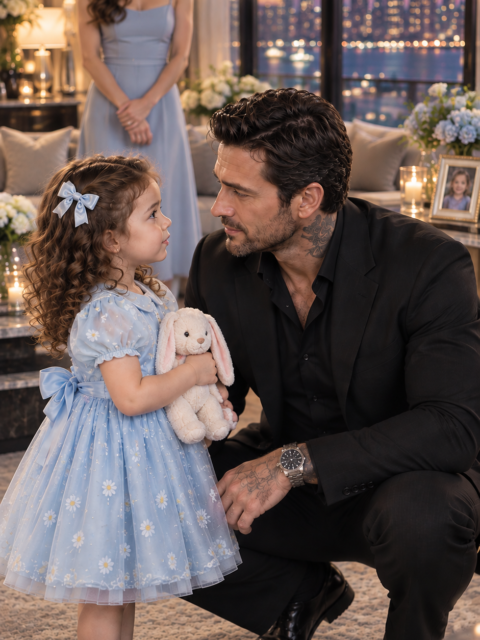
Then a six-year-old girl in pink sneakers walked into the room. She carried a bruised white flower. Finley, Rowan’s oldest guard, moved toward her. Rowan raised one hand. The girl stopped beside his wheelchair.
“It’s your birthday,” she said, offering him the flower. “You’re supposed to have flowers.”
Rowan stared at her. “What’s your name?”
“Piper.” She glanced around at the empty chairs. “Where is everybody?”
“They decided not to come.”
Piper leaned closer. “That’s rude.”
Something escaped Rowan’s throat that almost sounded like laughter.
Chapter Two
The Threat
Then the door flew open. “Piper!” A young waitress rushed inside and pulled the child toward her. Her name tag read MAEVE. “I’m so sorry, sir. She slipped away from the staff room.”
“It’s all right.”
“We’ll leave immediately.”
“No.” Maeve froze. Rowan looked at Piper. “Let her stay.”
Piper climbed onto the chair beside him and pushed her wilted flower directly into the frosting. “There. Now you have to make a wish.”
For the first time in sixteen months, Rowan didn’t wish to walk again. He wished the room didn’t feel so empty.
He cut three pieces of cake. For twenty minutes, Piper talked about her stuffed rabbit while Maeve nervously brushed crumbs from her daughter’s dress. Somehow, the enormous dining room stopped feeling like a monument to betrayal.
When they finally left, Piper waved. “Happy birthday, Uncle Rowan!”
The door closed. Rowan was still looking at the crooked flower when his phone illuminated.
UNKNOWN NUMBER.
Tonight was only the beginning. Step down quietly, or the next chair left empty will be yours.
Chapter Three
The Envelope
Finley read the message over his shoulder. “Say the word.”
Rowan looked at the thirty abandoned chairs. “No.” His voice had changed. “Find out who ordered them not to come.”
Finley reached for his phone. Then stopped. His eyes had landed on something beneath Piper’s abandoned chair. A small envelope.
Rowan wheeled closer. His name was written across the front. Not ROWAN. A childhood nickname almost nobody alive still knew.
Ro.
Finley’s face hardened. “Boss… where did that little girl get this?”
Rowan opened the envelope. Inside was an old photograph. Maeve stood in the background, much younger. Beside her was the man Rowan had watched die sixteen months ago. The man everyone believed had fired the bullet that put him in the wheelchair.
And in his arms was a newborn baby. Piper.
Chapter Four
Uncle Rowan
Rowan sat with the photograph for a long time after Finley finally left to run down the guest list, his mind circling back, over and over, to the word Piper had used on her way out the door. Uncle. Not Mr. Hale. Not sir. Uncle Rowan, said with the easy, unquestioning familiarity of a child repeating something she’d been told many times before, by someone she trusted completely.
He turned the photograph over. No date, no note, nothing but the image itself — a young man, arm around a younger Maeve, cradling an infant with the particular careful terror new fathers wear on their faces, standing in front of a rowhouse Rowan recognized instantly despite not having thought about it in years. Dorchester. The street he’d grown up on.
The man in the photograph was Dominic Reyes.
Rowan hadn’t allowed himself to think Dominic’s name in months, not since the night sixteen months earlier when his own security team had confirmed, with what had seemed at the time like unimpeachable evidence, that Dominic had been the shooter — a dockworker with gambling debts and a grudge, found dead in an apparent act of retaliation before Rowan had even fully regained consciousness in the hospital.
He’d grieved that story for sixteen months. Grieved it the particular, complicated way you grieve someone you’re also furious at.
And now a six-year-old girl who called him Uncle Rowan had just placed Dominic’s daughter directly in front of him, along with proof that whoever had orchestrated the shooting had also orchestrated the story Rowan had spent sixteen months believing.
Chapter Five
Dominic Reyes
Dominic and Rowan had grown up two doors apart on the same Dorchester street, inseparable from the time they were old enough to walk to school together, close enough that Dominic had been the only person outside Rowan’s own family who’d ever been allowed to call him Ro without earning a sharp look for the presumption.
Their paths had diverged in their twenties, the way paths sometimes do — Rowan rising through the organization his father had left him, Dominic staying independent, working the docks honestly, wanting nothing to do with the world Rowan had inherited despite the friendship between them never fully breaking. Rowan had, over the years, quietly made sure Dominic’s dock work stayed steady, stayed safe from the kind of trouble that found men who worked those docks without protection. It was the closest either of them ever came to acknowledging what Rowan had actually become.
“He wasn’t the shooter,” Rowan told Finley flatly, once his old guard returned from a fruitless afternoon confirming that all thirty invited guests had, independently, received calls instructing them their attendance “wasn’t necessary this year.” “I need you to understand that before we go any further. Whatever the evidence said sixteen months ago, I’m no longer certain any of it was real.”
Finley, who had been with Rowan’s family for over twenty years, looked troubled in a way Rowan rarely saw from him. “The evidence was solid, boss. The gun. The gambling debts. Witnesses who placed him near the dock that night.”
“Evidence can be built,” Rowan said quietly, “by anyone patient enough to plan it sixteen months in advance. I want to know who built it, and I want to start with finding out exactly how much Maeve actually knows.
Chapter Six
What Maeve Knew
Maeve agreed to meet him alone, two days later, in a diner considerably less grand than the Sterling Court, choosing the location herself with a care that told Rowan she’d been thinking carefully about exposure and safety for longer than the past two days alone.
“I’ve worked at that hotel for eight months,” she said, both hands wrapped around a coffee cup she didn’t drink from, an echo of a gesture Rowan had seen too many frightened people make in his lifetime to miss its significance. “I took the job specifically because I knew you held events there. I’ve been waiting for the right moment to get close enough to reach you safely for almost that entire time.”
“Why not simply approach me directly?”
“Because I didn’t know who around you could be trusted,” Maeve said. “Dominic told me, before he died, that if anything happened to him, I shouldn’t go to anyone in your organization directly — that I should find a way to reach you personally, and only you, because he didn’t know how far up the betrayal actually went.”
“He knew he was in danger.”
“He knew someone was setting him up for something,” Maeve said. “He didn’t know what, exactly, or why, until almost the very end. He came home three days before he died and told me he’d found out someone in your organization was moving money in ways that didn’t match the official books — skimming, he thought at first, until he realized the amounts were too large and too carefully hidden to be simple theft. He said it looked like someone was quietly building resources for something bigger.”
“Did he tell you who?” Rowan asked, already dreading an answer he suspected he already knew.
Chapter Seven
The Frame
“He never got a name,” Maeve said. “Just patterns. Shipments that didn’t match manifests. Payments routed through accounts that didn’t officially exist. He was going to bring it to you directly, the week he died. He told me that the night before — that he’d finally gathered enough to be sure it wasn’t nothing, and that he trusted you enough, even after everything you’d become, to believe you’d want to know.”
“He never got the chance.”
“He was dead four days later,” Maeve said. “Shot in an alley two blocks from the docks, in what the police report called a dispute over gambling debts he didn’t actually have. I know he didn’t have them, because I paid our bills every month for six years. There was no gambling debt. There was never a gun registered to him before the one that supposedly killed you turned up with his fingerprints on it.”
Rowan sat with that for a long moment, the shape of it settling into something considerably colder than grief. “Someone needed a shooter who was already dead by the time anyone thought to question the story too closely.”
“That’s what I’ve believed for sixteen months,” Maeve said. “I kept the photograph, and everything else Dominic had gathered before he died, because I was too afraid to bring it to anyone in your world directly. I didn’t know if you’d believe me. I didn’t know if you’d even want to know the truth, once you were the one sitting in that chair because of it.”
“Everything else he gathered,” Rowan repeated. “You have more than the photograph.”
Chapter Eight
Callum
Maeve’s small storage unit, rented under her maiden name specifically to keep it separate from anything traceable back to her, contained a battered folder of financial records Dominic had copied by hand from shipping logs he’d had no official reason to access — dates, amounts, and a recurring set of account numbers that meant nothing to Maeve, but meant everything to the forensic accountant Rowan quietly brought in the following week.
The accounts traced back, through three careful layers of obfuscation, to Callum Weathers — Rowan’s own second-in-command for the past nine years, the man who had personally overseen the internal investigation into the shooting sixteen months earlier, the man who had presented Rowan, still recovering in a hospital bed, with the evidence implicating Dominic in the first place.
“He’s been skimming for over two years,” the accountant reported. “Small enough at first to stay beneath notice, then considerably larger in the months leading up to the shooting — consistent with someone building a war chest for something they expected to cost significantly more than routine operations.”
Finley, reviewing the same documents in Rowan’s study late into the night, looked as though he’d aged a decade in a single conversation. “Nine years, boss. I trained that man myself. I vouched for him.”
“So did I,” Rowan said quietly. “Which means he understood exactly how much damage he could do once he had access to everything I trusted him with — including, apparently, the ability to convince an entire organization that my oldest friend had tried to kill me.”
Chapter Nine
The Thirty Chairs
The thirty empty chairs, once Rowan understood who he was actually looking for, resolved into a pattern that had been sitting in plain sight the entire evening. Callum had spent sixteen months positioning himself as the steady hand keeping the organization together while Rowan recovered — visiting the same thirty people who’d have normally filled that dining room, quietly suggesting, in careful, deniable language, that perhaps a boss who could no longer stand wasn’t the leader this organization needed going forward.
The birthday dinner had been Callum’s test, orchestrated with the same patience he’d apparently applied to everything else: watch how many people were still willing to show up for a wounded king, and use the answer to gauge exactly how ready the rest of the organization was for what he intended to do next.
“He needed you humiliated publicly before he made his real move,” Finley said, once they’d laid the full timeline out together. “Thirty empty chairs sends a message to everyone watching, whether or not you go quietly. It tells the whole organization the tide’s already turned.”
“And the threat that followed,” Rowan said, “was meant to push me toward stepping down before anyone had to make it messier than a simple resignation.”
“Except he didn’t count on a six-year-old girl walking through that door,” Finley said, “or on Maeve finally deciding tonight was the night she was done being afraid.”
Chapter Ten
The Trap
Rowan didn’t confront Callum immediately. Sixteen months of watching his own organization test his weakness had taught him, if nothing else, exactly how much patience mattered when the alternative was moving too soon and giving a cornered, resourceful enemy time to cover his tracks a second time.
Instead, he and Finley spent two careful weeks building a case airtight enough that Callum’s inevitable denials wouldn’t matter — cross-referencing the financial records against shipping manifests, quietly interviewing two of Callum’s own lieutenants who, once shown the evidence and offered protection, admitted they’d been recruited months earlier for “a transition” they’d been told was coming regardless of what Rowan wanted.
The trap itself was simple, once the evidence was solid: a private meeting, called under the pretense of discussing Rowan’s “reduced role” going forward, exactly the conversation Callum had spent sixteen months maneuvering toward. Callum arrived expecting a negotiation. He found, instead, Finley, two of his own now-cooperating lieutenants, and Rowan holding the folder Dominic had died trying to deliver.
“You’re going to want to see this before you say anything you can’t take back,” Rowan said, sliding the folder across the table.
Callum’s composure held for almost thirty full seconds before the first genuine crack appeared — long enough, Rowan noted with a coldness he hadn’t felt in years, for him to understand exactly how much practice his second-in-command had gotten lying to his face over the past sixteen months.
Chapter Eleven
The Reckoning
Callum didn’t bother denying the financial trail once he understood how thoroughly it had been documented. What he offered instead, in a voice that had lost every trace of the steady, reasonable tone Rowan had trusted for nine years, was justification.
“You’d stopped being able to lead this organization the moment that bullet hit you,” he said. “I watched grown men lose respect for you in real time, watched territory we’d held for a decade start slipping because our own people no longer believed you could protect it. Someone needed to be ready to step in before the whole thing collapsed. I was protecting what you built.”
“By having me shot,” Rowan said flatly.
Something in Callum’s expression flickered — the first genuine hesitation Rowan had seen from him. “That was never supposed to happen the way it did. I needed you weakened, sidelined, not dead. Dominic was never supposed to be the one who took the fall for it either, if I’m being honest. He got too close to the financial records by accident, and once he did, he became a loose end I hadn’t planned for.”
“So you killed him and built a story around his corpse.”
Callum didn’t answer that directly, which Rowan understood, in the end, was answer enough.
With the cooperating lieutenants’ testimony, the financial trail, and Maeve’s evidence combined, Rowan didn’t need to resolve this the way his father’s generation might have. He handed the complete case to contacts inside the district attorney’s office his organization had quietly cultivated for exactly this kind of leverage, ensuring Callum faced consequences considerably more permanent, and considerably better documented, than anything achieved through the old ways.
Callum was convicted the following year on charges spanning fraud, conspiracy, and accessory to murder — the truth of Dominic Reyes’s innocence entered permanently into public record for the first time in over two years.
Chapter Twelve
What Remained
Rowan cleared Dominic’s name publicly, in the only way that mattered to the people who’d actually known him — a quiet, dignified correction to the official record, a headstone finally allowed to say what had actually happened rather than the story Callum had built to cover his own tracks, and a fund established in Dominic’s name to support dockworkers’ families, the kind of honest work Dominic had spent his whole life proud of despite his oldest friend’s very different path.
Maeve accepted, cautiously at first and then with growing trust, Rowan’s support — not charity, he made clear, but the debt of a man who understood exactly how much his oldest friend had sacrificed trying to protect him, and exactly how long Dominic’s widow had carried that sacrifice alone out of fear nobody would believe her.
Piper, blessedly unaware of most of what her small, fearless gesture had actually set in motion, simply got to keep calling him Uncle Rowan — a title that had started, Maeve eventually admitted, as something Dominic himself had told her to teach their daughter someday, in case he never got the chance to properly reintroduce two of the most important people in his life to each other himself.
Rowan rebuilt his organization in the months that followed, more carefully this time, with considerably less blind trust extended to any single person no matter how many years they’d earned it. But he kept one tradition from that first, terrible birthday: an empty chair, left permanently at the head of every gathering after that, not as a monument to betrayal, but as a reminder — of a friend who’d died protecting the truth, and of a little girl in pink sneakers who’d walked into an empty room and refused to let it stay that way.