A Gripping Frontier Romance of Unyielding Loyalty, Land Defense, and the Woman Who Defied an Outlaw Gang for Love
Chapter 1: The Lonely Cabin in Sweetwater Valley
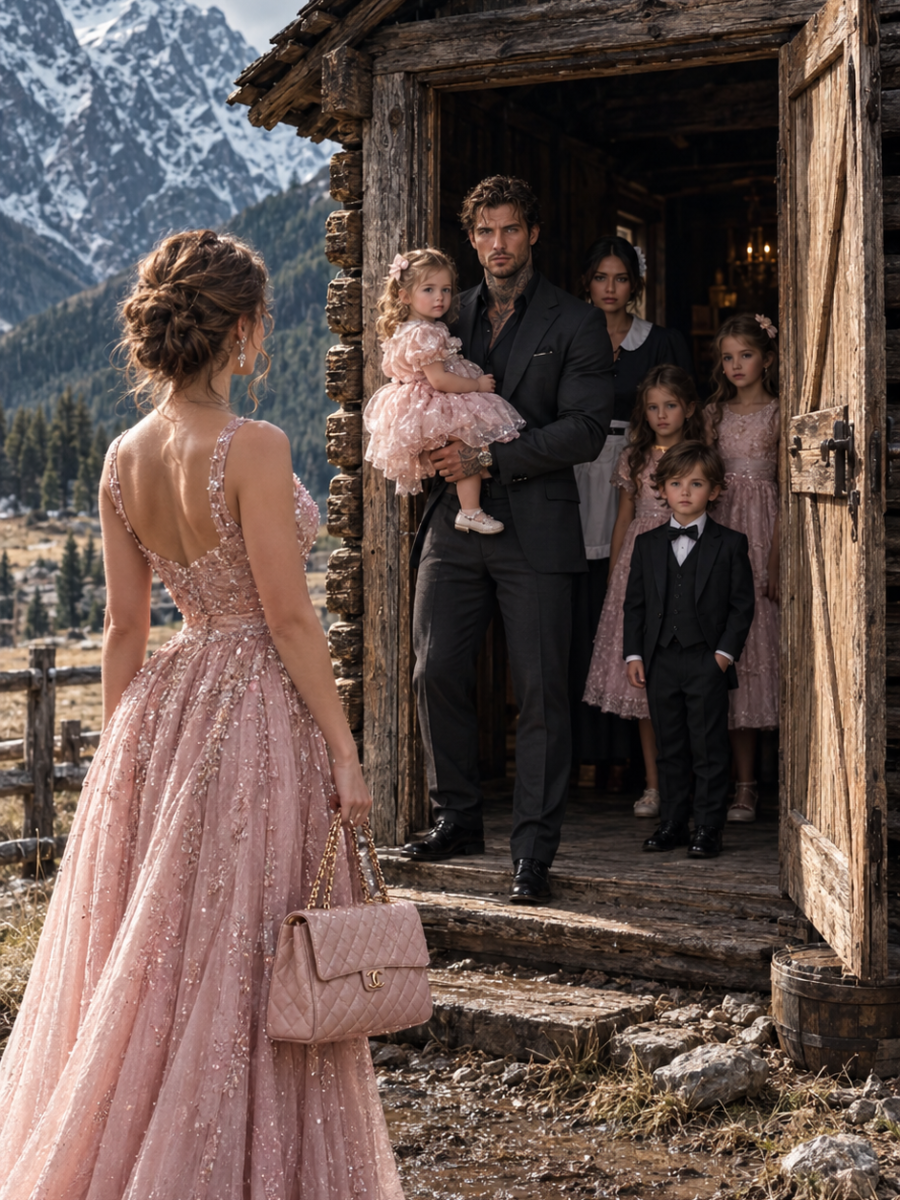
Norah Prescott had crossed nine days of unforgiving mountain country to marry a complete stranger. She had endured the jolting rattle of the Union Pacific railway from Cincinnati, followed by two punishing days on an open freight stage across the wind-swept plains of Wyoming Territory. Her dark wool traveling dress was powdered with grey alkaline dust, her carpetbag was frayed at the edges, and her hands were numb with cold when the stage driver dropped her before a lonely log cabin nestled in the foothills of Sweetwater Valley on April 14, 1876.
She knocked twice on the heavy timber door. The sound echoed through the valley, answered only by the mournful sigh of mountain wind through the lodgepole pines. During her long trek west, Norah had imagined what Silas Hol would be like. Perhaps he would be nervous and awkward. Perhaps he would be a rugged, bearded mountain titan, rough around the edges but possessing the gentle dignity reflected in his carefully penned letters to the eastern matrimonial bureau.
She had prepared herself for a primitive cabin, an awkward meeting, even sharp disappointment. She had not prepared herself for the heavy wooden latch lifting to reveal a sixteen-year-old boy balancing an eleven-month-old baby girl against his hip.
And behind him, arranged in an anxious, silent staircase from tallest to smallest in the dim kitchen, stood six more children.
Norah froze on the threshold, her fingers tightening around the handle of her carpetbag. Seven children. They wore patched homespun shirts and oversized overalls, their faces pale and smudged with soot, their hair uncombed. They stared at her with massive, watchful eyes, like little wild creatures cornered in a cave.
The sixteen-year-old boy possessed his father’s square jaw and broad shoulders, but his eyes carried an exhaustion that belonged to a grown man who had carried the world on his shoulders for far too long.
“You must be Norah,” the boy said in a hoarse, guarded whisper.
“I am,” Norah answered softly, her heart aching at the sight.
The boy looked down at the muddy floorboards, shifting the baby’s weight. “Pa’s not here.”
The Wyoming wind swept across the porch, tugging at Norah’s woolen skirts. Silas Hol’s third letter was still folded carefully inside her leather reticule. In it, Silas had described his sturdy homestead, his mountain timber rights, and his three young children. Three. Not seven.
“My name is Eli,” the boy continued, his voice tight with defensive pride. “You can step inside if you want out of the cold. But there’s no room for you in this house.”
Norah looked past him into the gloom. The iron stove was cold. Unwashed tin plates were stacked high on the rough pine table. A split chair leaned against the stone chimney, its missing leg replaced by a cedar log. In the corner, a pile of rough burlap sacks and thin quilts served as a collective bed for three little boys. The baby in Eli’s arms rested her cheek against his worn collar, her breathing shallow, her cheeks flushed with hunger.
“I can see that,” Norah said gently. Then she lifted her chin, meeting the boy’s fierce, protective glare with steady warmth. “Can I come in anyway?”
Chapter 2: The Cold Stove and the First Warm Biscuit
The children retreated slowly as Norah crossed the threshold, their bare feet whispering against the rough floorboards. She had barely taken three steps into the center of the kitchen when the smallest boy—no more than four years old, wearing an oversized flannel shirt with sleeves rolled up past his elbows—broke away from the group.
He marched straight up to Norah’s skirts, gripped the dark wool fabric in both hands, and tilted his tear-stained face upward. “Are you going to be our new mama?”
“Tom, hush!” Eli snapped sharply from the table, his voice cracking with embarrassment. “Leave the lady alone.”
The question hung in the cold, silent air like a ringing bell. Norah looked down into little Tom’s enormous hazel eyes, feeling a profound pang of sorrow deep in her soul. She had traveled hundreds of miles seeking a marriage and a partnership. Instead, she had walked directly into a family standing on the precipice of absolute ruin.
Slowly, deliberately, Norah set her carpetbag on the floor. She unpinned her travelling bonnet, folded her wool shawl over the back of the intact rocking chair, and knelt down in front of the four-year-old boy. With the corner of her clean handkerchief, she gently wiped away the soot from his cheek.
“My name is Norah, little one,” she said with a soothing, reassuring voice. Then she stood up and looked across the room at Eli. “What did you children have for breakfast this morning?”
Eli’s jaw tightened. He looked at the floorboards for a long second, his throat bobbing as he swallowed hard. “Nothing yet. We finished the last dried beans yesterday morning.”
Norah’s breath caught in her throat. Seven children. No breakfast. A cold stove. A missing father. Panic was a luxury they could not afford.
“Eli,” Norah said, her voice instantly shifting into practical, authoritative calm. “Take the boys out to the woodpile. I need dry cedar kindling and heavy split pine. Right now.”
Eli blinked, startled by the commanding firmness in her voice. He nodded once, handed the eleven-month-old baby to fourteen-year-old Ruth, and hurried out the back door with ten-year-old Caleb and eight-year-old Micah trailing at his heels.
Norah rolled her sleeves past her elbows and began searching the cupboards. She found half a tin of coarse white flour, a jar of rendered lard, salt, and half a bucket of clear well water. Within ten minutes, Eli returned with an armload of dry resinous pine. Sparks caught in the hearth, and within fifteen minutes, the heavy cast-iron stove was radiating deep, crackling warmth throughout the chilly cabin.
With four-year-old Tom clinging stubbornly to her left apron string, Norah began working the dough. She kneaded it with deft, practiced hands, cutting twelve thick buttermilk biscuits and sliding the cast-iron skillet into the roaring oven. From her own carpetbag, she produced a jar of wild blackberry preserves and a tin of dried peppermint tea she had carried all the way from Ohio.
When the rich, buttery fragrance of golden baking biscuits filled the room, the seven children gathered around the pine table like moths drawn to a lantern. When Norah pulled the smoking skillet from the stove and split the steaming biscuits open, spreading dark berry preserves over the fluffy crumb, little Tom let out a breathless whimper of sheer joy.
They ate in complete, reverent silence. And as Norah watched them chew with tears glittering in their eyes, she knew she was not going anywhere.
Chapter 3: The Secret in the Mountain Letter
By late afternoon, the cabin had been transformed. The dishes were scrubbed clean with boiling water and lye soap, the hearth fire burned bright and warm, and baby Clara was sleeping peacefully in a laundry basket lined with clean flannel blankets. Six-year-old Hannah and four-year-old Tom were fast asleep under a heavy wool quilt, their bellies full for the first time in weeks.
Eli sat across the scarred pine table from Norah, his elbows resting on the wood, a steaming mug of peppermint tea between his calloused hands. The defensive hostility had drained from his posture, replaced by a raw, desperate vulnerability.
“Why did Silas write that he only had three children?” Norah asked quietly, pulling the folded letter from her pocket and laying it flat on the wood.
Eli stared at his father’s handwriting, his eyes glistening in the firelight. “Because three mail-order brides came to this valley last year, Miss Norah. When they saw seven young ones and a working cabin that needed a woman from dawn to dusk, every single one of them got back on the stagecoach before the horses could drink from the trough.”
He swallowed hard, rubbing his eyes with his sleeve. “Pa didn’t lie to deceive you. He was terrified. Mama passed two winters ago when little Clara was born. Pa tried to do it all—chopping timber, clearing five acres of rocky soil, hunting meat, washing clothes, keeping us alive. He was working nineteen hours a day until he was coughing blood. The preacher in town told him he needed a wife, but every letter he sent mentioning seven kids went unanswered.”
“Where is he, Eli?” Norah asked, leaning forward.
Eli’s hands tightened around his tin cup until his knuckles went pale. “Ten days ago, a timber trader named Lucas Vance came up the mountain. He runs the valley trading post and holds a three-hundred-dollar mortgage against our homestead. Vance told Pa that if the debt wasn’t paid by the end of April, he was seizing the land, the cabin, and the water rights.”
A heavy silence fell over the room.
“A timber company on the north face of Black Bear Ridge offered sixty dollars a week for experienced high-country loggers to clear old-growth spruce through the snow,” Eli whispered, a tear finally escaping and tracing a path through the dust on his cheek. “It’s suicidal work in April. The snowpack is rotting, and mudslides happen every spring. Pa packed his tools and told me he had to earn the mortgage money so you’d have a real home when you arrived. He said he’d be back by the thirteenth.”
Eli looked directly into Norah’s eyes, his young voice trembling with agony. “Yesterday was the thirteenth, Miss Norah. A blizzard hit the high pass three nights ago. Pa hasn’t come home.”
Chapter 4: The Trading Post Baron’s Eviction Notice
The following morning brought no sign of Silas Hol, but it brought something far worse. At ten o’clock, the sound of heavy carriage wheels crunched across the frozen gravel outside the cabin.
Norah stepped out onto the porch, wiping flour from her hands on her apron. Standing by the pasture rail was Lucas Vance, the wealthiest merchant and land speculator in Sweetwater Valley. Dressed in a tailored black broadcloth coat, a beaver-skin hat, and polished riding boots, he looked upon the weathered homestead with greedy satisfaction. Behind him sat the county sheriff in an open buggy.
“Well, well,” Vance said, stepping onto the porch with a patronizing smirk, tipping his brim with theatrical courtesy. “You must be the mail-order bride from Ohio. I must say, Silas Hol possessed considerable gall inviting an innocent woman to a homestead on the brink of foreclosure.”
Norah stood tall, her spine straight as an oak beam, blocking the doorway so the children inside remained shielded from view. “State your business, sir.”
Vance pulled a legal notice stamped with the red wax seal of the Sweetwater County Court from his breast pocket. “Official business, ma’am. Silas Hol owes the Sweetwater Mercantile Company three hundred and forty-two dollars in chattel mortgages and timber liens. The debt matures on April twenty-first. In accordance with territorial statute, I have posted formal notice of default.”
He leaned against the railing, his eyes gleaming with malicious confidence. “Silas went up Black Bear Ridge two weeks ago like a madman. Two loggers arrived at the trading post yesterday morning saying the high timber camp was wiped out by a massive spring rockslide three days ago. Silas Hol is dead under forty feet of mountain shale.”
Behind the half-open door, Norah heard a stifled, agonizing gasp from Ruth, followed by Eli’s trembling hand gripping the doorframe.
Norah did not flinch. She stepped forward, her hazel eyes flashing with sharp defiance. “Have you found his body, Mr. Vance?”
“No one can reach the gorge until the thaw,” Vance dismissed with a careless wave. “The point is, the debt comes due in five days. There is no money. There is no father. I have a buyer ready to purchase the timber rights for two thousand dollars.”
He stepped closer, lowering his voice into a greasy whisper. “I’m a charitable man, Miss Prescott. I’ll pay for your stagecoach ticket back to Cincinnati tomorrow morning. As for the seven young ones, the territorial orphanage in Cheyenne will take them off the county’s hands. Pack your bags and leave this ruin.”
Norah looked Vance dead in his cold, calculating eyes. “The debt matures on April twenty-first, Mr. Vance. Today is April sixteenth. You have five days. Until then, you are trespassing on the Hol homestead. Get off this porch before I have Eli fetch his father’s twelve-gauge shotgun.”
Vance’s face darkened with venom. He sneered, turning toward his buggy. “Five days, woman! Have their orphan bundles packed on the porch by noon on Friday!”
Chapter 5: The Fever in the April Blizzard
The moment Vance’s buggy vanished down the valley road, the fragile dam broke. Inside the cabin, Ruth fell to her knees, burying her face in her apron, sobbing hysterically for her lost father. Caleb and Micah retreated to the cold corner, their shoulders shaking with silent terror. Little Tom ran to Norah, wrapping his arms around her knees and burying his face in her skirt.
Only Eli stood motionless by the window, his fists clenched so tightly that blood dripped from his palms where his fingernails dug into his skin.
“Pa isn’t dead,” Eli whispered in a terrifying, hollow monotone. “He knows the high passes better than any man in Wyoming. He’s hurt. He’s trapped. And that bastard Vance wants to let him die up there so he can steal our timber.”
“Eli, look at me,” Norah commanded, stepping toward him and placing both hands firmly on his broad shoulders. Her voice was steady, resonant, and filled with an invincible courage. “Listen to me carefully. Lucas Vance wants you to believe your father is dead because fear makes people give up. We are not giving up.”
She turned to the younger children. “Ruth, dry your eyes and boil three kettles of water. Caleb, help Micah bring in every piece of hardwood from the dry shed. We have work to do, and despair has no home under this roof.”
That evening, nature tested their resolve to the limit. An unseasonal late-April blizzard roared down from the Wind River Mountains, dropping temperatures to twenty degrees below zero and howling through the cabin eaves like a pack of wolves. To make matters worse, eleven-month-old Clara developed a violent, chest-rattling croup fever, her tiny forehead burning like hot coals.
For forty-eight sleepless hours, Norah Mercer waged war against death. She built a steam tent over the cradle using iron kettles, fresh pine needles, and camphor lard. She bathed the infant in cool vinegar water, stayed on her knees singing comforting hymns of hope, and spoon-fed sweet onion broth to keep the baby from dehydrating.
By the third morning, as the storm clouds broke to reveal a blinding blue sky over the snow-covered peaks, Clara’s fever broke. She opened her bright blue eyes, looked up at Norah, and let out a sweet, healthy coo.
Eli, who had sat vigil beside Norah through both nights without closing his eyes, stared at the sleeping baby. Then he turned to Norah, his proud young face crumpling in profound reverence. “You really are our mama, aren’t you?”
Norah smiled softly through her exhaustion, brushing a stray lock of hair from his forehead. “I am, son. Now let’s go find your father.”
Chapter 6: The Ride to the Black Bear Ridge
With Clara out of danger and fourteen-year-old Ruth capable of managing the hearth and younger children for a single day, Norah made her decision. They could not wait for the sheriff or Lucas Vance to organize a search that would never happen.
Norah saddled Silas’s massive draft mare while Eli harnessed the sturdy mountain mule to a light timber sled loaded with wool blankets, splints, bandages, two rifles, and three thermoses of hot venison stew.
They rode out into the gleaming, snow-choked wilderness at dawn on April nineteenth. The trail up the south face of Black Bear Ridge was treacherous, covered in four feet of fresh powder over wet shale. For six grueling hours, Norah and Eli battled their way up the mountain, their breath freezing on their scarves, horses plunging through chest-high drifts.
At three in the afternoon, they reached the timber logging zone at eight thousand feet. The camp was a catastrophic ruin. A massive avalanche of limestone boulders and uprooted pine trees had sheared down the western couloir, crushing the bunkhouse into splintered matchsticks.
“Pa!” Eli screamed into the vast, freezing silence. “Pa!”
The echo died against the granite cliffs. Silence.
Then, faintly, from beneath an enormous overhang of shelf rock forty yards up the scree slope, came the distinct, rhythmic metallic clinking of an iron hammer against a steel pry-bar.
Clink. Clink. Clink.
Norah scrambled up the icy rocks on her hands and knees, tearing through the snowdrifts until she reached the shallow cave beneath the shelf rock. Inside, wrapped in shredded wool blankets and huddled beside the dying embers of a pine-knot fire, lay Silas Hol.
He was a giant of a man—broad-shouldered, with weathered sun-tanned skin, a thick auburn beard, and piercing blue eyes. His right leg was trapped under a fallen timber beam, swollen and badly broken, but his hands were steady and his spirit was alive. In his leather belt pouch was a stack of grease-stained territorial gold certificates: three hundred and sixty dollars, earned through two weeks of backbreaking high-altitude felling before the slide hit.
Silas looked up through frostbitten eyelashes at the woman kneeling in the snow before him, her fair face flushed with exertion, her eyes shining with fierce resolve. He blinked, wondering if he was dreaming an angel.
“Silas Hol?” Norah asked, her voice trembling with emotion as she reached for his frozen hands.
“Yes, ma’am,” Silas whispered hoarsely, his cracked lips trembling. “Who… who are you?”
“I’m Norah Prescott,” she answered, smiling as warm tears spilled down her cold cheeks. “I’m your wife. And your seven children are waiting for you at home.”
Chapter 7: The Face-Off at High Noon
On Friday, April twenty-first, at precisely eleven-thirty in the morning, Lucas Vance arrived at the Hol homestead in his two-horse carriage. Flanked by the county sheriff, a court clerk, and two armed hired guards, Vance carried a padlock, iron chains, and the official sheriff’s deed of eviction.
The porch was silent. The seven children stood lined up on the front walk, dressed in clean, pressed clothes, their faces scrubbed and their heads held high. In the center stood fourteen-year-old Ruth holding baby Clara, flanked by Caleb, Micah, Hannah, and little Tom.
“Well, children,” Vance announced with slick, theatrical sympathy. “No hard feelings. The stage to Cheyenne leaves the trading post at one. Hand over the door keys to the sheriff.”
None of the children moved. Not a single eye blinked.
“Are you deaf?” Vance snapped, stepping toward the steps. “Where is that Ohio woman? Did she pack her bags and flee in the night?”
The heavy front door swung open.
Norah Prescott stepped out onto the porch. She was dressed in an elegant dark wool traveling dress, her hair pinned up gracefully, radiating the calm, unshakeable power of a woman who had faced death and conquered it.
Beside her walked Eli, supporting his father, Silas Hol, who leaned heavily on a polished cedar crutch with his broken leg neatly bound in clean cedar splints.
Lucas Vance stumbled backward as if he had seen a ghost rising from the grave. His jaw dropped, his face turning an ashen, sickly grey. “Silas?! You… you were buried in the slide!”
“The mountain couldn’t hold me, Lucas,” Silas rumbled, his deep, resonant voice echoing across the valley with thunderous authority. “I have a family to feed.”
Norah walked down the wooden steps, stopping three feet from Lucas Vance. From her leather reticule, she produced a leather envelope, extracted three crisp one-hundred-dollar gold treasury certificates and forty-two silver dollars, and dropped them directly into the dust at Vance’s polished boots.
“Three hundred and forty-two dollars,” Norah stated, her clear voice ringing across the mountainside. “Paid in full before the noon deadline. Sign the certificate of satisfaction, Mr. Vance, and take your hired thugs off our land.”
The sheriff stepped forward, picked up the currency, and stamped the lien release with red county ink, handing the clear deed directly into Norah’s hands. “The debt is satisfied, Vance. This homestead belongs to the Hol family.”
Vance stared at the deed, speechless with humiliation, before scrambling into his carriage and driving furiously away down the road.
Silas Hol looked down at the seven children gathered around his waist. Little Tom leaped into his arms, sobbing tears of pure joy, while Ruth and Eli pressed their faces against his broad chest. Silas wrapped his powerful arms around all seven of them, tears streaming unashamedly down into his auburn beard.
Then Silas looked up at Norah. He reached out his calloused hand, taking hers with profound, everlasting reverence. “I wrote for a wife to help three children, Norah. God sent an angel to save eight of us.”
Norah smiled, feeling the warm spring sun breaking over the Wyoming mountains. She had traveled across an entire continent expecting an uncertain stranger, but she had found an empire of love that would endure for generations to come.