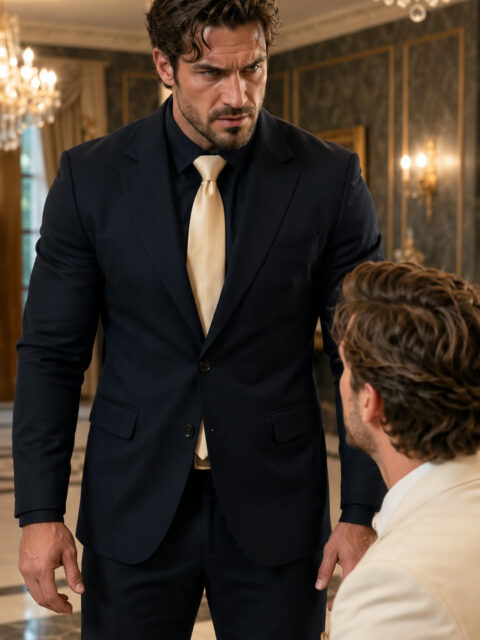
The Forbidden Music in the West Wing, the Seventeenth Cassette, and the Voice of the Lost Sister
Table of Contents
- Chapter 1: The House of Absolute Silence
- Chapter 2: The Song from the Small Bluetooth Speaker
- Chapter 3: The Sealed Doors of the West Wing
- Chapter 4: The Steinway Beneath the Velvet Dust Cloth
- Chapter 5: The Sixteen Cassettes in the Teakwood Box
- Chapter 6: Tape Seventeen in the Vintage Deck
- Chapter 7: The Voice from Beyond the Grave
- Chapter 8: The Confrontation in the Conservatory
- Chapter 9: The First Melody in Ten Years
Chapter 1: The House of Absolute Silence
“Rachel, don’t turn it off,” Dominic Vale commanded from the shadows of the grand marble staircase, his deep baritone stopping my trembling hands just as I rushed to silence the acoustic melody echoing through a mansion that had forbidden music for an entire decade.
My name is Rachel Bennett. In Westchester County, north of New York City, people spoke of Dominic Vale in hushed, intimidated whispers. He was thirty-eight years old, the reclusive billionaire founder of Vale Maritime Logistics and Global Sovereign Infrastructure. He controlled deepwater cargo fleets, oceanic drydocks, and automated freight terminals spanning six continents. Yet despite his staggering wealth, Dominic lived like an ascetic monk in a forty-room English Gothic manor perched on the wooded bluffs high above the Hudson River. The limestone walls were four feet thick, the arched stained-glass windows kept out the autumn chill, and the estate’s heavy wrought-iron gates were monitored day and night by private security details.
There were no lavish parties at Vale Manor. There were no glittering socialite galas, no charity banquets, and no casual weekend visitors. But the strangest rule of the estate—the rule that every domestic worker was forced to sign in a binding, four-page non-disclosure agreement—was the Rule of Absolute Silence.
No radios. No television audio past ten percent volume. No singing, no whistling, and under no circumstances was any musical instrument or digital speaker ever to be activated inside the house. The six previous housekeepers had been dismissed without severance for humming while polishing silver, whistling while folding laundry, or listening to podcasts through leaky headphones. To Dominic Vale, any melodic frequency was treated as an intolerable violation.
I had worked at the manor for seven months. I was twenty-six years old, an aspiring cellist who had been forced to put my Juilliard graduate performance studies on indefinite hold after my mother fell gravely ill with end-stage renal failure. The five-thousand-dollar monthly housekeeping salary at Vale Manor paid for her dialysis treatments, private nursing visits, and expensive immunosuppressive medications. I respected Mr. Vale’s silence. I understood what it was like to carry a grief so heavy that the ordinary, careless sounds of the outside world felt like sandpaper scraping against an exposed nerve.
Everyone in the Hudson Valley knew why the house was silent. Ten years earlier, Dominic’s younger sister, Sofia Vale—a world-renowned concert pianist whose breathtaking performances at Carnegie Hall and Vienna had brought audiences to their feet in tears—had died on a stormy winter night when her sports car skidded off the icy curves of Route 9 and plunged into the freezing Hudson River. Dominic, who had raised her like a father following their parents’ deaths in a plane crash when he was twenty, had shattered into a million pieces. The morning after her funeral, he had ordered every instrument in the house locked away, every stereo system dismantled, and the entire west wing sealed behind heavy oak doors.
For ten years, Dominic had lived in a cold, echoing tomb of his own making, punishing himself with endless silence.
Chapter 2: The Song from the Small Bluetooth Speaker
That rainy Wednesday afternoon, the autumn wind was wailing through the Gothic arches of the manor, rattling the leaded glass windows with dreary, relentless monotony. I was down on my knees in the grand reception gallery, applying organic beeswax polish to the intricate walnut parquet floors with a soft flannel cloth.
The house was freezing, desolate, and oppressively quiet. The only sound was the rhythmic squeak of my cleaning cloth and the distant drumming of rain against the slate roof. To keep my spirits from sinking into the gray floorboards, I had tucked a tiny wireless earbud into my left ear, streaming a melancholic, gentle cello and piano arrangement of Frédéric Chopin’s Nocturne in C-sharp Minor from my phone.
As I reached forward to buff the corner baseboard near the grand fireplace, my elbow accidentally bumped my phone off the mahogany console table. It struck the hardwood floor with a sharp crack, knocking loose the wireless Bluetooth connection.
Instantly, the small portable speaker inside my cleaning caddy connected automatically, broadcasting the rich, resonant acoustic vibrations of the cello into the sixty-foot vaulted ceiling of the grand gallery.
Panic—pure, blinding terror—shot through my spine like high-voltage electricity. The cello notes echoed like cannon fire in the silent mansion. I dropped my polishing cloth and scrambled across the floor on my knees, lunging for the speaker with trembling fingers, terrified that Dominic would emerge from his study and terminate my employment on the spot. My mother’s next dialysis payment was due in five days; I couldn’t afford to be cast out into the street.
“Rachel, don’t turn it off.”
The voice came from the landing of the grand staircase.
I froze, my hand hovering two inches above the power button, my breath caught in my throat. I slowly lifted my eyes, bracing for the fury of a reclusive billionaire.
Dominic Vale was standing at the mahogany banister. He was dressed in a black cashmere sweater and dark trousers, his tall, imposing six-foot-three frame silhouetted against the gray afternoon light filtering through the stained glass. His chiseled, aristocratic face, usually carved of unyielding granite, looked completely transformed. His dark amber eyes were wide, glistening with an emotion that looked dangerously like tears. His hands gripped the railing so tightly that his knuckles were stark white.
“Mr. Vale… I am so terribly sorry,” I stammered, my heart pounding against my ribs like a trapped bird. “The phone fell… the connection dropped. I swear to you on my mother’s life it was an accident—”
“Leave it,” Dominic whispered softly, his baritone trembling with raw, unvarnished vulnerability. “Please. Just… let it play.”
Chapter 3: The Sealed Doors of the West Wing
For four agonizing minutes, neither of us moved an inch.
Chopin’s nocturnal melody drifted through the cavernous gallery, wrapping around the cold stone pillars, softening the hard edges of the gilded ancestral portraits, breathing life into a house that had been spiritually dead for ten years. Dominic closed his eyes, his head tilted back slightly, his chest rising and falling in slow, ragged breaths as the resonant frequencies of the cello filled the empty space between us.
When the final note faded into the quiet room, the silence that followed was no longer the suffocating quiet of a cemetery; it was the sacred stillness of a cathedral.
Dominic opened his eyes. He walked down the grand staircase, his footfalls silent against the velvet runner. He stopped four feet from where I was kneeling on the floor, looking down at me with an expression stripped of all corporate armor.
“Who is playing the cello on that recording, Rachel?” he asked quietly.
“It’s… it’s me, sir,” I confessed, looking down at my hands. “Before my mother became ill, I studied classical performance at Juilliard. I recorded that piece with a classmate two years ago during our winter recital.”
Dominic looked at me for a long, searching moment. There was no anger in his eyes, only a profound, bottomless sadness that seemed to stretch back through a decade of isolation. “Bring your speaker with you tomorrow. And come to the second floor at five o’clock.”
The following afternoon at exactly 5:00 PM, I walked up the grand staircase, holding my breath. Dominic was waiting for me at the heavy, padlocked double oak doors at the entrance to the west wing. In his right hand, he held a heavy brass skeleton key attached to a faded silk ribbon.
He inserted the key into the antique lock, turned it with a heavy mechanical click, and pushed the doors open.
A faint scent of aged paper, dried lavender, and old rosewood greeted us as we stepped across the threshold into the dark corridor. Dominic touched a brass wall switch, and soft amber chandeliers flickered to life, illuminating a gallery untouched by human hands for an entire decade.
Chapter 4: The Steinway Beneath the Velvet Dust Cloth
The centerpiece of the west wing was a magnificent, vaulted music conservatory with twenty-foot leaded glass windows overlooking the rocky bluffs of the Hudson River. Sitting in the center of the Persian rug was a nine-foot Steinway Model D concert grand piano, draped beneath a heavy, royal-blue velvet dust cover.
Lining the walls were towering mahogany shelves holding thousands of vinyl records, leather-bound musical scores, and silver-framed photographs of a vibrant, laughing young woman with golden curls and radiant hazel eyes—Sofia Vale. In one picture, she was receiving a bouquet of roses on the stage of Carnegie Hall; in another, she was twelve years old, sitting on Dominic’s shoulders on a sun-drenched beach in Cape Cod.
“This was her sanctuary,” Dominic said, his voice hushed, as if speaking too loudly might disturb a sacred presence. “When Sofia was at that piano, there was no darkness in the world. She could play Rachmaninoff until the stormy ocean calmed down.”
He walked over to the grand piano, reached out his hand, and gently peeled back the velvet cover. The polished black lacquer gleamed beneath the amber light, pristine, flawless, and untouched. Dominic’s fingers traced the ivory keys, feeling the cool surface, but he did not press down.
“For ten years, I believed that if I let music enter this house again, it would mean I had accepted her death,” Dominic said, looking out at the gray river below. “I thought silence was my penance for failing to protect her. I thought that if I suffered in total quiet, it would prove that I never forgot. But yesterday, when your cello played in the gallery… for the first time in a decade, I didn’t feel the suffocating weight in my chest. I felt like Sofia was in the room, telling me to stop hiding.”
He turned away from the piano and walked toward an antique teakwood credenza in the corner of the room. He opened the carved drawer and lifted out a velvet-lined teakwood box.
Inside the box, resting neatly in custom foam cutouts, were seventeen vintage audio cassette tapes, each labeled in Sofia’s delicate, cursive handwriting: For Dominic – Journal & Improvisations, numbered one through seventeen.
Chapter 5: The Sixteen Cassettes in the Teakwood Box
“What are these, Mr. Vale?” I asked softly, stepping closer to the teakwood table.
“Before she died,” Dominic explained, his thumb stroking the smooth wood of the box, “Sofia kept audio journals. Whenever she composed a new piece, struggled with a difficult concerto, or had personal thoughts she couldn’t say out loud, she recorded them on a portable Nagra analog tape deck. After the state police recovered her personal belongings from the river, they handed me this box.”
He looked down at the tapes, a heavy shadow crossing his brow. “Over the past ten years, on the anniversary of her death every November, I forced myself to listen to them. Tape one was her fifteenth birthday, laughing about burned birthday pancakes. Tape four was her first solo performance at Lincoln Center, describing her stage fright. Tape nine was the summer we spent in Tuscany, where she promised me she would play at my wedding one day.”
He paused, his jaw tightening into a rigid, painful line. “I listened to sixteen of them. But Tape Seventeen… I have never played it.”
“Why?” I whispered.
“Because Tape Seventeen was recorded on November 14th, 2016,” Dominic said, his eyes meeting mine with haunting vulnerability. “The night she died. The cassette was found inside her purse in the glove compartment of her submerged car. For ten years, I was terrified that listening to it would break whatever sanity I had left. I couldn’t bear to hear her final words alone in this empty house.”
He set the box on the teakwood table, picked up Tape Seventeen, and looked at me with an intensity that made my heart ache. “Rachel… will you listen to it with me?”
I saw the deep, agonizing loneliness in this powerful man’s soul—a man who commanded global maritime fleets yet was terrified to face his own grief alone. I set my bag down and took a step forward, meeting his gaze with unshakeable warmth.
“I’m here, Dominic,” I said gently, using his first name for the first time. “You don’t have to carry this grief alone anymore.”
Chapter 6: Tape Seventeen in the Vintage Deck
Dominic pulled a vintage Nakamichi Dragon cassette deck from the credenza, plugged it into the wall outlet, and pressed the eject button. The tape carriage slid open with a smooth mechanical hiss.
With trembling fingers, Dominic inserted Tape Seventeen, snapped the door shut, and plugged in two studio reference headphones through a dual-jack splitter. He handed one pair to me and placed the other over his ears.
He sat down on the velvet sofa beside me. His hand, cold and rigid with tension, rested on his knee. Without thinking, I reached out and gently laid my hand over his. He didn’t pull away; his fingers turned upward and gripped mine with desperate, unshakeable strength.
He pressed the PLAY button.
The tape hissed softly. The counter ticked: 001… 002… 003…
Then, through the headphones, the sound of rain drumming against a car windshield came through clearly, accompanied by the low rumble of an engine. Followed immediately by the soft, warm, unmistakable voice of Sofia Vale.
“Dominic,” Sofia’s voice began, sounding breathless, hurried, and frightened. “If you are listening to this tape… it means I didn’t make it to the manor tonight. It means something terrible happened to me on the highway.”
Beside me, Dominic gasped, his entire body stiffening as if hit by an electric shock.
“I don’t have much time, Dom,” Sofia continued, her voice trembling with urgent desperation. “I’m recording this on the shoulder of Route 9 near Tarrytown. My brake pedal just went completely soft. The brake fluid warning light is flashing red, and the steering wheel is pulling violently to the right. Dominic, listen to me carefully: THE ACCIDENT WASN’T AN ACCIDENT… AND THE KILLER IS STILL INSIDE YOUR HOUSE.”
Chapter 7: The Voice from Beyond the Grave
Dominic’s breath hitched in his throat. His grip on my hand tightened so hard it nearly bruised my fingers, but I didn’t flinch. I stayed locked beside him as Sofia’s recorded voice unraveled the dark, monstrous truth that had remained buried beneath ten years of silence.
“Two days ago, Dom,” Sofia’s recorded voice sobbed softly, “I went into the Manhattan office to drop off your birthday gift. I accessed the private foundation server to pull the charitable music gala budgets. While I was in the directory, I found the offshore routing files for Gregory Ross.”
Gregory Ross.
Gregory was Dominic’s second-in-command, senior vice president of Vale Maritime, and Dominic’s trusted childhood friend who had managed the company’s treasury for fifteen years. Gregory was the man who had delivered the eulogy at Sofia’s funeral, weeping openly as he placed white lilies upon her casket.
“Gregory has been skimming sixty million dollars from the South American port terminal contracts into shell corporations in Belize,” Sofia said, her voice shaking with terror. “I confronted him this afternoon in the boardroom. He begged me not to tell you. He told me it would ruin the company. When I refused and told him I was driving straight to Westchester to show you the encrypted drive, he walked out of the room looking like a ghost.”
Through the tape, the sound of tires screeching on wet asphalt echoed in the background, accompanied by the blare of a horn.
“He sent his private mechanic to service my car at the corporate garage before I left Manhattan, Dom! They cut the hydraulic brake lines! I can’t stop the car… God, Dominic, I love you so much. Protect yourself… Gregory is—”
The tape dissolved into a violent crash, the sound of tearing metal, shattered glass, and the roar of freezing river water, followed by terrifying, absolute static.
Chapter 8: The Confrontation in the Conservatory
The headphones fell from Dominic’s ears, clattering onto the sofa cushion.
He did not shout. He did not weep. He slowly rose from the sofa, his eyes turning to black ice. The agonizing sorrow that had paralyzed him for ten years had instantly evaporated, replaced by a lethal, razor-sharp fury that radiated from him like a nuclear detonation.
“Ten years,” Dominic whispered, his voice dangerously calm, every muscle in his back rigid as iron. “Ten years I blamed God. I blamed the ice on Route 9. I blamed myself for letting her drive in the winter storm. And the man who murdered my sister has been sitting across from me at the board table, sipping my Scotch.”
He pulled out his satellite phone and dialed his tactical security commander. “Vance. Bring tactical security detail Alpha to the west wing conservatory right now. And bring Gregory Ross upstairs immediately. Tell him there is an emergency board audit on the South American terminal leases.”
Ten minutes later, the double oak doors of the west wing swung open. Gregory Ross strode into the conservatory, wearing a tailored charcoal suit, holding a leather folder, exuding his usual smooth, corporate confidence.
“Dominic?” Gregory said, looking around the room in mild surprise. “What are we doing in the west wing? You haven’t opened these doors in ten years—”
Gregory stopped dead in his tracks.
Sitting on the mahogany table in the center of the room was the Nakamichi tape deck. Standing around the perimeter of the room were four armed security operatives in black tactical gear. And standing beside the grand piano was Dominic Vale, holding an encrypted flash drive and a certified copy of the 2016 corporate garage service logs.
“Press play, Gregory,” Dominic said, his baritone dropping to a frequency that made the leaded glass windows rattle.
Gregory swallowed hard, his arrogant smirk fading into a sickly pallor. “Dominic… what is this nonsense? Is this some kind of sick joke?”
“I said PRESS PLAY!” Dominic roared, slamming his fist onto the piano lid with a concussive boom that sent a discord of vibrating strings wailing through the room.
Gregory stumbled forward on trembling knees. He reached out a trembling finger and pressed the button. Sofia’s frantic voice filled the conservatory: “The accident wasn’t an accident… Gregory has been skimming sixty million dollars… they cut the hydraulic brake lines…”
Gregory collapsed onto the Persian rug as if his spine had been severed. Tears of cowardice and terror poured down his face. “Dominic… please! By our brotherhood! I was desperate! The debt collectors in Macao were going to kill my family! I didn’t mean for her to die… I just wanted to delay her! I swear to God I just wanted to disable the car so she couldn’t show you the drive!”
“You murdered my sister,” Dominic said, stepping over him with icy disgust. “You stole her life, you stole my sanity, and you spent ten years eating at my table while she slept in the cold earth.”
Detectives from the New York State Police Major Crimes Bureau and federal investigators strode through the doors, flashing arrest warrants for aggravated first-degree murder, corporate embezzlement, and grand conspiracy. As handcuffs were locked onto Gregory’s wrists, Dominic didn’t look at him again.
“Take him away,” Dominic ordered coldly. “Let him rot in Sing Sing for the rest of his miserable days.”
Chapter 9: The First Melody in Ten Years
Three months later, the cold Hudson winter had given way to a brilliant, emerald spring. The river glistened under a warm sun, and the dogwoods and lilacs across Vale Manor were blooming in vibrant shades of white, violet, and gold.
The Rule of Absolute Silence had been revoked forever. The heavy oak doors of the west wing were thrown wide open, allowing golden sunlight and the fresh scent of blooming gardens and river breezes to flood the halls of Vale Manor.
Rachel was no longer the housekeeper. Dominic had cleared all of her mother’s medical debts in full, arranged for top nephrologists at Columbia Presbyterian to oversee a successful kidney transplant, and purchased a magnificent handcrafted German cello for Rachel to resume her concert studies at Juilliard.
That Sunday afternoon, warm sunlight poured through the conservatory’s leaded windows. Sitting on the leather piano bench, his long fingers poised gracefully over the ivory keys of the Steinway, was Dominic Vale. Beside him, holding her carved wooden cello, sat Rachel.
“Are you ready?” Dominic asked softly, turning his head to look at her with eyes that were now bright, warm, and brimming with peace and hope.
“Whenever you are, Dominic,” Rachel smiled, raising her bow.
Dominic’s fingers descended onto the keys, playing the opening chords of Chopin’s Nocturne—the very song that had shattered the silence three months earlier. Rachel drew her bow across the strings, weaving a rich, velvety harmony that resonated through the grand manor.
It was not a song of sorrow. It was a song of triumph, healing, and unshakeable love. On the mantle above the piano, Sofia’s portrait seemed to glow under the afternoon sun, her painted smile looking down upon them as the music echoed across the Hudson River.
The house of silence was finally, beautifully alive.