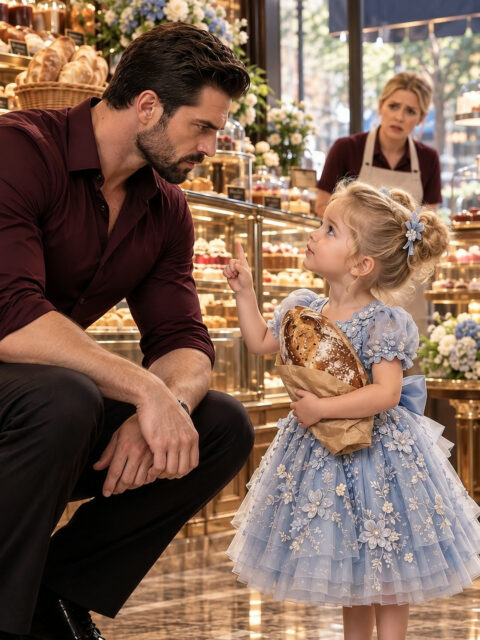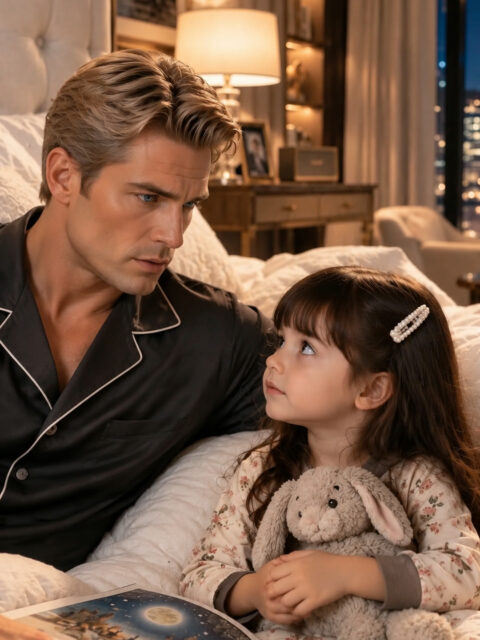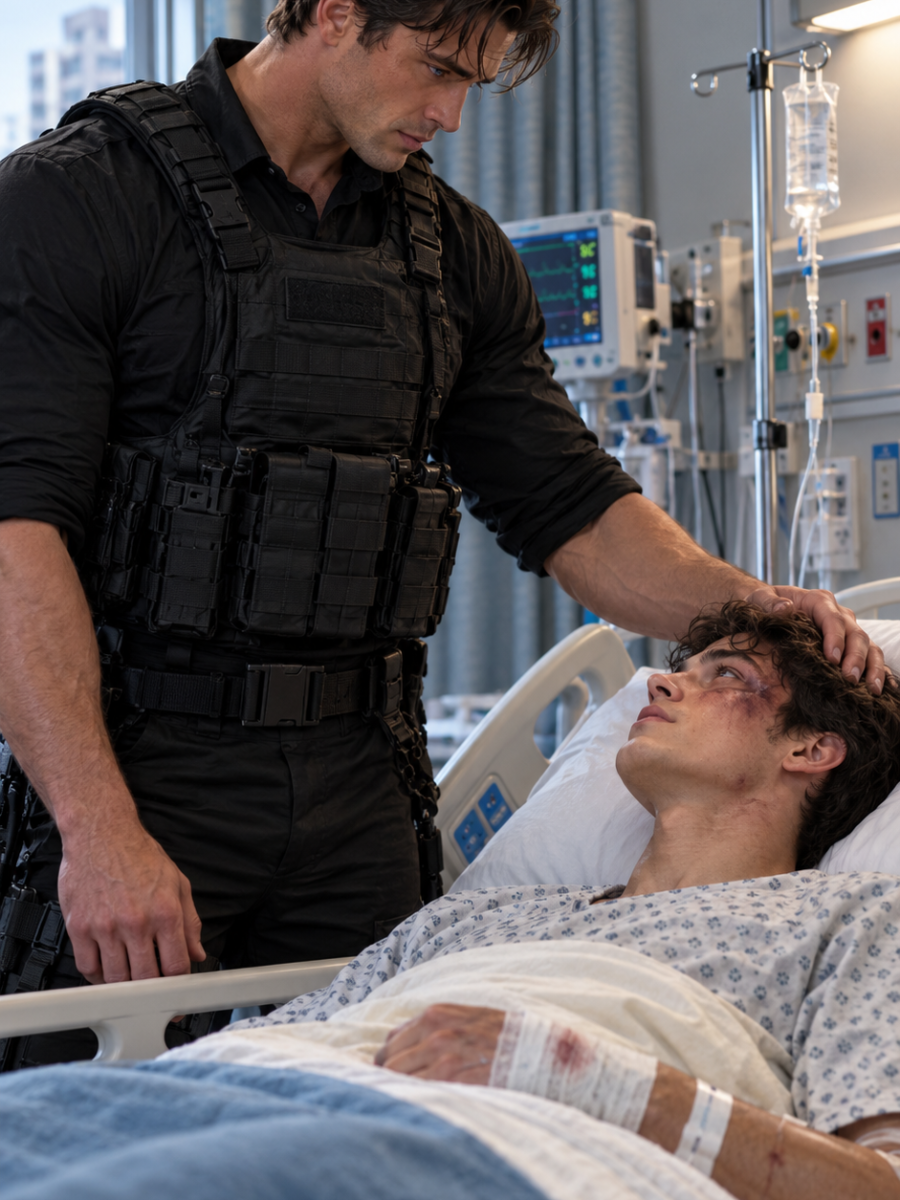
“Your daddy’s not here to protect you,” the wealthy father-in-law laughed as he pinned eight-year-old Jake to the concrete driveway while the boy’s uncles held him down. They thought Frank Sterling was just a penniless, quiet mechanic. They had no idea he was Commander Vanguard Actual—leader of a Tier-1 federal task force. When the mansion lights went black at midnight, the bullies discovered the terrifying price of touching a soldier’s son.
Table of Contents
- Chapter 1: Fluorescent Lights and Missed Calls
- Chapter 2: Concrete and Gravel
- Chapter 3: The Encrypted Channel
- Chapter 4: Highland Crest Celebration
- Chapter 5: The Blackout Breach
- Chapter 6: Vanguard Actual
- Chapter 7: The Weight of the Badge
- Chapter 8: Cold Rain and Broken Alliances
- Chapter 9: The Red House with the Oak Tree
Chapter 1: Fluorescent Lights and Missed Calls
The harsh fluorescent tube above bay four in Mercy Memorial’s pediatric trauma wing emitted a low, rhythmic hum.
It was the kind of sound a man only noticed when his entire world had stopped spinning on its axis and crashed into jagged glass.
Frank Sterling sat on a steel-framed plastic chair, his elbows resting on his denim-clad knees, his knuckles pressed together until the skin stretched white over bone. His jacket was unzipped, revealing a faded gray cotton t-shirt. On his feet were scuffed work boots dusted with dry suburban soil from the garden he had been weeding three hours ago.
To anyone passing in the corridor—nurses carrying clipboard charts, orderlies pushing linen carts, tired residents gulping stale coffee—he looked like an ordinary thirty-four-year-old father caught in the worst nightmare of middle-class domestic life. An unassuming landscape contractor or automotive technician waiting for bad news.
On the small vinyl bedside table beside him, his smartphone screen flared to life for the ninth time in forty minutes.
*Christine Calling.*
The vibration buzzed angrily against the laminate surface, rattling like a trapped hornet before falling silent.
Nine missed calls.
Nine calls from the woman he had been married to for nine years. The woman who, at two o’clock that afternoon, had loaded their eight-year-old son, Jake, into her Lexus SUV to take him across town to her father’s gated estate in Oakridge Ridge for what she had chirped was “a lovely family barbecue.”
Frank had offered to come along, but Christine had stiffened, waving a manicured hand dismissively. *”Oh Frank, you know how Daddy and my brothers get around you. They talk about real estate mergers and high-yield hedge funds, and you just sit there talking about tool sheds and mulch. It’s better if it’s just Jake and me today. Daddy wants to bond with his only grandson.”*
Frank had let them go. He had kissed Jake on top of his unruly brown hair, handed him his favorite pocket compass, and told him to be a good boy.
Now, it was 8:42 PM.
Jake was not at a family barbecue.
Jake was lying in bed four, hooked to a cardiac monitor whose green line spiked with every shallow, pained breath he drew.
A sterile curtain parted. Dr. Elizabeth Ramos, the senior attending pediatric trauma physician, stepped into the bay. Her stethoscope hung loose around her neck, and her brow was creased with deep, solemn concern.
“Mr. Sterling?”
Frank rose immediately. He didn’t stumble; he moved with the fluid, silent economy of a man whose joints and reflexes had been conditioned in environments far deadlier than a suburban emergency ward.
“Doctor. Give it to me straight.”
Dr. Ramos gestured toward the digital tablet in her hand. “The CT scan confirmed a moderate concussion with localized subdural edema along the right temporal lobe. He has extensive soft tissue contusions across his ribcage, defensive bruising along both forearms, and deep gravel abrasions on his knees and chin. Someone pinned him down with tremendous force on a rough aggregate surface.”
Frank’s voice remained flat, devoid of tremor. “Driveway concrete.”
“Yes,” Dr. Ramos said quietly, searching his stone-carved face. “The paramedic report noted that an elderly neighbor, Mrs. Patterson, found him stumbling three houses down the lane from Arthur Vance’s residence. The boy had blood running into his ear canal and one sneaker missing. Mr. Sterling… hospital protocol mandates that I contact Child Protective Services and the local sheriff’s department immediately. These injuries are not accidental. They are felonious assault.”
“Call them,” Frank said softly. “File every report. Document every millimeter of skin.”
“He’s awake now,” Dr. Ramos added, softening her tone. “The pain medication has taken the edge off, but he’s frightened. He’s asking for you.”
Frank nodded once. “Thank you, Doctor.”
Chapter 2: Concrete and Gravel
Frank pulled the curtain aside and stepped into the small cubicle.
Jake looked impossibly fragile beneath the heavy white thermal blanket. His right cheek was swollen to twice its normal size, mottled in angry shades of purple and sickly plum. A butterfly suture held together a ragged two-inch tear near his temple where the sharp edge of an aggregate driveway had split the skin down to the bone.
His small fingers were clutching the frayed edge of the sheet, trembling with an involuntary tremor that made Frank’s stomach twist into an iron knot.
“Jake,” Frank murmured.
The boy’s left eye—the only one not swollen shut—fluttered open. When he recognized his father, a ragged gasp escaped his cracked lips.
“Dad…”
Frank was at his side in half a heartbeat. He caught his son’s cold, trembling hand between both of his own, anchoring him against the cold sterile terror of the hospital room.
“I’m here, buddy. I’ve got you. You’re safe now.”
A single tear tracked through the dried blood on Jake’s cheek, leaving a pale streak across the bruising. “I… I tried to run away, Dad. I dropped my sneaker in the bushes by the iron gate, but I kept running until the old lady with the yellow flowers came out.”
“You did good, Jake. You did so brave. You don’t have to talk right now. Just rest.”
“No,” Jake whispered, his voice cracking with desperate, childish urgency. “You have to know. Grandpa… Grandpa was screaming at Mom. He wanted the deed to our house. He said you were a nobody. He said you were just a common mechanic with no money and no pedigree, and that Mom had to divorce you and hand over the family trust.”
Frank smoothed Jake’s damp hair away from his forehead. His face was an unreadable mask of carved granite, but behind his dark eyes, a cold, terrifying calculation was already taking shape.
“What happened next, Jake?”
“I told Grandpa to stop,” Jake sobbed softly. “I told him my dad is the strongest, best man in the world and he works hard for us. Grandpa got so red in the face. He slapped me across the porch. Then… then Uncle Carl and Uncle Hugh grabbed me.”
Frank felt the blood in his veins turn to liquid nitrogen. “Carl and Hugh held you?”
“Uncle Carl held my arms behind my back,” Jake whispered, shivers wracking his small frame. “Uncle Hugh grabbed my legs so I couldn’t kick. Grandpa dragged me down the brick steps onto the concrete driveway. He slammed my head down twice. He laughed, Dad. He leaned right over my face and laughed. He said, *’Your daddy’s not here to protect you now, little bastard. Your daddy is nothing.’*”
Jake clutched Frank’s sleeve with sudden, fierce strength.
“Dad… don’t let them come back. Grandpa said he was going to come to our house tonight and take me away for good. Please don’t let them take me.”
Frank looked down into his son’s pleading, terrified eyes. The warmth of a gentle father remained in his touch, but the shadow that passed behind his gaze belonged to an entirely different man.
“Jake, look at me.”
The boy focused his tear-streaked eye on his father.
“Nobody is ever going to touch you again,” Frank said, his voice dropping into a register of absolute, terrifying certainty. “Grandpa and your uncles made the single biggest mistake of their lives today. They thought your father was alone. They thought your father was weak.”
Frank leaned down and pressed a long, gentle kiss against Jake’s uninjured temple.
“Sleep now, son. When you wake up in the morning, our world will be clean.”
Chapter 3: The Encrypted Channel
Frank stepped out of the trauma bay, pulled the curtain completely shut, and signaled to the armed sheriff’s deputy stationed at the nursing station.
“Deputy Miller?”
The young deputy looked up from his clipboard. “Yes, Mr. Sterling?”
“My son is resting under heavy sedation. No one enters that cubicle without my personal authorization. If my wife, Christine Vance-Sterling, or any member of the Vance family appears on this floor, you detain them immediately and notify the watch commander. Do you understand?”
Deputy Miller straightened his posture unconsciously, sensing an innate authority in Frank’s posture that commanded instant obedience. “Understood, sir. Nobody gets past me.”
Frank walked down the corridor, past the sliding automatic doors, and stepped into the cool, dark autumn air of the hospital courtyard.
The wind rustled through the oak trees, scattering dry leaves across the asphalt.
Frank reached into his heavy canvas work jacket. He pulled out his standard smartphone—the one filled with family photos, school schedules, and Christine’s angry unanswered text messages. He powered it off completely and slipped it into his left pocket.
Then, from an inner zippered pocket lined with signal-blocking carbon weave, Frank withdrew a second phone.
It was an austere, matte-black handheld device with no logos, no consumer operating system, and a custom cryptographic chip soldered directly onto the motherboard.
He held his thumb against the biometric scanner. The screen blinked green once, displaying a single prompt: SECURE TERMINAL ACTIVATED – TIER 1 DIRECTIVE.
Frank pressed a single speed-dial button.
The connection did not ring through cellular towers; it routed through an encrypted low-earth-orbit military satellite constellation.
It was answered on the first microsecond.
“Command,” a crisp, razor-sharp voice answered.
“Vanguard Actual,” Frank spoke, his voice completely stripped of suburban warmth. “Code Blackout.”
There was an instantaneous shift in the operator’s tone, snapping from routine readiness to absolute combat protocol. “Sir! Commander Sterling. We read you loud and clear. Uplink established. What are your orders, Commander?”
“Activate Task Force Ironclad,” Frank said coldly. “Full domestic interdiction package. Target is Arthur Vance, CEO of Vance Maritime Logistics, along with his sons Carl Vance and Hugh Vance. Location: The Vance Estate, 1400 Highland Crest, Oakridge.”
“Understood, Commander. What is the operational profile?”
“Hostile civilian combatants,” Frank replied, his words dropping like lead weights into the receiver. “Felonious assault with intent to cause grievous bodily harm against an eight-year-old dependent of Tier-1 Command. Attempted extortion and aggravated battery.”
“Jesus Christ,” the voice on the other end hardened into lethal professionalism. “Is Jake okay, sir?”
“He’s in trauma care,” Frank said. “I want the Vance financial network frozen within fifteen minutes. I want every offshore account, every customs evasion record, and every maritime shipping discrepancy Arthur Vance has hidden for the last twenty years seized by the Federal Maritime Commission and the Department of Justice. Then dispatch Echo and Bravo tactical teams to stage two miles outside Highland Crest.”
“Teams are spinning up now, Commander. ETA to staging area is twenty-two minutes. We have eyes in the sky via drone feed within six minutes.”
“Good,” Frank said. “I am en route to Highland Crest now. I will conduct the breach personally.”
“Understood, Vanguard Actual. God help them.”
Chapter 4: Highland Crest Celebration
For eight years, Arthur Vance had looked at Frank Sterling with unvarnished, venomous contempt.
In Arthur’s mind, Frank was a pathetic nobody—a quiet, soft-spoken veteran who ran a small independent heavy-equipment maintenance shop on the industrial side of town. Arthur was the patriarch of a multi-million-dollar coastal shipping dynasty, a man whose portrait hung in the downtown yacht club, whose donations purchased city council members, and whose family name was stamped on marble plaques across the county.
When his daughter Christine had defied him eight years ago to marry Frank after an unexpected pregnancy, Arthur had vowed to break the marriage.
For nearly a decade, he had poisoned Christine’s mind. He told her she was wasting her beauty and pedigree on an ambitionless blue-collar drone. He dangled a forty-million-dollar inheritance trust in front of her, under one condition: she divorce Frank, sign Jake over to the Vance family lineage, and force Frank to surrender the five acres of prime commercial land his maintenance shop sat on—land Arthur desperately needed to expand his container terminal.
Tonight, Arthur believed he had finally won.
Inside the sprawling three-story Georgian mansion at Highland Crest, the air smelled of Cuban cigars, aged Scotch, and smug triumph.
In the mahogany-paneled library, Arthur Vance sat in a high-backed leather wing chair, swirling three fingers of twenty-five-year-old Macallan in a crystal glass. At seventy-one, he was a broad-shouldered, silver-haired tyrant who believed that wealth and ruthless intimidation were the only laws that governed the earth.
Standing across the Persian rug were his two sons: Carl, thirty-eight, a bloated corporate vice president in an expensive bespoke polo shirt, and Hugh, thirty-five, a personal-injury lawyer with slicked-back hair and gold cufflinks.
On the silk sofa near the fireplace sat Christine.
Her eyes were red and swollen, her mascara smudged, but her hands were trembling around a glass of dry white wine.
“Daddy… you shouldn’t have done that,” Christine whispered, her voice wavering between guilt and anxiety. “Jake is only eight. You pushed him too hard. What if Mrs. Patterson calls the police? What if Frank finds out?”
Arthur took a leisurely sip of his Scotch and laughed—a harsh, barking sound.
“Frank?” Arthur sneered. “What is that pathetic grease monkey going to do, Christine? Drive over here in his rusted pickup truck and wave a wrench at us? Let him come! The moment he sets foot on my property, the private security guards will beat him bloody and have him arrested for trespassing.”
Carl chuckled, rolling his shoulders. “Daddy gave the kid a reality check. The brat had the nerve to mouth off to us, saying his daddy was stronger than the Vance family. So we showed him how the real world works. A couple of scraped knees and a bump on the noggin builds character.”
Hugh checked his gold Rolex. “Besides, Christine, this works perfectly in our favor. I’ve already drafted the emergency custody petition. We claim Jake fell while playing on the patio, and that Frank’s home is negligent and unsafe. We serve Frank tomorrow morning. By noon, Jake is in a boarding school in Switzerland, Frank is bankrupt from legal fees, and that five-acre parcel on Harbor Boulevard belongs to Vance Logistics.”
“He’s right, sweetheart,” Arthur said, leaning forward and tapping the mahogany table. “You’re finally rid of that loser. Tonight is a celebration. Pour another drink.”
Suddenly, the crystal chandelier above them flickered.
Then, with a sharp *pop*, every light in the twelve-thousand-square-foot mansion extinguished simultaneously.
Chapter 5: The Blackout Breach
The library plunged into pitch-black darkness, illuminated only by the dying amber embers of the wood fire in the hearth.
“What the hell?” Carl grumbled, fumbling in his pocket for his phone. “Did the main breaker trip?”
“Don’t be an idiot,” Hugh said, tapping his screen. “The whole estate is dead. The streetlights outside are gone too. And look at my phone—no service. Zero bars. Emergency calls only.”
Arthur scowled, setting his crystal glass on the table. “The backup diesel generator should have kicked on in five seconds. Where is Vance Security? Sanders! Sanders, get in here!”
No answer came from the marbled foyer.
Outside, the crickets had gone dead silent.
Then, from the long, tree-lined private driveway of Highland Crest, came a sound that did not belong in an affluent suburban neighborhood.
It was the deep, thunderous rumble of multiple high-displacement turbodiesel engines.
Arthur walked over to the tall bay windows, parting the heavy velvet drapes.
Through the darkness, four matte-black armored tactical transport vehicles—BearCat G3s with darkened ballistic glass and roof-mounted FLIR optics—slid silently through the smashed wrought-iron perimeter gates. Their heavy push-bumpers had sheared through the ornamental iron hinges as if they were made of rotten balsa wood.
No sirens wailed. No flashing red-and-blue lights lit up the lawn.
Only the cold, blinding intensity of six hundred-watt infrared and high-lumen tactical floodlights suddenly ignited, bathing the entire facade of the mansion in an unforgiving, daylight-bright glare.
“What is that?” Christine screamed, dropping her wine glass onto the rug. “Daddy, who is that?!”
“Private security?” Carl stammered, his face draining of color as he pressed his nose against the glass. “No… those aren’t security guards. Look at the gear!”
Thirty figures poured out of the BearCats.
They moved with absolute, terrifying synchronicity. Black tactical armor, Kevlar helmets with panoramic night-vision goggles folded down, suppressed carbines held at the low-ready position. They fanned out across the grounds, securing every perimeter door, patio, and balcony in less than forty seconds.
The mansion’s front double doors were made of solid two-inch Honduran mahogany with reinforced deadbolts.
A loud metallic hiss sounded outside.
*BOOM!*
The hydraulic breaching ram blew the double doors off their hinges with a thunderous concussion that shook the dust from the ceiling mouldings.
Heavy combat boots crunched over the splintered wood and shattered glass in the foyer.
A voice, amplified through a tactical command megaphone, echoed through the vast halls like the trumpet of judgment:
“FEDERAL TACTICAL INTERDICTION GROUP. THIS IS A TIER-1 MILITARY AND SPECIAL INVESTIGATIONS BREACH. ALL OCCUPANTS REMAIN WHERE YOU ARE. DROP TO YOUR KNEES WITH YOUR HANDS INTERLACED BEHIND YOUR HEADS. ANY HOSTILE MOVEMENT WILL BE MET WITH LETHAL NEUTRALIZATION.”
Carl began to hyperventilate. “Hugh! Call your judge friends! Call the mayor!”
“I told you, the phones are dead!” Hugh shrieked, backing into the bookshelf. “They’re jamming all civilian frequencies!”
The library doors were kicked wide open.
Four tactical operators in full balaclavas swept into the room, weapon lights cutting through the darkness, lasers painting red dots directly onto the chests of Arthur, Carl, and Hugh Vance.
“DOWN! ON YOUR KNEES! NOW!”
Chapter 6: Vanguard Actual
Carl dropped instantly to his knees, his hands trembling violently against the back of his neck, his bespoke shirt soaked in cold sweat. Hugh collapsed beside him, weeping openly, babbling about constitutional rights that nobody in the room cared to hear.
Arthur Vance stood his ground for three stubborn seconds, his silver hair disheveled, his face purple with outrage.
“Do you know who I am?!” Arthur roared at the masked operators. “I am Arthur Vance! I contribute millions to the Governor’s campaign! I will have every single one of your badges stripped by dawn! Where is your commanding officer?!”
From the darkened hallway beyond the library door, slow, measured footsteps approached.
The tactical operators stepped back, snapping to rigid attention.
“Commander on deck!” the lead operator barked.
Into the blinding glare of the tactical lights stepped Frank Sterling.
He was no longer wearing his faded canvas work jacket or scuffed boots. He wore a crisp, midnight-blue tactical command uniform with subdued tactical insignia. Pinned to the left breast of his load-bearing vest was a silver trident crest intertwined with a federal command emblem—an insignia recognized only in the highest echelons of the Department of Defense and Joint Special Operations Command.
Behind him walked two senior special agents in dark suits carrying heavy aluminum briefing cases: one from the Federal Maritime Commission, and one bearing the badge of the United States Attorney for the Eastern District.
Christine stared at her husband as if she were looking at a ghost risen from a tomb.
“Frank…?” she gasped, her hands flying to her mouth. “Frank… what is this? What have you done?”
Frank did not look at her.
His eyes were fixed solely on Arthur Vance.
The cold, absolute stillness in Frank’s gaze was more terrifying than the thirty assault rifles surrounding the room. It was the look of a predator who had spent twelve years hunting human monsters in foreign deserts and mountain ranges, now staring at a bloated suburban coward who had dared to touch his child.
“Arthur,” Frank spoke. His voice was quiet, calm, and utterly chilling. “You told my son that his daddy wasn’t here to protect him.”
Arthur swallowed hard. The arrogance in his posture cracked, crumbling into sheer, raw panic. “Frank… listen to me. This was a family misunderstanding. The boy was unruly… he slipped on the patio…”
“He didn’t slip,” Frank said, stepping closer until he stood six inches from Arthur’s face. “Your driveway concrete has aggregate stone with sharp quartz edges. Dr. Ramos extracted three fragments of quartz from my son’s temporal bone. She also extracted tissue fibers under his fingernails that match the cashmere blend of Carl’s sleeves.”
Frank turned his eyes toward Carl, who let out a whimpering moan on the floor.
“Carl held his arms,” Frank continued, each word delivered with surgical precision. “Hugh held his legs. And you, Arthur, slammed an eight-year-old child’s head into the pavement because he had the courage to tell you that his father was an honest man.”
“Frank, please!” Christine cried, throwing herself toward him, attempting to grab his arm. “They’re my family! You can’t do this!”
Frank finally turned his gaze onto his wife.
The look in his eyes stopped her dead in her tracks. There was no hatred in his expression. There was something far worse: complete, absolute indifference.
“You left your son bleeding on a stranger’s lawn, Christine,” Frank said softly. “You sat here drinking wine while your father and brothers bragged about crushing him. As of this moment, you are no longer my wife, and you will never see Jake again without a court-appointed supervisor present.”
Chapter 7: The Weight of the Badge
Frank nodded to the two federal agents standing behind him.
Special Agent Marcus Croft stepped forward, clicking open the heavy aluminum case on Arthur’s mahogany desk. He withdrew a thick stack of blue-backed legal documents stamped with the official seal of the United States District Court.
“Arthur Vance,” Agent Croft announced in a dry, administrative voice. “By order of the Attorney General and under the authority of the Defense Logistics Security Act, all assets, domestic accounts, and corporate holdings of Vance Maritime Logistics have been placed under federal receivership.”
Arthur’s mouth dropped open. “Receivership?! On what possible grounds?!”
“On the grounds that for the past seven years, Vance Maritime Logistics has been laundering illicit cargo manifests through container terminals in Baltimore and Savannah,” Agent Croft replied. “You believed your political donations made you untouchable. What you didn’t know was that Commander Frank Sterling has served as Director of the Federal Joint Maritime Task Force for the past five years.”
Arthur’s knees buckled.
He grabbed the edge of the leather chair to keep from falling.
“Director…?” Arthur stammered, looking at Frank with bulging, bloodshot eyes. “You… you run an equipment repair shop…”
“The maintenance facility is a secure forward operating base for my tactical unit,” Frank said quietly. “It has been monitoring port logistics and regional corruption for half a decade. I chose to live an ordinary life, Arthur. I wanted my son to grow up with grass under his feet, with a father who came home for dinner, who helped him with his science fair projects, and who didn’t carry the stench of war into his bedroom.”
Frank leaned down, his eyes boring into Arthur’s soul.
“I gave you every opportunity to be a grandfather to my son. But you mistook my humility for weakness. You thought because I didn’t brag about money or wear four-thousand-dollar suits that I was a peasant you could trample under your feet.”
Agent Croft signaled to the tactical operators.
“Cuff them.”
Four operators moved in. Heavy steel zip-ties clicked tightly around the wrists of Carl and Hugh Vance. Both men were pulled roughly to their feet, sobbing and blubbering apologies that Frank ignored completely.
When the operator reached for Arthur, the old man tried to jerk away, but Frank caught him by the lapels of his tailored blazer.
“One more thing, Arthur,” Frank whispered into his ear.
Arthur trembled, unable to pull his eyes away from Frank’s icy gaze.
“The five-acre commercial parcel on Harbor Boulevard that you tried to steal?” Frank said. “The federal government has just condemned your adjacent container yard under eminent domain. It will be converted into a state-of-the-art regional pediatric rehabilitation center. And it will be named the Jake Sterling Center for Children.”
Arthur gasped, his chest heaving as if he were having a coronary event.
“Get them out of my sight,” Frank ordered.
Chapter 8: Cold Rain and Broken Alliances
By 1:30 AM, the grand mansion at Highland Crest had become an active federal crime scene.
Floodlights illuminated the driveway as Carl, Hugh, and Arthur Vance were loaded into separate armored transport vans under armed escort. Local media vans, alerted by the sudden closure of the Oakridge district, were already gathered at the outer perimeter gates, cameras flashing against the wet asphalt.
Christine sat on the marble front steps of the ruined foyer, her silk dress stained, her head buried in her hands.
Frank walked down the steps toward his command vehicle.
“Frank!” she called out, stumbling to her feet, running after him. “Frank, wait! Please!”
Frank stopped near the open door of his BearCat and turned around.
“What do you want, Christine?”
“You can’t do this to me,” she wept, tears cutting black lines down her cheeks. “They’re my father and brothers! They made a terrible mistake, but you’re destroying everything! How am I supposed to live? Where am I supposed to go?”
Frank looked at the woman he had loved for nine years, searching for any trace of the girl who had once laughed with him in the front seat of his old truck.
There was nothing left. Only shallow entitlement and poisoned vanity.
“You have thirty days to vacate my home,” Frank said calmly. “My attorneys have already filed for emergency dissolution of marriage on grounds of gross domestic endangerment and abandonment of a minor. The prenup you signed when we married—the one your father insisted on to protect his money from me—ensures that you leave with exactly what you brought into the marriage: your clothes and your car.”
“Frank, I am Jake’s mother!” she screamed, her voice cracking in hysteria. “You can’t take my son from me!”
“A mother doesn’t leave her child bleeding on the pavement while she sips wine with his abusers,” Frank replied, his voice cutting through the night like a razor. “Jake will have doctors, counselors, and a father who would tear down the world to keep him safe. If you ever come within five hundred feet of him, the restraining order will land you in the same federal detention facility as your brothers.”
Frank stepped into the armored vehicle.
“Driver. Take us to Mercy Memorial.”
The heavy steel door slammed shut with an airtight seal. The engine roared to life, and the convoy turned down the driveway, leaving Christine Vance standing alone in the cold autumn rain amidst the flashing red lights of federal cruisers.
Chapter 9: The Red House with the Oak Tree
Dawn broke over the city in ribbons of soft lavender and gold.
In bay four of the pediatric recovery wing at Mercy Memorial, the harsh fluorescent lights had been switched off, replaced by the warm, gentle morning sunlight streaming through the blinds.
Jake was sitting up in bed, propped against two fluffy pillows. The swelling around his temple had begun to subside, and a clean white bandage covered the stitched laceration. On the tray table in front of him sat a bowl of warm oatmeal, a glass of fresh orange juice, and a brand-new box of colored markers.
Beside the bed sat Frank.
He had showered and changed back into clean civilian clothes: soft cotton jeans, a warm wool sweater, and comfortable boots. His tactical armor, the encrypted phone, and the weight of command were locked away where they belonged.
To the world, he was just a father sitting by his boy.
Jake looked up from his drawing. With his left hand, he held up a sheet of paper.
On it was a crayon drawing of a large red house with a tall oak tree in the front yard. Standing in the yard were two figures holding hands: a small boy in a blue cap, and a tall man with broad shoulders and a gentle smile.
“Look, Dad,” Jake whispered, his voice clearer and stronger than it had been the night before.
Frank took the drawing in his hands. His fingers traced the bright red lines of the house.
“It’s beautiful, buddy,” Frank said, a genuine, warm smile touching his eyes for the first time in twenty-four hours. “The best drawing you’ve ever made.”
“Dad?” Jake asked softly, looking at the door. “Are they… are they going to come here?”
Frank set the drawing carefully on the bedside table and took his son’s small hand into his own.
“No, Jake. Never again.”
“Did you talk to Grandpa?”
“I did,” Frank said gently. “Grandpa and your uncles are going away for a very, very long time. They’re going to a place where they can never hurt anyone ever again. And our house is going to be quiet, safe, and happy.”
Jake let out a long, shuddering breath, as if a boulder that had been sitting on his small chest for weeks had finally rolled away. He leaned against his father’s arm, resting his forehead against Frank’s shoulder.
“Can we build the treehouse this weekend, Dad?”
Frank wrapped his arm around his son, pulling him close, feeling the steady, rhythmic beat of Jake’s heart against his ribs.
“We can build whatever you want, Jake,” Frank murmured, kissing the top of his head. “We have all the time in the world.”
Outside the hospital window, the autumn sun climbed higher into the sky, chasing away the long shadows of the night, shining down on a father and son who had walked through fire and come out whole on the other side.