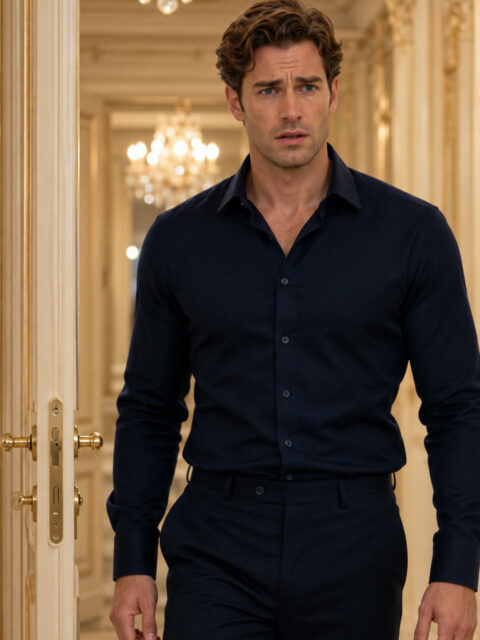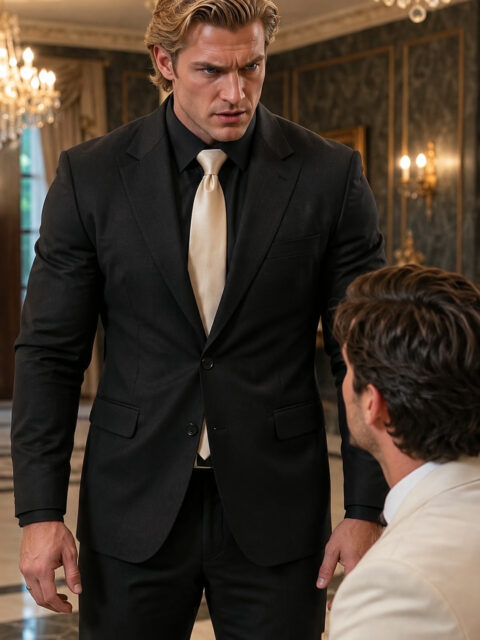
The first thing I did after meeting Chicago’s most feared paralyzed crime boss was insult him, refuse to clean up his whiskey, and rip the blanket off his legs. Two weeks later at 3 a.m. during a violent spasm, his right-hand man Frankie rushed in saying they found the man who planted the bomb… and the bomber named someone that made the boss turn slowly toward me.
Table of Contents
- Chapter 1: The 1998 Civic and the Iron Gates
- Chapter 2: Spilled Whiskey and the Wool Blanket
- Chapter 3: The 3 A.M. Spasm
- Chapter 4: The Bomber’s Confession
- Chapter 5: The Ghost of Connor Callahan
- Chapter 6: Underboss Declan’s Ambition
- Chapter 7: The Syndicate Tribunal
- Chapter 8: Standing on Broken Ground
- Chapter 9: The Crime Boss’s Anchor
Chapter 1: The 1998 Civic and the Iron Gates
My 1998 Honda Civic breathed its dying mechanical gasp exactly three feet from the wrought-iron security gates of the Gallagher estate.
A cloud of white coolant steam hissed violently from beneath the rusted hood, billowing into the freezing November twilight. The temperature in suburban Lake Forest was hovering at twenty-eight degrees, and my heater had stopped working two winters ago.
“Perfect,” I muttered, slamming both palms against the worn steering wheel. “Just brilliant, Paige. Now you’re going to freeze to death on the doorstep of Chicago’s bloodiest syndicate.”
I grabbed my oversized canvas tote from the passenger seat, kicked open the driver’s side door with a sharp metallic screech, and stepped out onto the gravel driveway.
Across the imposing perimeter wall, two men in tailored black trench coats stood with their hands resting inside their lapels. Their sunglasses were completely unnecessary in the fading dusk, but their unblinking, dead-eyed stares communicated everything that words couldn’t.
“I’m here for the private caregiver interview,” I called out, pulling my faded fleece jacket tighter around my coffee-stained teal medical scrubs. “Unless you two are the senior registered nurses, in which case I’ll happily take my resume and walk back to the highway.”
Neither man cracked a smile. One of them touched a radio earbud, murmured two words into his collar, and pressed a buzzer.
The heavy iron gates parted with a low, hydraulic groan.
That should have been my final warning to turn around and run.
The Gallagher estate looked less like a residential home and more like an armed military compound disguised by sixty million dollars’ worth of Indiana limestone and imported French limestone. Security cameras hummed softly from the crown moldings of every exterior portico. Behind the weeping birch trees, two Rottweilers paced inside high-voltage kennels.
A broad-shouldered man with a scarred jaw and a broken nose met me at the towering front doors. His name tag said “Frankie.”
“Bag on the table,” Frankie grunted, gesturing to a polished marble console in the grand foyer.
I tossed my canvas tote down. Frankie unzipped it with surgical precision, pulling out a stethoscope, blood pressure cuffs, sterile catheter packs, two bottles of saline, and a canister of heavy-duty pepper spray.
He dropped the pepper spray into his overcoat pocket.
“Hey! That cost me fourteen dollars at Walmart,” I protested.
Frankie gave me a look that suggested he had buried men for far less. “Nobody carries weapons near the Boss. Follow me. Keep your hands where he can see them. And whatever you do, don’t look at his legs.”
He led me through a maze of vaulted hallways lined with modern art and dark mahogany paneling. The air smelled of expensive cedarwood, antique paper, and the sharp, medicinal tang of antiseptic.
At the end of the east wing, Frankie pushed open two massive double doors.
“Good luck,” Frankie muttered under his breath, stepping aside to let me enter. “You’re going to need it.”
Chapter 2: Spilled Whiskey and the Wool Blanket
The room was a cavernous, two-story master library with floor-to-ceiling bookshelves accessible by brass rolling ladders. A massive fireplace roared in the stone hearth, casting long, dancing amber shadows across the dark parquet floor.
Positioned near the leaded bay window overlooking the frozen gardens was a motorized Permobil wheelchair.
Sitting in the chair was Desmond Gallagher.
Even seated, his presence commanded the entire room. He possessed broad, powerful shoulders that filled out a black cashmere sweater, a jawline carved from granite, and dark, unruly hair threaded with premature streaks of silver. His profile was breathtaking—and terrifying.
Over his lap and legs lay a heavy, dark green wool blanket, tucked tightly beneath his thighs despite the sweltering heat radiating from the massive stone fireplace.
He didn’t turn around when the doors clicked shut.
“I specifically instructed the agency to send a senior male nurse with twenty years of trauma experience,” Desmond’s voice rolled across the room like distant thunder, deep, gravelly, and laced with absolute contempt.
“You got me,” I answered, walking forward until I stopped ten feet from his left side.
The motorized chair rotated with a low electric hum.
Icy blue eyes locked onto mine. They were eyes that had looked into the barrel of guns without flinching; eyes that had ordered assassinations across three states; eyes currently burning with bitter, humiliated fury.
His gaze moved slowly over my coffee-stained scrubs, my scuffed white nursing clogs, and the messy ponytail falling across my shoulders.
“You’re late,” he said coldly.
“My radiator exploded three feet from your front gate.”
“You’re inexperienced.”
“I have four years of acute trauma ICU experience at Cook County Hospital. I’ve kept gunshot victims alive while bullets were still flying in the ambulance bay.”
“You’re barely thirty.”
“Twenty-eight,” I corrected, crossing my arms over my chest. “And from what the agency supervisor told me, you’ve fired four nurses in forty-eight hours. You threw a water pitcher at the last guy, and you made an army veteran cry in your driveway yesterday morning.”
A dangerous silence fell over the library.
“I need money,” I continued bluntly. “You’re offering three times the standard hourly wage because your reputation is so toxic nobody in the Midwest wants to step foot inside this fortress. So here is the deal, Mr. Gallagher: I manage your vitals, your skin breakdown, your catheterization, and your physical therapy. You manage your temper and sign my bi-weekly paycheck. Deal?”
Desmond Gallagher stared at me. His jaw clenched so tight the muscles bulged against his skin.
Slowly, deliberately, he reached his right hand toward the side table beside his chair. He picked up a crystal tumbler filled to the brim with amber Scotch.
His fingers trembled—a microscopic nerve tremor from spinal trauma.
The glass slipped.
It didn’t shatter by accident; Desmond shoved it downward with a sharp flick of his wrist.
The crystal shattered against the dark walnut floorboards. Scotch splashed across the wood, soaking into the hem of my pants.
“Clean it up,” Desmond commanded, his eyes daring me to disobey. “Then get out of my sight.”
I looked down at the puddle of liquor and glass.
Then I looked straight into his icy blue eyes.
“No.”
Desmond’s brow furrowed in utter disbelief. “What did you say?”
“I’m a licensed trauma nurse, Mr. Gallagher, not your scullery maid. Call Frankie if you want someone to sweep up your tantrums.”
Before he could reach for the intercom to call his armed guards, I took three swift strides across the room, reached down, and violently yanked the heavy wool blanket off his lap.
“What the hell are you doing?” Desmond roared, his left hand shooting out with terrifying speed, locking around my right wrist like a steel vice.
The strength in his upper body was monstrous. His grip bruised my bone, but I didn’t wince. I leaned down, thrusting my face inches from his.
“I’m checking what everyone else in this house is too terrified to look at,” I hissed.
Beneath the blanket, his legs were clad in loose gray flannel pants. I pushed the fabric up to his knees.
Six months without walking had taken a visible toll. The powerful quadriceps of a former collegiate athlete had atrophied. But far worse was what was happening on his right calf: the skin was mottled, purplish, with an angry, inflamed Stage Two pressure ulcer forming near the lateral malleolus.
“Look at this,” I snapped, pointing at his leg. “You’re sitting under a wool blanket in an eighty-degree room, drowning in Scotch, with zero circulation while your tissue is actively necrotizing. You have a developing decubitus ulcer that will become osteomyelitis within three weeks if someone doesn’t debride and dress it.”
Desmond’s eyes darted down to his leg, a flicker of genuine shock piercing his rage.
“If you squeeze my wrist any harder,” I added calmly, “I won’t be able to debride the wound. And then you’ll lose the leg entirely. Release me.”
For five agonizing seconds, Desmond Gallagher held my wrist in a vice grip, his chest heaving, his icy eyes searching mine for fear, disgust, or pity.
He found none of them.
Slowly, his fingers uncoiled.
He leaned back in his leather chair, exhaling a long, ragged breath that sounded like grinding glass.
“Frankie!” he shouted toward the double doors.
Frankie burst into the room with his pistol half-drawn. “Boss? You okay?”
Desmond didn’t look at Frankie. His eyes remained locked on my face.
“Have someone tow her piece-of-shit car into the garage and fix the radiator,” Desmond ordered raspy. “She’s hired.”
Chapter 3: The 3 A.M. Spasm
The next fourteen days were a masterclass in psychological warfare.
Desmond Gallagher was the undisputed king of Chicago’s south side docks, trucking unions, and underground gaming parlors. Even confined to his wheelchair, he conducted multi-million-dollar meetings from his library, issuing commands that sent ripples of panic through Cook County politics.
Yet every morning at 7:00 a.m., I marched into his bedroom with a medical tray, tore his silk sheets back, and forced him to endure forty-five minutes of passive range-of-motion stretching.
“You’re a sadist, Paige,” he would grunt through clenched teeth, his biceps straining against the leather armrests as I mobilized his stiffened ankles.
“I’m an angel of mercy, Desmond,” I replied cheerfully, applying antimicrobial silver dressing to his healing calf ulcer. “Now bend your knee or I’ll tell Frankie you whined like a toddler during your catheter check.”
He would glare at me with murderous intent, but beneath the scowl, something extraordinary was happening.
For six months, every doctor, bodyguard, and underboss had treated Desmond Gallagher like a broken god—whispering in hushed tones, averting their eyes from his limp legs, tiptoeing around his explosive anger.
I didn’t tiptoe.
I called him out when he drank too much whiskey. I forced him to drink electrolyte water. I mocked his terrible taste in Italian opera, and in return, he mocked my obsession with true-crime podcasts and gas-station sour candy.
For the first time since the bomb had ripped through his armored limousine six months ago, Desmond was being treated as a living, breathing human being.
Then came the second Tuesday night.
At 3:14 a.m., the wireless emergency monitor on my bedside table in the third-floor guest suite shrieked an alarm.
Desmond’s heart rate had spiked to 165 beats per minute.
I threw off my blanket, sprinted down the back servants’ stairs barefoot, and burst into his master bedroom.
The room was bathed in the pale glow of the moon.
Desmond was thrashing violently across the king-sized mattress. His lower body had seized in a catastrophic autonomic dysreflexia spasm. His right leg was kicking against the mahogany bedpost with brutal, uncontrolled force, while his back arched off the sheets, his face drenched in sweat, gasping for air.
“Desmond!” I screamed, lunging onto the bed.
I threw my entire weight across his thighs, pressing both knees into his pelvis to prevent him from breaking his own femur against the wooden furniture.
“Breathe, Desmond! Look at me! Look into my eyes!”
His hands flew up, catching my shoulders. His fingers dug into my flesh like talons. Pain twisted his handsome features into a grotesque mask.
“I can’t… stop it…” he choked out, veins bulging along his neck like thick cables. “It’s ripping me apart…”
“It’s just nerve firing, Desmond!” I shouted over the rattling of the bed frame. “Your spinal cord is having a reflex storm! I’ve got you! I’m right here!”
His right foot bucked hard, slamming my elbow into his ribs. A sharp crack of pain shot up my arm, but I didn’t let go. I leaned forward, pressing my chest against his chest, wrapping both arms around his neck, holding his trembling, sweat-soaked frame against mine with every ounce of strength in my body.
“Breathe with me,” I whispered into his ear, smoothing the wet hair from his forehead. “In… out. In… out. You are not alone in the dark, Desmond. I’m not leaving you.”
Slowly, agonizingly, the violent tremors began to subside.
The rigid muscles in his legs relaxed. His breathing slowed from frantic gasps to heavy, shuddering exhalations.
He lay beneath me, exhausted, trembling, his chest rising and falling in sync with mine. His hands, which had been gripping my shoulders in terror, slowly softened, his fingers curling gently into the fabric of my scrub top.
Neither of us moved.
The silence of the room was deafening. I was acutely aware of the warmth of his skin, the scent of cedar and sea salt radiating from his neck, and the sudden, electric stillness that passed between us.
Desmond looked up at me in the dim moonlight. The icy blue of his eyes had melted into something raw, vulnerable, and completely unguarded.
“You’re a terrible nurse,” he whispered, a broken, breathless half-laugh escaping his lips.
“I warned you on day one,” I whispered back, my heart pounding against my ribs for reasons that had nothing to do with medicine.
Before either of us could pull away, the heavy bedroom door was thrown open with a violent thud.
Chapter 4: The Bomber’s Confession
Frankie stood in the doorway.
He had his tactical jacket unzipped, his shoulder holster exposed, his breathing ragged. But what froze the blood in my veins wasn’t Frankie’s gun.
It was his face.
The grizzled, hardened security chief looked as pale as a corpse. He gripped the doorframe with knuckles that were trembling.
“Boss,” Frankie croaked, his voice cracking.
Desmond shifted instantly. The vulnerable, exhausted man vanished in the span of a single heartbeat. Chicago’s ruthless syndicate boss snapped back into existence. He reached up, gently helping me sit up on the edge of the mattress, pulling the silk sheet over his chest.
“What is it, Frankie?” Desmond demanded, his voice dropping into low, icy gravel. “Why didn’t you knock?”
Frankie stepped into the room, glancing nervously at me, then back at Desmond. He swallowed hard, his throat bobbing.
“They caught him, Boss.”
Desmond went utterly, terrifyingly still.
“Who?”
“The bomb-maker,” Frankie whispered. “The man who wired the C-4 under your limousine at the Union Station terminal six months ago. Our boys in Detroit just pulled him out of a basement in Dearborn.”
The air in the bedroom dropped ten degrees.
For six months, Desmond had lived with the agonizing reality that someone inside his inner circle had orchestrated the explosion that took his ability to walk. The police had found nothing. The federal ATF investigation had hit a brick wall.
“Is he alive?” Desmond asked, his voice deceptively soft—a whisper that promised unspeakable violence.
“Barely,” Frankie answered. “The Detroit crew has him strapped to a chair in the cold-storage warehouse at the rail yards. They broke his fingers before he gave up the contractor.”
Desmond leaned forward, his hands gripping the edge of the mattress. “Who paid him, Frankie? Was it the Moretti syndicate? Was it the Russians?”
Frankie hesitated. His eyes flickered toward me again, filled with an agonizing, conflicted pity that made my stomach plunge into bottomless freefall.
“It wasn’t Moretti, Boss,” Frankie muttered, his voice trembling. “The bomb-maker gave up the demolition technician who procured the military-grade C-4 and the radio detonator.”
“Give me the name, Frankie,” Desmond ordered, his tone razor-sharp. “Or I will drag myself down to Detroit and tear it out of your throat.”
Frankie closed his eyes, took a deep breath, and spoke the name that shattered my entire universe into jagged pieces:
“The technician was Connor Callahan.”
I stopped breathing.
The bedroom spun in nauseating circles. My ears began to ring with a high-pitched, deafening whine.
*Connor Callahan.*
My brother.
My older brother Connor, the former Army combat engineer who had returned from Kandahar with severe PTSD, night terrors, and six-figure medical debts. Connor, who had vanished without a trace six months ago on the exact night Desmond Gallagher’s car was blown apart outside Union Station.
Desmond slowly turned his head toward me.
The warmth that had lingered in his icy blue eyes moments earlier was extinguished. In its place was a cold, calculating darkness so terrifying that the hair on my arms stood on end.
“Paige,” Desmond whispered, his voice dangerously level. “What was your maiden name before you applied to the nursing agency?”
My mouth opened, but no sound came out.
“Paige,” Desmond repeated, his hand sliding slowly toward the bedside table where his Kimber .45 pistol was kept. “Who is Connor Callahan?”
Chapter 5: The Ghost of Connor Callahan
“He’s my brother,” I choked out, tears instantly flooding my vision. “Desmond… Connor is my older brother.”
Frankie stepped forward, his hand unbuttoning his holster. “Boss, she’s a plant. The agency was a setup. They put her in this house to finish the job—”
“Shut up, Frankie!” Desmond snarled without looking away from me.
His icy eyes were boring into my soul, searching every micro-expression on my face. His right hand hovered two inches from the steel grip of his weapon.
“Did you come here to kill me, Paige?” he asked, his voice trembling with a mixture of betrayal and raw, unadulterated fury.
“No!” I cried, falling from the edge of the mattress to my knees on the hardwood floor. “Desmond, I swear to God on my life, I had no idea! Connor disappeared six months ago! He told me he got a legitimate civil engineering job inspecting bridges in Ohio. Then his phone was disconnected. His apartment was emptied. I’ve spent six months thinking he committed suicide or was lying in a ditch!”
I reached into the pocket of my scrub pants with trembling hands.
“Hands where I can see them!” Frankie barked, drawing his Glock.
“Let her,” Desmond commanded coldly.
I pulled out my worn leather wallet and flipped it open to a faded photograph tucked behind my nursing license.
It was a picture of Connor and me taken seven years ago at his military graduation at Fort Leonard Wood. Connor was smiling, broad-shouldered, wearing his army dress uniform, holding me in a headlock while I laughed in my high school cap and gown.
I threw the wallet onto Desmond’s lap.
“Look at him!” I sobbed, tears dripping onto the floorboards. “Connor is an engineer! He spent three tours in Afghanistan clearing IEDs to save American soldiers! He didn’t assassinate people for money! If Connor was involved in that bombing, someone forced him, blackmailed him, or set him up!”
Desmond picked up the wallet. He looked at the photograph. He looked at Connor’s laughing, open face, then at the desperate, weeping nurse kneeling before him in her bare feet and coffee-stained scrubs.
He remembered how I had ripped the blanket off his legs.
He remembered how I had climbed onto his bed thirty minutes ago, taking his kicks to my ribs, wrapping my arms around his neck to anchor him through the agony of his spasms.
A contract killer didn’t spend two weeks washing bedsores and stretching stiffened ankles.
“Frankie,” Desmond said quietly, tossing the wallet back onto the nightstand. “What else did the bomb-maker say in Detroit?”
Frankie swallowed hard. “The bomb-maker said Connor Callahan didn’t plant the device. Connor brought the military detonator to a meeting behind the railyards… but when Connor realized the target was a civilian vehicle with a private security detail, he tried to back out.”
I gasped, looking up.
“And?” Desmond pressed.
“Connor was shot twice in the chest,” Frankie revealed, his voice solemn. “The client shot him, took the detonator, and planted the C-4 himself. Connor’s body was dumped in an abandoned lime pit in Gary, Indiana six months ago.”
A strangled, agonizing wail tore from my throat.
Connor was dead.
My brother had been murdered on the very night the bomb exploded.
Desmond’s eyes softened with profound, devastating realization. He leaned forward over the edge of the bed, reaching down with both hands. He grabbed me by my forearms and hauled me up until I was sitting beside him on the mattress.
“He didn’t do it, Paige,” Desmond murmured softly, wrapping one massive, protective arm around my shaking shoulders as I wept against his chest. “Your brother tried to stop it. He died trying to keep that bomb from going off.”
“Who killed him, Desmond?” I wept into his neck. “Who murdered my brother?”
Desmond looked across the darkened bedroom at Frankie.
“Frankie,” Desmond said, his voice dropping into a register that made the windowpanes vibrate. “Who was the client at the railyards?”
Frankie closed his eyes.
“It was Declan, Boss,” Frankie whispered. “Your cousin Declan.”
Chapter 6: Underboss Declan’s Ambition
Declan Gallagher.
Desmond’s first cousin and the vice president of Gallagher Logistics.
For six months, Declan had played the role of the devoted, grief-stricken family member. He had cried at the hospital; he had offered to run the day-to-day operations of the trucking lines while Desmond recovered; he had visited this estate every Sunday with expensive cigars and financial reports.
And all the while, Declan had been the monster who hired the explosives, murdered my brother in cold blood, and crippled Desmond to seize the sixty-million-dollar empire for himself.
“Frankie,” Desmond said, his voice terrifyingly calm. “Where is Declan right now?”
“He’s hosting the quarterly syndicate executive dinner at the Drake Hotel,” Frankie answered. “All twelve district capos are there. Declan called the meeting to announce that due to your… permanent health condition… he’s petitioning the commission to officially transfer supreme command to his office.”
“Tonight?” I asked, wiping the tears from my eyes.
“Tonight at 9:00 p.m.,” Frankie confirmed. “Declan thinks Desmond is an invalid rotting in this mansion. He thinks no one can stop him.”
Desmond looked down at his legs.
For six months, he had hidden beneath that green wool blanket, terrified of letting the underworld see his weakness.
Then he looked at me.
“Paige,” he said, taking my hand in his. “Two weeks ago, you told me that my legs weren’t dead—that the nerve pathways were just stunned and unconditioned.”
“The spinal MRI showed incomplete contusion, Desmond,” I replied, my voice steadying. “The spinal cord wasn’t severed. The physical therapy we’ve been doing… the spasms you had tonight… that’s not deterioration. That’s hyper-reflexia. That’s your nervous system trying to wake up.”
Desmond’s eyes flared with a lethal, burning light.
“Can you get me on my feet?” he asked.
“What?”
“Can you fit me with bilateral carbon-fiber leg braces, inject high-dose anti-spasmodic medication, and help me stand?”
“Desmond, your muscles haven’t supported your full weight in six months,” I warned. “If you try to walk, the agony will be excruciating. You could collapse.”
“I would rather collapse in front of my enemies than die in this bed like a coward,” Desmond said, his grip on my hand tightening with unshakeable resolve. “Declan murdered your brother. He stole my legs. Tonight, we collect both debts.”
I looked into his eyes—the eyes of a man who had fought his way through the darkest shadows and refused to surrender.
“Frankie,” I said, standing up and wiping the last tear from my cheek. “Go to the medical supply closet in the west wing. Bring me the custom titanium articulators, the medical gait belt, and the sterile Toradol vials. We have a syndicate meeting to attend.”
Chapter 7: The Syndicate Tribunal
The private executive dining room at the Drake Hotel was thick with the smoke of Cuban cigars and the clinking of crystal tumblers.
Twelve syndicate district capos sat around a massive oval mahogany table. At the head of the table sat Declan Gallagher.
Declan was thirty-four, impeccably groomed in a three-piece charcoal pinstripe suit, wearing a gold signet ring on his pinky finger. He leaned back in his leather chair, a smug, victorious grin playing on his lips as he tapped his fountain pen against a stack of corporate assignment documents.
“Gentlemen,” Declan’s voice resonated through the room. “We all love Desmond. He built this family into the most profitable logistics network in the Midwest. But let us be honest with ourselves. Chicago is not a city for men in wheelchairs.”
Murmurs of uneasy agreement rippled around the table.
“A king who cannot walk cannot lead,” Declan continued, spreading his arms wide. “The New York families are already encroaching on our South Side rail depots. The dock unions are demanding an audience with a boss who can look them in the eye. With Desmond permanently incapacitated, the Gallagher council must vote to ratify my ascension tonight.”
Declan pushed the signature page toward Tommy “The Anvil” Barone, the senior capo of the North Side district.
“Sign the ratification, Tommy. Let’s put an end to this uncertainty.”
Tommy reached for his pen.
Before the nib could touch the paper, the heavy double doors of the executive suite burst open with an explosive crash.
The room went instantly, terrifyingly silent.
Standing in the doorway was Frankie, flanked by eight tactical security operatives armed with suppressed automatic submachine guns.
And between them, walking forward one slow, agonizing, deliberate step at a time…
Was Desmond Gallagher.
He was not in a wheelchair.
He wore an immaculate bespoke black three-piece suit. Concealed beneath the tailored fabric of his trousers were high-strength titanium articulation braces locking his knees. Walking beside him, her hand firmly supporting his elbow with a medical gait strap, was me.
Every single capo around the table leaped to their feet, chairs scraping violently against the hardwood.
“D-Desmond?” Tommy Barone stammered, his eyes bulging in utter disbelief.
Declan’s face drained of every drop of color. The gold pen slipped from his trembling fingers, clattering loudly against the mahogany table.
“Desmond… you’re… you’re walking?” Declan gasped, his voice cracking like thin ice.
Desmond took three more steps forward, each impact of his leather shoes echoing through the room like the hammer of a judge’s gavel. The sheer physical agony in his face was masked behind an expression of terrifying, unyielding iron.
He stopped at the foot of the table, towering six feet two inches above his stunned lieutenants.
“Did you miss me, Declan?” Desmond’s voice boomed across the room, deep, resonance rolling like a tidal wave.
“Desmond! My god, this is a miracle!” Declan stammered, scrambling to paste an affectionate smile across his pale face. “We were just discussing how to protect your interests while you recovered!”
“You were discussing how to steal my chair, cousin,” Desmond replied softly.
Desmond raised his right hand.
Frankie stepped forward, slamming a heavy digital tablet onto the center of the oval table.
Frankie tapped the screen.
The high-definition recording from Detroit boomed through the speakers. The captured bomb-maker’s voice echoed with chilling precision:
*”It was Declan Gallagher. He gave me eighty thousand in cash and the C-4. Connor Callahan tried to stop it, so Declan shot him twice in the railyard and took the detonator.”*
The dining room erupted into horrified shouts. Tommy Barone and the other eleven capos drew their sidearms, aiming twelve laser sights directly at Declan’s chest.
“You traitorous piece of shit!” Barone snarled. “You bombed our own Boss?”
Declan backed against the wall, his hands raised in frantic terror. “No! It’s a lie! It’s a setup by Moretti!”
Desmond took one final step forward, releasing his grip on my shoulder.
Standing entirely under his own power for three glorious, defiant seconds, Desmond reached across the table, grabbed Declan by his silk lapels, and slammed him face-first onto the mahogany surface, shattering the crystal tumblers.
Desmond leaned down, pressing his lips to his cousin’s ear.
“You took Connor Callahan from his sister,” Desmond whispered, his voice vibrating with lethal certainty. “You took six months of my life. But you forgot one thing, Declan.”
“W-what?” Declan wept in terror.
“The Gallagher family always settles its debts.”
Desmond released him.
“Frankie,” Desmond commanded, turning his back on his cousin. “Take him to the lime pit in Gary. Let him see where Connor spent the winter.”
Chapter 8: Standing on Broken Ground
The aftermath of that night dismantled Declan’s faction within forty-eight hours.
Federal agents and private forensic teams recovered Connor’s remains from the abandoned industrial site in Gary, Indiana. With the bomb-maker’s confession and financial records linking the offshore wire transfers directly to Declan’s accounts, my brother’s name was officially, completely cleared of any wrongdoing.
Three days later, Connor was laid to rest with full military honors at the Abraham Lincoln National Cemetery in Elwood.
The crisp November morning was cold and clear.
A six-man military honor guard folded the American flag with crisp, geometric precision, handing it to me as the mournful notes of “Taps” drifted across the rolling green hills.
Beside me, standing tall with the support of a silver-tipped ebony walking cane, was Desmond Gallagher.
He had insisted on standing throughout the entire twenty-minute ceremony, ignoring the burning nerve pain in his legs, refusing to let my brother be buried before a sitting boss.
When the last salute was fired, the mourners dispersed, leaving only the two of us beside the polished granite marker.
I touched the engraved letters: *CONNOR CALLAHAN — CPL US ARMY — BELOVED BROTHER.*
Tears fell silently down my cheeks, but for the first time in six months, they were not tears of grief. They were tears of peace.
Desmond rested his large, warm hand over mine on the cold granite.
“He was a soldier, Paige,” Desmond said softly. “He died protecting people he didn’t even know. This city will never forget his sacrifice.”
“Thank you, Desmond,” I whispered, leaning my head against his arm. “For everything.”
He turned to look down at me. The icy blue of his eyes had completely transformed—filled with an unshakeable, profound tenderness that made my breath catch in my throat.
“I should be thanking you,” he said. “You walked into my house when everyone else had given up on me. You ripped the blanket off my legs. You taught me how to fight again.”
He raised his hand, his thumb gently wiping a tear from my cheek.
“My contract with your agency is officially terminated,” he murmured.
My heart sank slightly. “Oh.”
“Because I don’t want a caregiver anymore, Paige,” Desmond continued, a faint, genuine smile touching his lips. “I want the woman who stood beside me in the dark. If you’ll have me.”
I looked up into the rugged, handsome face of the most feared man in Chicago—a man who had been broken, but whose heart had been rebuilt with honor and unyielding love.
I smiled through my tears.
“Only if you promise to stop throwing whiskey glasses on the floor.”
Desmond laughed—a deep, resonant sound that echoed across the quiet cemetery.
“Deal.”
Chapter 9: The Crime Boss’s Anchor
One year later, the Gallagher estate in Lake Forest was filled with music and sunlight.
The dark velvet drapes had been torn down, replaced by sheer white curtains that allowed the golden spring light to flood the high vaulted ceilings. The smell of cedar and antiseptic had been replaced by the scent of fresh lilacs and ocean breeze drifting from the lake.
In the private garden courtyard, a new physical therapy pavilion had been built.
I sat on a wooden bench, watching Desmond walk across the stone flagstones.
He didn’t use the titanium braces anymore. He didn’t even use the ebony cane. With daily, grueling rehabilitation, his gait was steady, powerful, and natural, marked only by a slight, distinguished hitch in his right stride.
He wore a simple linen shirt, sleeves rolled up, laughing as he tossed a tennis ball for the two Rottweilers, who were now completely tame and spent their afternoons begging for table scraps.
Desmond caught the ball, turned, and walked toward the bench.
He sat down beside me, wrapping his arm around my shoulders and pulling me against his side.
“Doctor says the nerve regeneration in the lumbar plexus is ninety-five percent complete,” he said, pressing a kiss to the crown of my head. “He called it a medical miracle.”
“It wasn’t a miracle,” I smiled, leaning into his warmth. “It was stubbornness. You were just too arrogant to stay in that chair.”
“Maybe,” he conceded with a low chuckle. “Or maybe I just didn’t want my nurse to have an excuse to yell at me every morning.”
He reached into his pocket and pulled out a small, velvet-lined box.
My breath hitched.
He opened it to reveal an antique platinum ring holding a flawless three-carat emerald-cut diamond, flanked by two sapphire stones that matched the exact color of his eyes.
“Paige Callahan,” Desmond said, his voice dropping into that deep, gravelly register that never failed to send shivers down my spine. “You saved my life. You cleared your brother’s name. You brought light into a house that had known only shadows for thirty years.”
He took my trembling hand, sliding the ring onto my fourth finger.
“Will you marry me, Paige?”
I looked down at the ring, then up into the eyes of the man who had become my anchor, my partner, and my whole world.
“Yes,” I whispered, throwing my arms around his neck. “A thousand times yes.”
As Desmond held me tightly against his chest, the warm spring breeze rustled the leaves of the birch trees overhead.
I remembered the day my beat-up Civic had died outside his iron gates—a broke, desperate nurse with coffee on her scrubs, expecting to meet a ruthless monster.
Instead, I had found a king who needed an anchor.
And in saving him, I had found a love that was stronger than steel, deeper than the lake, and unshakable against every storm the world could bring.