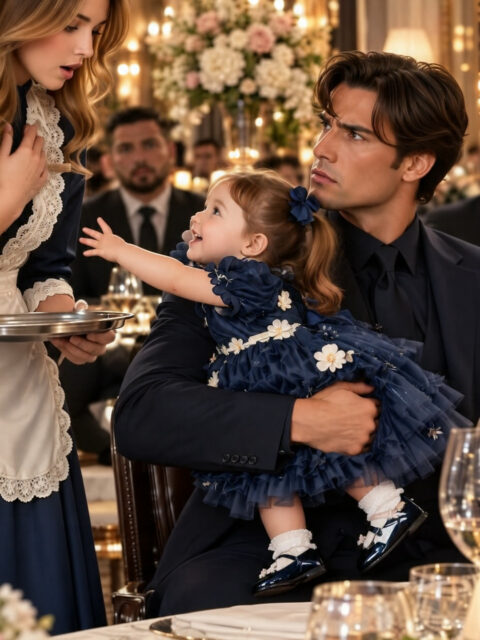
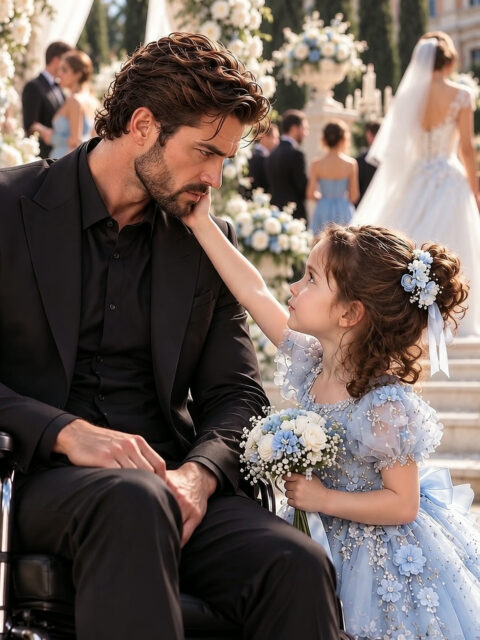
I’m Rachel Hayes, an Air Force officer whose father mocked her at his Texas cookout minutes before a V-22 Osprey landed on his lawn.
After three years away, I came home with one duffel bag and a quiet hope that my family might finally be glad to see me. Instead, my father pointed his spatula at the road, my brother asked if I still played soldier, and my mother looked down at the paper plates. None of them knew why I had to be back in Washington by midnight. Read every chapter to find out who stepped off that aircraft, what my father had hidden in his garage for three years, and why the whole backyard went silent.
“The loudest people at the table are rarely the ones carrying the heaviest load.”
Chapter 1: The Greasy Spatula
The first thing my father did when I walked back onto his Texas lawn was laugh.
Not a hug after three years of missed birthdays. He lifted a greasy spatula from the grill and pointed it at the road behind me.
“The bus stop’s that way.”
For half a second the cookout went quiet. Then my brother Travis barked out a laugh, and that was all the permission everyone else needed. Cousins snickered into their beer cans. A neighbor by the cooler turned away a moment too late.
I stood by the fence in worn boots, dark jeans and a plain black T-shirt, my old sand-colored duffel hanging from one hand. The Abilene heat sat on the yard like a wet towel. Lighter fluid, cut grass and burned burgers hung in the air while country music crackled from the patio speaker.
“Good to see you too, Dad,” I said.
Walter Hayes flipped a burger harder than he needed to. He was seventy that summer, six foot two, sunburned and gray, and he still walked like a man who expected doors and people to move aside.
“Well, if it isn’t our world traveler,” he said.
Another ripple of laughter. Travis leaned back in his lawn chair, sunglasses pushed into his thinning hair, a beer balanced on his stomach.
“Still playing soldier, Rach?”
“Still serving,” I said.
“Serving coffee at the airport?”
Dad laughed at that one.
I set my duffel down by the fence. On the flight home I had pictured this moment a hundred times, and it never looked like this.
“You want a burger or not?” Dad asked.
“Sure.”
“Then grab a plate. Nobody’s waiting on you here. This isn’t one of your fancy hotels.”
“I don’t stay in fancy hotels, Dad.”
“Sure you don’t.”
My mother stood beside the picnic table straightening paper plates that were already straight. She wore a blue sundress and the same nervous smile I remembered from every Thanksgiving argument. When Dad made the whole yard laugh at me, she looked down at the plastic forks.
That hurt more than his voice.
“Hi, Mom.”
“Hi, sweetheart,” she whispered, still not looking up.
Behind me, on the dashboard of my rental car, my government phone buzzed twice against the plastic.
I knew that pattern. Two short, one long.
Someone in Washington needed me, and they needed me today.
Chapter 2: The Plastic Cup of Iced Tea
Mom brought me iced tea in a plastic cup slick with condensation.
“You look thin,” she said quietly.
Not I missed you. Not I’m proud of you. Just thin.
“I’m okay, Mom.”
Her eyes slid toward my father. “Your room isn’t really ready. We weren’t sure if you were staying.”
“I’m not staying long. I have to be back in D.C.”
Travis leaned forward as if I had handed him a gift. “D.C.? Listen to her. She says it like she’s important.”
I said nothing and let the cold of the cup settle into my palm. My cousin Kelsey tilted her head and studied me like a puzzle.
“What do you actually do now, Rachel? Nobody ever really knows.”
Every face at the picnic table turned toward me. They wore the look people get when they are waiting for an answer they can bend into another joke.
“I work at the Pentagon,” I said.
Travis slapped his knee. Dad shook his head as if he had caught me in a lie too big to let slide.
“The Pentagon,” Dad said. “Sure.”
“I do.”
“Doing what?” Travis asked. “Changing printer toner?”
The whole yard laughed again. A napkin skated across the table in a hot gust.
I remembered a cadet’s story online: “My father shoved me into the rain on graduation day.” She said the cruelest part was the crowd that watched. I understood her now.
“Travis,” Mom murmured, “that’s enough.”
“What? I’m just asking what she does. Three years, Mom. Three Christmases. She sends a card with no return address and a phone number that never picks up.”
“I called every Sunday I could,” I said.
“From where?” Dad asked.
“I can’t tell you that.”
“Of course you can’t.” He waved the spatula. “Everything’s top secret. My daughter, the spy. Next she’ll tell us the President knows her name.”
I looked at my father for a long moment. “He does, Dad.”
The laughter stalled for a heartbeat, then came back louder, because that was the only way the Hayes family knew how to handle something it did not understand.
Then, somewhere past the live oaks, a deep mechanical rumble began. It was low enough that only a few people noticed at first.
I noticed. I knew exactly what that sound was.
And I knew it was early.
Chapter 3: The Shadow Over the Fence
The rumble grew until it swallowed the music.
The iced tea trembled inside my cup. Paper plates lifted off the picnic table and spun into the flower beds. Beer cans rolled under the lawn chairs.
“What in the world is that?” Uncle Ray shouted.
A wide shadow slid across the driveway, over the fence and across every laughing face in the yard. Mom’s smile vanished.
Dad squinted up into the glare, spatula frozen in midair. He wasn’t smiling anymore.
I met his eyes. “That’s my ride.”
Above his backyard, coming down hard through the bright Texas heat, a V-22 Osprey tilted its huge rotors upward and settled toward the open lawn behind the house. The grass flattened in rolling waves. Travis’s sunglasses blew off his head and skidded under the grill.
“Rachel!” Mom screamed. “Get back!”
“It’s all right, Mom. They know where to land.”
“They?” Dad shouted over the roar. “Who is they?”
The wheels touched down beside the old swing set Dad had built when I was six. The engines dropped to a heavy whine. The rear ramp lowered with a hydraulic groan.
Two officers in dress blues stepped out and walked straight across the lawn. One was a tall man with silver at his temples. The other was a young woman holding a black leather folder against her chest.
Neighbors lined the fence. Someone was filming with a phone.
The officers stopped six feet in front of me, came to attention and raised crisp salutes.
“Colonel Hayes,” the man said. “Lieutenant Colonel Mark Delaney, ma’am. Captain Brooke Avery. We apologize for the interruption.”
I returned the salute. “You’re forty minutes early, Mark.”
“Yes, ma’am. The timeline moved.”
Behind me, a plastic chair scraped. I heard my mother make a small, broken sound.
I turned around just in time to see her knees give way. Travis caught her elbow before she hit the patio.
“Colonel?” Dad said. His voice came out thin, like air leaking from a tire. “Colonel?”
Captain Avery opened the folder and held it toward me.
“Ma’am, the Secretary asked that you read this before we lift. He said you would want to know who is on the list.”
I looked down at the first line of the page, and the ground seemed to tilt beneath my boots.
Chapter 4: The Black Leather Folder
The list had nineteen names on it.
Nineteen American aid workers trapped inside a hospital compound overseas after the city around them fell apart overnight. Doctors. Nurses. Two engineers. A teacher.
The seventh name was Kelsey’s husband, Daniel Ruiz.
I looked up. My cousin was standing by the cooler, hand pressed over her mouth, her phone dark in her fist.
“Kelsey,” I said. “When did you last hear from Danny?”
Her face drained of color. “Two days ago. He said the phones were down. He said not to worry. Rachel, how do you know his name?”
“Because I’m going to get him.”
The backyard went completely silent except for the idling engines.
Travis stepped forward, still holding Mom’s arm. “Wait. Wait a second. You? You’re going over there?”
“I plan evacuations, Travis. When Americans are trapped somewhere nobody else can reach, my team finds a way to bring them home. That’s what I’ve been doing for three years. That’s why I couldn’t tell you where I was.”
“You said you worked at the Pentagon.”
“I do. The Pentagon is where the plans start. They don’t always finish there.”
Dad set the spatula down on the grill. Grease hissed. He didn’t seem to notice.
“Why didn’t you say anything?” he asked. “All this time. Why didn’t you just tell us?”
“I tried, Dad. Every time I called, you asked if I was still pretending. After a while, I stopped trying to explain.”
Lieutenant Colonel Delaney cleared his throat. “Ma’am, we need to be wheels up in six minutes to make the connection at Dyess.”
“Understood.”
Kelsey grabbed my wrist. Her hand was shaking. “Please. Please bring him back.”
“I will do everything I can.”
“That’s not a yes.”
“In my work, nobody ever says yes. But I have never left anyone behind when there was a way out.”
I bent to pick up my duffel. Before I could lift it, my father’s hand closed over the strap.
“Dad, I have to go.”
“I know,” he said. His voice was rough. “I just need to tell you one thing first.”
He pulled a folded envelope from his back pocket. It was creased and soft, as if he had carried it for a very long time.
On the front, in my own handwriting, was his name.
Chapter 5: The Sand-Colored Duffel
I knew that envelope. I had written it three years ago at two in the morning in a tent outside Ramstein, the night before my first real mission.
It was the letter you write in case you don’t come back.
“Mom was supposed to keep that,” I said. “Only open if…”
“I know what it was for,” Dad said. “She gave it to me the week you left. I wasn’t supposed to read it. I read it anyway.”
Mom wiped her face with the back of her hand. “He reads it every Sunday, Rachel. After you call. He goes out to the garage and reads it.”
Travis stared at our father as if he had never seen him before. “You never told us that.”
“Nobody asked,” Dad muttered.
I held his gaze. “Then why, Dad? Why the jokes? Why the bus stop?”
He looked past me at the Osprey, at the rotors still turning slowly in the heat.
“Because if I laughed, I didn’t have to think about where you really were. Every time you hung up, I’d turn on the news and see some place on fire. Laughing was easier than being scared.”
I had read once about a soldier who came home to find her belongings in trash bags, and how her family pretended her absence did not matter because admitting it mattered would have hurt too much. I had never imagined my father might be doing the same thing with jokes.
“You could have been scared with me,” I said quietly. “I would have understood.”
“I know that now.” He pushed the envelope into my duffel’s side pocket. “Take it with you. Bring it back to me. That’s an order.”
“You can’t give me orders, Dad. I outrank you.”
For the first time all day, he laughed for real, a short, cracked sound. “You always did.”
Captain Avery stepped closer. “Colonel, three minutes.”
I hugged my mother. She held on so hard her bracelet dug into my back.
“I’m so sorry,” she whispered. “I should have stood up for you.”
“You can start when I get back.”
Then Travis stepped in front of me, blocking my path to the ramp.
“Rach,” he said, his voice suddenly small. “There’s something you need to know about Danny before you go.”
Chapter 6: The Satellite Phone
Travis glanced at Kelsey, then back at me.
“Danny called me last night,” he said. “Not Kelsey. Me.”
Kelsey spun toward him. “What? Why didn’t you tell me?”
“Because he made me promise. He said the compound was surrounded and he didn’t want you to panic. He asked if my sister still worked for the government. I told him…” Travis swallowed. “I told him you made coffee at the Pentagon.”
The words landed on the patio like dropped glass.
“Travis,” Mom breathed.
“I know. I know.” He pulled out his phone and held up a number. “But he gave me this. He said it’s a satellite phone one of the doctors has. He said if anyone could actually help, they should call it at nine o’clock tonight his time. It’s the only window they have before the battery dies.”
I took his phone and studied the number. My chest tightened. We had spent two days trying to find a working line inside that compound.
“Mark,” I called. “Get this to the operations cell. Now.”
Delaney copied it onto his tablet and spoke quickly into his headset. Within seconds his eyebrows rose.
“Ma’am, the cell says that number isn’t on any of our lists. This could be the contact we’ve been missing.”
I turned back to my brother. Travis had always been the loud one, Dad’s star quarterback. Now he stood in the trampled grass with tears on his face.
“You might have just saved nineteen people,” I told him.
“I almost didn’t say anything,” he whispered. “I was too busy making fun of you.”
“But you did say something. That’s what counts.”
“Are you going to tell them? Over there? That your idiot brother laughed at you?”
“No,” I said. “I’m going to tell them my brother found the phone number.”
Kelsey threw her arms around Travis, sobbing into his shoulder.
Dad picked up my duffel and carried it to the edge of the ramp himself. The rotor wash pushed his gray hair flat. He set the bag down and straightened up, looking at the two officers.
Then my father, who had never once in my life saluted anything but the flag on the Fourth of July, raised his right hand to his brow.
Delaney returned the salute without hesitation.
“Sir,” he said, “your daughter is the best evacuation planner in the Department of Defense. You should know that.”
Dad’s jaw trembled. “I’m starting to,” he said.
I climbed the ramp, and as it began to close, I saw my mother run toward the house.
She came back holding something red, white and blue.
Chapter 7: The Folded Flag
The ramp sealed before I could see what Mom was carrying.
For the next forty hours I did not think about Abilene.
We flew to Dyess, then to Germany, then to a staging airfield whose name I still cannot write. At nine o’clock local time, I sat in a dark operations tent with a headset pressed to my ear and dialed the number my brother had given me.
It rang four times.
“Hello?” A man’s voice, cracked and exhausted. “Who is this?”
“This is Colonel Rachel Hayes, United States Air Force. Is this Daniel Ruiz?”
A long silence. Then he made a sound halfway between a laugh and a sob.
“Rachel? Travis’s sister? He said you made coffee.”
“Travis says a lot of things. Danny, listen carefully. How many people are with you?”
“Nineteen. Two are hurt. One of the nurses has a broken ankle.”
“Can everyone walk to the east courtyard by four in the morning?”
“We’ll carry her if we have to.”
“Then that’s what you do. Keep the phone on. Don’t call anyone else. Four in the morning, east courtyard. Look up when you hear rotors.”
“Rachel, is this real?”
“It’s real. My father made me promise to come home. I don’t break promises to him.”
At 4:02 a.m., two Ospreys dropped into the hospital courtyard under a sky the color of ash. I stood at the bottom of the ramp and counted every person who ran up it. A doctor carrying the nurse on his back. Two engineers. A teacher clutching a stuffed giraffe.
Number nineteen was Danny Ruiz. He grabbed my shoulders and cried.
“Kelsey,” he kept saying. “Tell Kelsey.”
“You can tell her yourself in about thirty hours.”
When we were safely over the border, the crew chief handed me a sealed envelope. “Ma’am, this came through the mail pouch at Dyess before we left. Marked urgent, personal.”
Inside was a photograph of our backyard.
The old flagpole Dad had let rust for a decade had been scrubbed and painted white. A brand-new flag hung from it.
Under it, Dad had written one line in his heavy block letters.
“Flying it until you’re home. Walter Hayes, proud father of Colonel Rachel Hayes.”
Chapter 8: The Evening News
Back in Abilene, I later learned, the whole street watched it happen.
The Pentagon released a short statement the morning after the evacuation. Nineteen Americans recovered. No casualties. The planning cell led by an Air Force colonel whose name was withheld.
But a neighbor had posted the video of the Osprey landing in Walter Hayes’s backyard. By lunchtime it had a million views. By dinner, a local station had put the two together.
Mom told me about it later, sitting on the porch steps with her knees pulled to her chest.
“Your father watched that video forty times,” she said. “Forty. He kept pausing it right at the salute.”
“Mom, he doesn’t even like the internet.”
“He made Travis teach him how to replay it.” She laughed through fresh tears. “Then the men from the feed store came by. The same men he used to tell that his daughter was ‘off doing something with airplanes.’ He brought them into the garage and showed them your letter. He has never shown anyone that letter.”
I had imagined a man who didn’t care. Instead, there had been a man alone in a garage, reading the same page over and over.
It reminded me of a story about a stepfather whose pride collapsed when he finally saw three silver stars on the uniform he had mocked. Pride, I was learning, is often just fear wearing a louder shirt.
“What did Travis do?” I asked.
Mom’s face softened. “He went to the VFW hall the next night and stood up in front of everyone. He told them what he said to you. All of it. The coffee, the printer toner, the soldier joke. Then he told them about the phone number. He said he’d spend the rest of his life making it up to you.”
“He didn’t have to do that.”
“Yes, he did,” Mom said. “We all did.”
She reached into the pocket of her sundress and pulled out a small velvet box.
“Your father wanted to give you this himself. But he’s been hiding in the garage since your car pulled in. He’s too nervous to come out.”
I opened the box. Inside lay a pair of old silver Army jump wings, tarnished with age.
“Dad was never in the Army,” I said slowly.
“No,” Mom said. “But he almost was.”
Chapter 9: The Empty Chair at the Grill
I found him in the garage, sitting on an overturned bucket beside his workbench. My letter lay open on his knee.
“Mom gave me the wings,” I said.
He didn’t look up. “They were my brother’s. Uncle Joe. He jumped with the 82nd. I was supposed to enlist right after him, but I got a bad knee in a tractor accident at nineteen. The recruiter sent me home. Joe went alone and didn’t come back.”
I sat down on the cooler across from him. “You never told me that.”
“I never told anybody. When you joined up, I was so proud I couldn’t breathe. And then I was so scared I couldn’t stand it. So I made jokes. It’s what I do when I’m afraid, Rachel. It’s a coward’s habit.”
“You’re not a coward, Dad.”
“I laughed at my own daughter in front of the whole neighborhood. Called her a bus rider. Told her nobody was waiting on her.” He finally looked up, and his eyes were red. “I was waiting. Every single day, I was waiting.”
I took the envelope he had given me on the ramp out of my pocket and laid it on the workbench.
“I brought it back. Like you ordered.”
He picked it up with shaking hands, then tore it cleanly in half.
“We won’t need that one anymore,” he said. “You’re going to write me new letters. Boring ones. About the weather in Washington. About what you ate for dinner.”
“I can do boring.”
“Good.”
We walked out to the backyard together. The whole family was there again, the same picnic table, the same paper plates. But nobody was laughing at anyone. Kelsey sat holding Danny’s hand like she would never let go. Travis jumped up and pulled out a chair for me, the one right at the head of the table.
“That’s Dad’s seat,” I said.
“Not today,” Dad said. “Today it’s the Colonel’s.”
He flipped a burger, then turned to the yard with the spatula raised exactly the way he had before.
Everyone held their breath.
“Folks,” he said, pointing the spatula at me, “the bus stop is that way. But my daughter doesn’t need a bus. She brings her own aircraft.”
The yard erupted. This time, I laughed with them.
Above us, the new flag snapped in the hot Texas wind, and under it, pinned to my collar by my father’s own trembling hands, Uncle Joe’s silver wings finally came home.