The Billionaire Who Never Smiled, The Yellow Blanket, and The Twenty-Year Secret
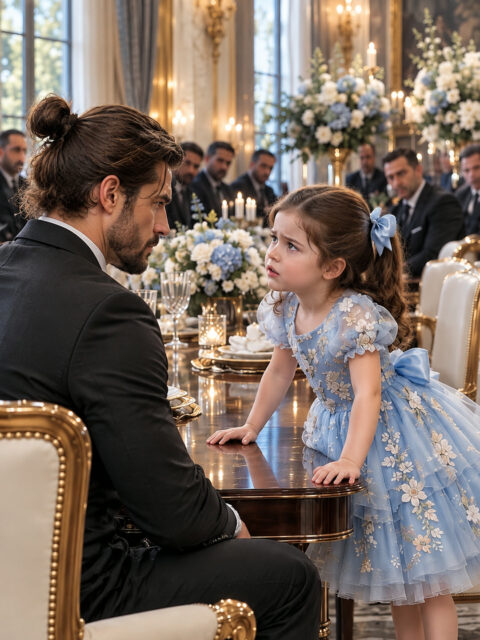
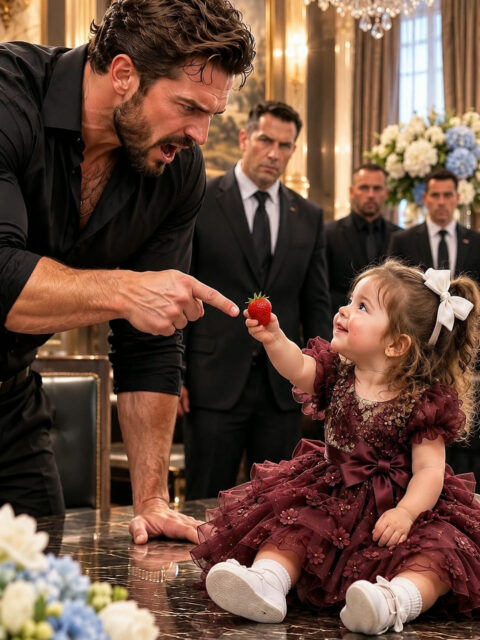
A paralyzed billionaire who hadn’t smiled in twenty years broke his lifelong curse when he woke up to find his courageous housekeeper and her toddler sleeping beside his bed after nursing him through a deadly fever. But when his toxic mother burst in, saw the child’s yellow blanket, and dropped a hidden police report, the twenty-year lie that shattered his youth was exposed forever.
Table of Contents
- Chapter 1: The Twenty-Year Curse
- Chapter 2: Sunlight in the Tomb
- Chapter 3: The Flooded Daycare and the Cellar Secret
- Chapter 4: The War Against the 104-Degree Fever
- Chapter 5: 7:12 AM: The Smile That Broke the Curse
- Chapter 6: The Dropped Portfolio on the Parquet
- Chapter 7: The Tampered Brakes on Interstate 5
- Chapter 8: The Ghost Leaves the Tomb
- Chapter 9: The Yellow Sapphire in the Sunlight
Chapter 1: The Twenty-Year Curse
“You can fire me tomorrow morning, Mr. Reed,” I told the shivering man whose dark eyes blazed with feverish fury. “You can throw my belongings onto the gravel driveway and blacklist me from every domestic staffing agency in California. But tonight, I am not going to stand here and watch you die just because you are too damn stubborn to accept help.”
My name is Mary Flores. I was twenty-nine years old, raising my eighteen-month-old son Ethan completely on my own after his father abandoned us before the first ultrasound. To keep a roof over our heads and organic formula in Ethan’s bottles, I worked twelve hours a day as a junior housekeeper at the sprawling, cold stone Reed estate nestled in the hills above Beverly Hills.
The estate belonged to Sebastian Reed.
At thirty-six years old, Sebastian was the chief executive of Reed Infrastructure and Global Engineering—a multi-billion-dollar industrial titan responsible for building bridges, deep-sea tunnels, and transit hubs across North America. He possessed more wealth than any five generations could spend, yet he lived like a condemned solitary inmate inside his own palatial home.
He had not walked—and had not smiled—since he was sixteen years old.
The tragedy that destroyed his youth had occurred twenty years earlier on a rain-slicked stretch of Interstate 5 during a torrential winter storm. The Reed family car had hydroplaned, spinning violently across three lanes before striking a concrete bridge support. Sebastian’s father, Arthur Reed, had been crushed instantly behind the steering wheel. Sebastian had survived, but a fractured lumbar vertebra had severed his spinal cord, leaving his lower body permanently paralyzed.
Ever since that horrific night, Sebastian had carried an unbearable, soul-devouring curse of guilt. He believed with every fiber of his being that he had murdered his father because, six seconds before the tires lost traction, he had leaned forward from the backseat to ask his father to switch the radio station to a baseball broadcast.
His mother, Evelyn Reed, had ensured that guilt never faded.
“Your father took his eyes off the road because of your childish demand,” Evelyn would remind him with cold, clinical cruelty whenever Sebastian questioned her financial decisions or tried to exert independence. “You broke this family, Sebastian. The least you can do is repent.”
Those poisonous words had hollowed him out from the inside. Sebastian spoke only in curt, clipped commands. He ate alone in his darkened mahogany study. He worked eighteen-hour days reviewing construction blueprints, refusing physical therapy, refusing company, and firing anyone who dared offer him pity.
Three veteran housekeepers had quit within three weeks of my hiring. Within forty-eight hours, I understood why.
Chapter 2: Sunlight in the Tomb
The Reed mansion felt less like a home and more like a mausoleum.
Heavy, charcoal velvet drapes blocked out every trace of California sunshine. The grand Steinway piano in the salon sat under a dust cover. The six domestic staff members tiptoed across the Persian carpets, speaking only in hushed, frightened whispers as if raised voices might awaken a demon.
On my very first afternoon, while wiping down the mahogany bookshelves in his private library, I let out an exasperated sigh and muttered under my breath, “This place has all the joy of an underground morgue.”
A sharp whir of electric wheels cut through the stillness.
Sebastian wheeled his high-backed titanium chair around the massive oak desk, his glacial, obsidian-dark eyes locking onto mine with lethal intensity.
“You are paid twenty-eight dollars an hour to dust books, Miss Flores,” he said, his voice flat, icy, and sharp as a surgeon’s scalpel. “You are not paid for architectural commentary or psychological analysis.”
I didn’t cower. I stood my ground, holding my microfiber cloth.
“I can dust and observe at the same time, Mr. Reed. It doesn’t cost the company any extra.”
His thick eyebrows arched in disbelief. “Are you attempting to be insolent?”
“No, sir. I’m simply pointing out that fresh air and sunlight are free, and you treat them like toxic waste.”
Behind me, the head of household, Theresa, gasped so hard she nearly dropped her brass clipboard. For twenty years, nobody had spoken to Sebastian Reed with anything less than terrified deference. He expected me to apologize or burst into tears.
Instead, I met his icy glare with calm, unblinking warmth.
“If you want to fire me for having a pulse, Mr. Reed, you are welcome to do so,” I said gently. “Otherwise, I’ll finish dusting the third shelf.”
He stared at me for ten excruciating seconds. Then, without a word, he turned his wheelchair back toward his monitors.
Over the next four weeks, Sebastian tested me relentlessly. He found fault with every task. A water glass had two water droplets on the rim. A folder on his credenza was skewed three degrees. A curtain hem was caught on a floor grate. Every complaint was delivered with razor-sharp irritation.
Yet, every time he criticized me, I simply smiled, corrected the issue without grumbling, and made sure his coffee was freshly brewed at precisely 140 degrees.
“Don’t you ever get exhausted from carrying all that anger?” I asked him one rainy Tuesday morning as I placed his porcelain mug on his desk.
His pen paused over a contract. “Don’t you ever get tired of overstepping?”
“Sometimes,” I answered with an easy shrug. “Then I look at my little boy, remember what truly matters, and let it go. Whatever you’re hauling around inside your chest, Mr. Reed… it looks ten times heavier than fifty-pound concrete sacks.”
Sebastian didn’t answer. But for the first time, he didn’t order me out of the room.
Chapter 3: The Flooded Daycare and the Cellar Secret
Then came the Monday that changed our lives forever.
At seven in the morning, as I was buckling Ethan into his car seat, my phone buzzed with an emergency notification: the local community daycare had suffered a ruptured main water line, flooding three classrooms and forcing an immediate three-day shutdown.
Panic seized my chest.
I had no relatives in Los Angeles. My savings account had forty-two dollars. A private last-minute nanny service demanded three hundred dollars upfront. And bringing a toddler into the silent, fortress-like Reed estate was an offense that would guarantee my immediate firing by Evelyn Reed.
Desperation makes you brave—and reckless.
I packed Ethan’s diaper bag with pureed apples, soft teething biscuits, his favorite wooden blocks, and his battered, faded yellow flannel blanket—a soft, vintage baby quilt with hand-embroidered blue trim that had belonged to my late grandmother.
When I arrived at the estate, I smuggled eighteen-month-old Ethan through the rear cellar entrance into the warm, disused laundry annex behind the commercial dryers.
“Stay quiet, my sweet angel,” I whispered, kissing his chubby forehead as he sat happily on a pile of fresh terry towels, hugging his yellow blanket. “Mommy will come check on you every fifteen minutes.”
For seven hours, the miracle held. Ethan was an angelic child; he napped to the rhythmic hum of the dryers, chewed his biscuits, and babbled silently to his wooden blocks.
At four in the afternoon, I carried fresh Egyptian cotton linens up to Sebastian’s master suite on the second floor.
The door was unlocked.
As I pushed the heavy oak panel open, a terrifying sound reached my ears—a ragged, choked gasp, followed by the violent clatter of metal.
I rushed inside.
Sebastian was collapsed half-on, half-off his massive king-sized bed. His wheelchair was overturned against the hardwood floor. His skin was drenched in cold sweat, his face pale as chalk, and his broad chest was heaving with shallow, suffocating gasps.
“Mr. Reed!” I cried, dropping the sheets and dropping to my knees beside him.
“Get… get out…” he rasped, his teeth chattering so violently the sound echoed in the cavernous room.
I reached out and pressed my palm against his forehead.
The heat radiating from his skin was staggering. It felt like touching a hot radiator. He was burning up with a massive, life-threatening fever.
Chapter 4: The War Against the 104-Degree Fever
“You’re burning with fever, Mr. Reed,” I said, trying to lift his torso back onto the bed. “Your temperature is easily over a hundred and three. I’m calling 911.”
His right hand shot out with sudden, desperate strength, his fingers locking around my wrist like a band of hot iron.
“No!” he choked out, his dark eyes bloodshot and dilated with terror. “No ambulances. No hospitals. If you… if you call anyone… you’re fired.”
“You are suffering from severe septic shock or pneumonia!” I argued, refusing to pull away. “You can’t survive this alone!”
“I don’t need… anyone,” he gasped through clenched teeth.
I grabbed the bedside intercom and buzzed Theresa. The maid answered breathless—Theresa was forty miles away in Pasadena helping Evelyn prepare for the annual Reed Symphony Gala. The estate’s private concierges and nurses were off-duty for the holiday weekend.
I checked his pulse. It was thumping at nearly one hundred and forty beats per minute.
When a man’s fever crosses 104 degrees, organs begin to fail.
“You can fire me tomorrow, Mr. Reed,” I told him, looking into his glazed, fevered eyes with fierce determination. “But tonight, you’re staying alive.”
I locked the bedroom door. I pulled off his sweat-drenched linen shirt. I called a 24-hour telehealth emergency physician, carefully detailing his symptoms, vitals, and spinal condition. The doctor warned me that without immediate cooling, he could suffer brain damage from febrile seizures.
For the next seven hours, I waged a desperate, private war against the fever.
I filled porcelain basins with cold water. I soaked hand towels and pressed them to his burning neck, his armpits, and his chest. I forced him to swallow electrolyte solution drop by drop through a plastic straw.
At first, he fought me. He cursed me. He tried to shove my hands away with weak, trembling arms.
“Leave me… let me die…” he groaned into the pillows. “I deserve it… I killed him…”
By one in the morning, the fever had stripped away every layer of his cold, billionaire defense.
The ruthless titan of industry disappeared.
In his place lay a terrified, broken sixteen-year-old boy trapped in the dark on a rain-slicked California highway.
“Dad…” Sebastian wept softly, his eyes squeezed tightly shut as tears tracked through the cold sweat on his cheeks. “Dad, don’t look back… keep your eyes on the road… please…”
I froze, holding the chilled washcloth against his forehead. My heart cracked in two.
“I didn’t mean to distract you, Dad,” Sebastian sobbed, his voice cracking into high, child-like whimpers. “I just wanted to hear the game… It should have been me… why did you die instead of me?”
The agony in his voice was so pure, so agonizingly raw, that tears blurred my own eyes. For twenty years, this man had lived inside an emotional iron cage, believing his childhood request had killed his father.
I sat on the edge of the mattress, took his burning hand between both of mine, and squeezed it with all the strength in my body.
“Sebastian,” I spoke softly, leaning close so my voice could penetrate the fever dreams. “Listen to my voice. You were just a sixteen-year-old child. You loved your dad. You didn’t make the rain fall. You didn’t make the tires skid. It was an accident. It was never your fault.”
His breathing hitched. His trembling slowly began to subside.
“Not… my fault?” he whispered into the pillow.
“Never your fault,” I promised him. “Rest now. You’re safe.”
Slowly, his tight grip on my hand relaxed, and his breathing leveled into deep, restorative sleep.
Chapter 5: 7:12 AM: The Smile That Broke the Curse
At four in the morning, the fever finally broke.
His skin cooled to a normal warmth, and his pulse slowed to a steady seventy-two beats per minute.
Downstairs in the cellar annex, a tiny cry echoed through the baby monitor in my pocket. Ethan was awake, hungry and lonely.
I crept downstairs, gathered my sweet boy into my arms, warmed his bottle, and changed him. But as I held him, exhaustion hit me like a physical blow. My limbs felt like lead, my head throbbed, and my eyelids burned with fatigue.
I couldn’t leave Sebastian alone in case the fever spiked again before dawn.
So I carried Ethan up the rear staircase into Sebastian’s bedroom. I wrapped my son snugly in his soft, faded yellow flannel blanket, settled into the oversized velvet wingback chair beside Sebastian’s bed, and nestled Ethan against my chest.
I closed my eyes, intending only to rest for two minutes.
I woke up at 7:12 AM.
Golden, unfiltered morning sunlight was streaming through the sheer curtains, bathing the room in soft, warm amber light.
A strange, quiet sound made my eyes flutter open.
It sounded like a sharp intake of breath—hesitant, awkward, and completely unfamiliar.
I lifted my head.
Sebastian was awake. He was propped up on his pillows, his dark hair disheveled, the fever completely gone from his clear, sharp eyes.
He wasn’t glaring. He wasn’t yelling at me to leave.
He was looking directly at me—and at little Ethan sleeping soundly against my chest, Ethan’s chubby little hand resting over the edge of the yellow blanket.
And then, the impossible happened.
The corners of Sebastian Reed’s mouth twitched. The tight, bitter lines etched around his jaw softened. His lips slowly, delicately curved upward.
It was an uneven, hesitant smile—the kind of smile an exiled man gives when he catches sight of his homeland after twenty years of darkness.
A smile of pure, breathtaking light.
For the first time in over seven thousand days, the man who never smiled was smiling.
My breath caught in my throat. Neither of us spoke. The morning seemed to hold its breath.
*BAM!*
The heavy double doors of the master bedroom flew open with a violent crash that rattled the glass lamps.
Chapter 6: The Dropped Portfolio on the Parquet
Evelyn Reed stood framed in the doorway.
She was still dressed in her floor-length black velvet symphony gown, diamond chokers gleaming at her throat, her styled silver-blonde hair unyielding as a helmet. Behind her stood Theresa, looking mortified.
“Sebastian!” Evelyn snapped, storming into the room with imperial fury. “What is the meaning of this? Why were your doors locked? The security desk said—”
Her voice abruptly died.
Her gaze landed on Sebastian sitting up in bed.
She saw the smile lingering on his lips. She saw the bowl of water, the damp cloths, the medicine bottles.
And then, her eyes traveled to me—and dropped directly onto the faded yellow blanket swaddling the toddler in my arms.
All the blood drained from Evelyn Reed’s face in a fraction of a second.
Her mouth fell open in sheer, unadulterated horror. Her manicured hands began to tremble so violently that the heavy burgundy leather portfolio she had been clutching slipped from her fingers.
*Smack.*
The portfolio hit the parquet floor, bursting open. Dozens of legal documents, bank statements, and yellowed official papers spilled across the Persian rug.
Right on top lay an official, watermarked California Highway Patrol Collision Investigation Report from November 14, 2004.
Stamped across the first page in faded red ink were the words:
OFFICIAL FINDING: MECHANICAL BRAKE LINE SEVERANCE PRIOR TO COLLISION. SEBASTIAN REED CLEARED OF ALL DRIVER DISTRACTION CONTRIBUTIONS.
Silence fell like a lead curtain.
Sebastian’s smile vanished instantly. His dark eyes darted from the fallen police report to his mother’s chalk-white face.
“Mother?” Sebastian’s voice was dangerously low, cold as frozen iron. “What is that report?”
Evelyn didn’t look at the report.
Her trembling hand rose, pointing a shaking finger directly at Ethan’s yellow blanket.
“Where…” Evelyn gasped, her breath wheezing through her teeth. “Where did you get that blanket?”
I blinked, holding Ethan tighter. “It belonged to my grandmother. She was a pediatric nurse at St. Jude’s Memorial in Sacramento twenty-five years ago.”
Evelyn’s knees buckled. She had to grasp the mahogany doorframe to prevent herself from falling.
“That blanket…” Evelyn whispered, her voice cracking into a ragged sob. “That blanket was wrapped around Arthur’s newborn infant… the child he took before he died.”
Chapter 7: The Tampered Brakes on Interstate 5
Sebastian’s gaze locked onto the spilled police report on the floor.
Using his powerful upper body, he dragged himself to the edge of the mattress and reached down with trembling arms, snatching the yellowed papers from the carpet.
As his eyes scanned the certified findings of the state accident reconstruction team, his knuckles turned white as bone.
“Brake line failure…” Sebastian whispered, his voice trembling with a mixture of disbelief and twenty years of suppressed agony. “The front left brake caliper was deliberately tampered with… Arthur Reed was fighting a mechanical failure three miles before the bridge…”
He lifted his eyes to Evelyn, his gaze burning with devastating realization.
“You knew,” Sebastian roared, his voice shaking the crystal fixtures. “You knew the car had been sabotaged! You knew the radio had nothing to do with it! You let me believe for twenty years that I killed my father!”
Evelyn backed away, clutching her diamond necklace as if it could shield her from the truth.
“Arthur was going to divorce me!” Evelyn shrieked, her aristocratic mask crumbling into ugly desperation. “He found out I was siphoning millions from the Reed Foundation to cover my brother’s casino debts in Monaco! He took the newborn baby—his secret heir from his true love, Eleanor Vance—and put him in hiding! He was on his way to sign the new trust documents disinheriting me when the crash happened!”
I gasped, looking down at my son.
Eleanor Vance had been my grandmother’s sister. Ethan wasn’t an orphan of a broken home—my grandmother had raised me on stories of Eleanor, the woman who had loved Arthur Reed in secret.
“You tampered with the brakes,” Sebastian said, his voice dropping into a register of cold, absolute horror.
“I didn’t mean to hurt you, Sebastian!” Evelyn sobbed, falling to her knees. “I only wanted Arthur stopped before he reached the probate court! But then you survived… and if you knew you were blameless, you would have taken full control of the trust at eighteen! I had to keep you guilty! I had to make you believe you were broken so you would let me control the board!”
“You monstrous woman,” Sebastian whispered, tears of profound grief and liberation spilling over his lashes. “You stole twenty years of my life.”
Chapter 8: The Ghost Leaves the Tomb
The Beverly Hills Police Department and investigators from the District Attorney’s Major Crimes Division arrived within forty-five minutes.
Evelyn Reed was escorted out of the mansion in handcuffs, her diamond choker removed and cataloged as evidence, her hysterical protests echoing across the manicured lawns.
The twenty-year-old cold case of Arthur Reed’s vehicular homicide had just been reopened with definitive forensic evidence and a confession recorded on the estate’s high-definition security microphones.
The estate grew quiet once more.
By noon, the clouds that had shadowed the master suite for two decades were gone. All the heavy charcoal drapes had been pulled down, letting bright, warm California sunlight flood every corner of the room.
Sebastian was sitting in his wheelchair by the grand terrace window, dressed in a clean navy cashmere sweater.
Beside him on the soft sheepskin rug, little Ethan was happily rolling a wooden fire truck across the floor, babbling cheerfully.
“Ethan,” Sebastian called softly.
Ethan looked up, smiled his wide, innocent baby smile, and crawled over to Sebastian’s chair. He placed his chubby little hands on Sebastian’s knee and held up his wooden truck.
Sebastian reached down. His large, strong hand gently accepted the toy.
I stood by the doorway, holding two cups of fresh herbal tea, watching the scene with a full heart.
“You don’t have to stand in the shadows anymore, Mary,” Sebastian said without turning around.
I walked over and handed him a porcelain cup, sitting down on the cushioned window seat.
“How do you feel?” I asked gently.
Sebastian looked out over the sunlit valley, then down at Ethan, who was now hugging his favorite yellow blanket against Sebastian’s leg.
“For twenty years, I felt like a ghost haunting a tomb,” Sebastian said, his voice deep and clear. “Every breath was an apology for being alive. Every dollar I earned felt like blood money.”
He looked at me, his dark eyes glowing with a warmth that completely transformed his features.
“Last night, when you refused to let me die… when you held my hand and told me I was blameless… you gave me back my soul, Mary.”
Chapter 9: The Yellow Sapphire in the Sunlight
Six months later.
The Reed mansion was unrecognizable.
The dark velvet drapes had been replaced with airy, white linen that billowed in the coastal breeze. Laughter echoed down the wide corridors. The Steinway piano in the salon was played every evening, filling the estate with bright, soaring melodies.
The Reed Foundation had undergone a complete restructuring. Under Sebastian’s direct leadership, a two-hundred-million-dollar endowment had been established for spinal injury research and safe havens for single mothers across the state.
Evelyn Reed had accepted a plea agreement, sentenced to twenty-five years at the California Institution for Women in Corona for conspiracy to commit murder and corporate embezzlement.
On a warm Saturday afternoon, the rear gardens of the estate were decorated with white roses and fairy lights for an intimate celebration.
Sebastian wheeled himself down the smooth stone pathway toward the pergola, where Ethan—now running steadily on his little toddler legs—was chasing bubbles blown by Theresa.
“Daddy!” Ethan squealed, stumbling over the grass and tumbling directly into Sebastian’s lap.
Sebastian caught him effortlessly, laughing out loud—a rich, booming, joyous laugh that made the garden birds take flight in musical bursts.
He pressed a warm kiss to Ethan’s messy hair, then looked up as I stepped into the sunlight wearing a simple, elegant ivory linen sundress.
“You spoil him, Mr. CEO,” I teased, walking over and resting my hands on his broad shoulders.
Sebastian reached up, his fingers intertwining with mine, bringing my hand to his lips for a tender, lingering kiss.
“He deserves to be spoiled,” Sebastian murmured softly. “And so do you, my love.”
He reached into his pocket and produced a small velvet box, opening it to reveal a magnificent yellow sapphire ring surrounded by a halo of brilliant diamonds—the exact color of Ethan’s cherished baby blanket.
“Twenty years ago, a storm took my father and broke my body,” Sebastian said, his eyes shining with deep emotion. “I spent twenty years in the dark, believing I would never deserve love or joy again. But you brought your son, your courage, and your sunlight into this house. You taught me how to smile again.”
He looked up at me with all the devotion a man could possess.
“Mary Flores, will you marry me and make this house our forever home?”
Tears of pure happiness spilled down my cheeks as Ethan clapped his little hands and giggled.
“Yes, Sebastian,” I whispered, leaning down to meet his warm, waiting lips. “A thousand times, yes.”
Beneath the warm California sun, with little Ethan laughing in our arms, the curse was broken forever.
The man who never smiled had finally found his reason to live.