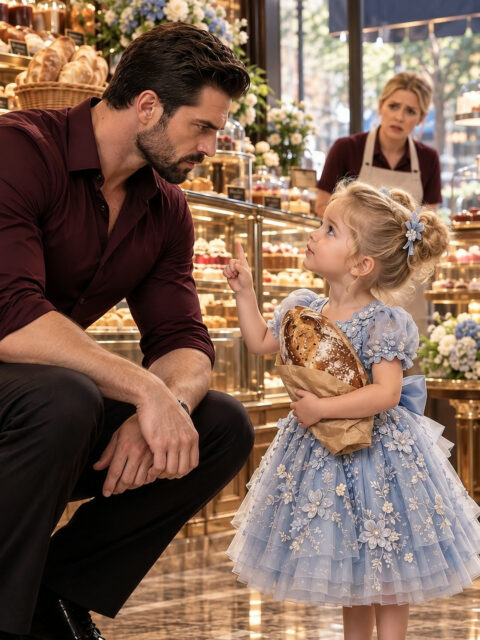
Please, Ma’am, Just One Bowl
“Please, ma’am. Just one bowl,” a little girl whispered inside a crowded Pennsylvania diner, holding exactly $2.17 while snow melted in her tangled hair. When billionaire widower Daniel Mercer stepped in to buy her soup, he uncovered an ancient debt of honor that would transform four lives forever.
Table of Contents
- Chapter 1: Two Dollars and Seventeen Cents
- Chapter 2: The Girl in the Blizzard
- Chapter 3: A Business Contract with Lucy
- Chapter 4: The Cabin in the Snowdrifts
- Chapter 5: An Old Friend’s Name
- Chapter 6: The Slumlord at the Front Door
- Chapter 7: The Power of Mercer Development
- Chapter 8: A Debt of Honor Paid with Interest
- Chapter 9: Kindness Paid Forward
Chapter 1: Two Dollars and Seventeen Cents
The fluorescent lights of the Dutch Kettle Diner hummed with a low, electric buzz against the freezing December dusk outside Lancaster, Pennsylvania.
The diner was packed to the gills. The air was thick with the scent of fried scrapple, buttered rye toast, scorched roast coffee, and wet wool. Outside, a heavy lake-effect snowstorm was sweeping down from Lake Erie, burying the pickup trucks in the gravel lot beneath four inches of powder.
I sat alone in the corner booth beside the frosted window, nursing a cup of black coffee.
My name is Daniel Mercer. At forty-seven years old, I was the sole owner and chief executive of Mercer Development Group—a commercial real estate and infrastructure firm operating across Pennsylvania, Ohio, and Maryland. I had built high-rise hospital towers in Pittsburgh, suburban office parks in Philadelphia, and luxury estates whose master bathrooms were larger than the rowhouse in Altoona where I had grown up.
Yet for six years, none of it had meant a damn thing.
Six years ago, on an icy stretch of the Pennsylvania Turnpike, an eighteen-wheeler had jackknifed across the median, killing my wife, Sarah. Since that night, my life had been reduced to a gray schedule of financial spreadsheets, boardroom meetings, and returning home to a twelve-thousand-square-foot stone manor where the only sound was the ticking of a grandfather clock in the dark.
I had learned to become deaf to the world.
Then, cutting through the clatter of silverware and the roar of the diner’s espresso machine, came a small, fragile whisper.
“Please, ma’am. Just one bowl.”
I looked up over the rim of my coffee mug.
Standing at the front cash register was a little girl who could not have been older than seven.
She wore a thin, navy-blue hooded jacket that was threadbare at the elbows, soaked through with slush. Her canvas sneakers were wrapped with gray duct tape around the soles to keep the freezing slush from soaking her socks, and wet snow was slowly melting into her tangled, honey-blond curls.
In her small, chapped hands, she held out a handful of damp coins.
Two crumpled one-dollar bills, a quarter, a dime, and two pennies.
Exactly two dollars and seventeen cents.
Behind the counter, the evening waitress, a tired woman named Donna with dark circles under her eyes, glanced nervously at the growing line of hungry truckers waiting to pay their checks.
“Sweetheart, a bowl of chicken noodle soup is five dollars and twenty-five cents,” Donna sighed, not unkindly, but with the hurried indifference of someone working a fourteen-hour shift. “Two dollars and seventeen cents isn’t enough.”
The little girl didn’t back down. She stood up on her tiptoes, pressing the coins closer to the glass display case.
“I know it isn’t enough, ma’am,” she whispered, her small voice trembling with urgent desperation. “You can make the bowl smaller. I don’t need the oyster crackers. And you don’t have to give me a spoon. My mom hasn’t eaten since yesterday morning, and the fever makes her throat hurt.”
“Honey, the register has a computer system,” Donna said, shaking her head. “I can’t punch in a discount. If the drawer is short at the end of the shift, it comes out of my tips.”
“What if I bring the rest tomorrow?” the child pleaded. “I shovel driveways on Elm Street. Mr. Henderson gives me three dollars when the snow stops!”
“No, sweetie. No credit.”
The girl hesitated for two seconds. Her small shoulders tightened.
“Could I wash dishes?” she asked, her voice cracking slightly. “I’m very fast. At home, I wash all the pots with cold water and lye soap.”
Several customers at the counter turned their heads, murmuring among themselves. A flush of embarrassment crept up Donna’s neck.
“You’re seven years old, honey! The health board would shut us down in five minutes,” Donna snapped, her voice tightening under the gaze of the room. “Please step aside. You’re holding up the line.”
Chapter 2: The Girl in the Blizzard
The little girl looked down at her damp coins.
She didn’t cry.
She didn’t stomp her feet. She didn’t let out a whimper or make a scene.
That bothered me more than tears ever could have.
Children are supposed to believe that cruelty and hunger are rare enough, shocking enough, to weep over. When a seven-year-old child meets rejection with quiet, stoic resignation, it means she has already learned that the world is cold, and that tears are merely a waste of energy.
With slow, mechanical precision, the little girl gathered her coins from the counter. She pulled a clean paper napkin from the chrome dispenser, wrapped the two dollars and seventeen cents inside it, and slid it carefully into the pocket of her thin jacket.
She turned to walk toward the exit.
As she passed booth four, she noticed a crumpled plastic straw wrapper lying on the linoleum floor.
Without pausing, she bent down, picked up the stranger’s trash, tossed it into the stainless-steel refuse bin beside the door, and pushed open the heavy glass door into the howling blizzard.
My chest seized with a physical ache so sharp I nearly spilled my coffee.
My late wife, Sarah, had been like that.
Sarah had been the kind of woman who wiped down the public sink after washing her hands, who apologized when distracted shoppers bumped into her cart, and who quietly slipped twenty-dollar bills into the collection plates of churches she didn’t attend.
Before the door could swing completely shut, I stood up from my booth, tossed a fifty-dollar bill onto the table, and walked to the counter.
“Donna,” I called out.
The waitress looked at me, surprised by the commanding authority in my voice. “Yes, Mr. Mercer?”
“Pack two quarts of the chicken noodle soup in heavy insulated containers,” I said. “Add four large biscuits, a side of roasted turkey breast, and two slices of that Dutch apple pie in the case.”
“Right away, Mr. Mercer!”
I turned, shoved open the glass door, and stepped out onto the snowy sidewalk.
The freezing gale hit my face like a wet towel, the snow swirling in wild white eddies beneath the amber streetlamps.
Twenty yards down the sidewalk, walking with her head ducked against the biting wind, was the little girl, her thin sneakers leaving uneven, slushy tracks in the powder.
“Excuse me!” I called out.
The child froze in her tracks.
She spun around, pulling her hood tighter around her face, her hazel eyes filled not with eager hope, but with sharp, defensive suspicion.
Chapter 3: A Business Contract with Lucy
I walked across the snow-covered gravel, stopping four feet from her, keeping my hands resting casually in the pockets of my wool overcoat so as not to appear intimidating.
“What kind of soup does your mother like best?” I asked gently.
She stared at me, her small jaw set in a hard, stubborn line. “Chicken.”
“Then chicken it is,” I said, pointing back toward the diner where Donna was already packing the heavy containers into a brown cardboard box. “Two quarts to go, with fresh biscuits and roast turkey.”
The little girl immediately shook her head, taking a step backward into the snowbank.
“No, sir,” she said, her voice firm and resolute. “I only asked for one bowl.”
“Two quarts will stay warm longer in this storm,” I explained with a soft smile. “And there’s enough food in that box to feed your mother, you, and whoever else is waiting at home.”
“I can’t pay for two quarts,” she replied, her hand clutching the paper napkin of coins inside her pocket. “I only have two dollars and seventeen cents.”
“I didn’t ask you to pay for it, sweetheart,” I told her. “I’m buying it.”
Her small chin lifted with a fierce, quiet pride that looked astonishingly majestic on a seven-year-old child in duct-taped shoes.
“My sister says we don’t take charity from strangers,” she stated clearly. “My sister says people who give free things always want something back.”
The words stopped me dead in my tracks.
In my world of corporate finance, that was the foundational rule: *Nothing is free. Every gift has an invoice attached.*
Yet standing before me in a Pennsylvania blizzard was a child starving for dinner, protecting the last fragile shred of dignity her family possessed.
“Your sister is a very smart woman,” I said, crouching down in the snow so my eyes were level with hers. “What is your name?”
“Lucy.”
“Lucy what?”
“Lucy Parker.”
I smiled, extending my gloved hand. “My name is Daniel Mercer. So you see, Lucy… now we’re not complete strangers.”
A tiny, reluctant twitch touched the corner of her lips—the faint ghost of an amused smile that vanished almost instantly.
“How about we make a business contract, Lucy?” I proposed.
Her eyes narrowed with serious, analytical interest. “What kind of contract?”
“You let me buy the soup and the turkey tonight,” I said. “And in exchange, you agree to a debt: someday, when you are grown up, and you see someone who is cold or hungry and needs something you can give… you give it to them. Deal?”
Lucy considered my offer with the solemn intensity of a federal judge.
“Anything?” she asked.
“Something reasonable,” I nodded.
Her gaze dropped toward her duct-taped sneakers, a shadow of ancient sorrow passing over her young face. “What if I never have any money, Mr. Mercer? What if I’m always poor?”
I looked at her small, noble face, and for a fleeting second, the suffocating loneliness of my massive, empty stone house flashed through my mind.
“Kindness doesn’t cost money, Lucy,” I whispered softly. “Sometimes, kindness is just picking up a piece of trash, or sitting with someone who is lonely.”
Lucy looked back up at me.
Her hazel eyes searched my face—reading the gray hair at my temples, the dark hollows of grief beneath my eyes, and the quiet, heavy stillness in my posture.
Then she asked a question that no adult had dared ask me in six years:
“If that’s true, Mr. Mercer… why do you look so sad?”
Chapter 4: The Cabin in the Snowdrifts
The question hit me like a physical blow to the sternum.
For six years, colleagues, board members, and socialite acquaintances had walked on eggshells around me. They had spoken of quarterly profits, new construction permits, and foundation galas, carefully avoiding the gaping, bleeding hole where Sarah had once been.
And here, in the middle of a parking lot in a snowstorm, a starving seven-year-old girl had looked past my four-thousand-dollar cashmere coat and seen the broken, weeping widower shivering inside.
I swallowed hard, the cold air burning my throat.
“I look sad, Lucy,” I replied, my voice hoarse and raw, “because I lost someone very special to me six years ago, and sometimes my house feels too big and too quiet.”
Lucy looked at me for three long seconds.
Then, without a word, she pulled her small right hand from her jacket pocket, stepped forward through the snow, and gently rested her cold, chapped fingers against the back of my leather glove.
“You can come with me to bring the soup to Mommy,” Lucy said softly. “Our house is very small, but it isn’t quiet.”
Five minutes later, Donna handed me the steaming cardboard box filled with hot soup, roasted meat, and fresh biscuits.
I helped Lucy into the passenger seat of my heavy four-wheel-drive GMC Yukon, turning the heater vents on full blast until the warm air began melting the ice crystals from her blond curls.
We drove four miles west of Lancaster, turning off the state highway onto a narrow, unpaved gravel lane that wound through the snow-choked hemlock woods.
At the end of the lane sat a dilapidated, single-story timber cabin with a sagging front porch and a smoking tin chimney.
Beside the porch sat a rusted, twenty-year-old station wagon on four flat tires, buried under eighteen inches of fresh snow.
“That’s our house,” Lucy pointed proudly.
I carried the heavy food box up the rickety wooden steps, while Lucy opened the door.
“Mommy! Claire! I brought the chicken soup!” Lucy called out into the dim interior.
The cabin was freezing. A small woodstove in the corner was burning damp pine slabs, producing more smoke than heat.
Sitting on a worn sofa beneath three heavy woolen blankets was a woman in her late forties, her face pale, sunken, and flushed with a fever that made her breathe in shallow, rattling gasps.
And rushing out of the tiny kitchen with an iron poker in her hand was a young woman of about twenty-four.
She wore a faded flannel shirt, her dark hair pulled back into a severe ponytail, her jaw set in ferocious defense.
“Lucy! Where have you been?” the older sister cried out, pulling Lucy behind her, turning the iron poker toward me with trembling, defiant hands. “Who are you, mister? Get out of our house before I call the sheriff!”
Chapter 5: An Old Friend’s Name
“Claire, stop! He’s nice!” Lucy pleaded, tugging at her sister’s flannel shirt. “His name is Mr. Daniel Mercer! He bought the soup for Mommy, and we made a business contract!”
At the sound of my name, the young woman froze.
The iron poker in her hand slowly lowered, its tip clattering against the bare floorboards.
Claire Parker stared at me, her eyes widening in disbelief. “Daniel Mercer? The… the contractor? Mercer Development?”
“Yes, ma’am,” I said, setting the steaming food box gently onto the rustic wooden table. “Your sister came to the Dutch Kettle to buy soup for your mother. I insisted on bringing it out.”
From the sofa beneath the blankets, the sick woman let out a weak, coughing rasp. She struggled to sit up, her hazel eyes blinking through the haze of fever.
“Mercer…?” the older woman whispered, her voice frail as dry autumn leaves. “Daniel Mercer… from Altoona?”
I stepped closer to the sofa, removing my hat, looking down at the woman’s weathered face. “Yes, ma’am. I grew up in Altoona.”
The woman let out a long, shuddering breath, fresh tears spilling over her hollow cheeks.
“Thomas always told me you’d become a great builder, Daniel,” she whispered.
A cold shockwave raced through my spine.
“Thomas?” I breathed. “Thomas Parker?”
“My father,” Claire said quietly from behind me, her voice trembling. “Thomas Parker. He was your lead framing carpenter on the St. Jude Community Center project in nineteen ninety-six.”
Thirty years vanished in a single, concussive flash of memory.
In 1996, I had been a twenty-seven-year-old novice contractor with fifteen thousand dollars in borrowed bank credit, trying to complete my first municipal project. When my primary lumber supplier had defaulted and sent defective green timber, my company had faced bankruptcy and prison for contract default.
It had been Thomas Parker—a master framing carpenter with hands like oak roots—who had refused to walk off the job.
Thomas had brought his own tools, rallied six veteran framing carpenters, worked twenty-hour shifts in freezing sleet without pay, and personally rebuilt the roof trusses, saving my company, my reputation, and my entire future.
And when I had tried to write him a bonus check after the city inspector signed off, Thomas had pushed my hand away with a warm grin: *”Pay it forward when you’re a big shot, kid. A good foundation holds up the whole house.”*
I looked at the sick woman on the sofa.
“Evelyn,” I whispered, dropping to both knees beside her couch, taking her cold, feverish hand into both of mine. “You’re Thomas’s Evelyn.”
Chapter 6: The Slumlord at the Front Door
“Thomas passed away three years ago, Daniel,” Evelyn Parker wept softly, her frail fingers tightening around mine. “Silicosis from the stone quarries. He worked until his lungs turned to concrete.”
Claire stepped beside her mother, her arms wrapped tightly around Lucy.
“My dad had no pension, Mr. Mercer,” Claire explained, her voice cracking under the weight of three years of relentless suffering. “We used all our savings for his medical treatments. Then Mommy took ill with chronic bronchial pneumonia. I work thirty hours a week as a receptionist at the feed mill and clean offices at night, but the rent on this cabin is eight hundred dollars a month.”
Claire gestured toward an official legal document lying on the kitchen counter.
“Our landlord, Vance Holdings, filed an emergency eviction writ last week,” Claire said, wiping a bitter tear from her cheek. “They gave us until tomorrow morning at nine to vacate the cabin. Caleb Vance bought the land to clear-cut the hemlock timber. We have nowhere to go.”
Before I could answer, headlights swept through the frosted front windows.
A heavy truck door slammed outside in the snow.
The front door of the cabin was shoved open without a knock, letting in a blast of sub-zero wind and blowing snow.
Stepping into the room was Caleb Vance—a sixty-year-old local developer with a greasy sheepskin coat, a cigar stub clenched in his teeth, flanked by two burly men carrying crowbars and eviction padlocks.
“Evening, Evelyn,” Vance barked, not bothering to remove his boots as he tracked dirty slush onto the clean pine floor. “Just came by to remind you that the sheriff’s van will be here at eight sharp tomorrow. Pack your blankets and clear out, or my boys will start tossing your junk into the ditch tonight.”
Claire stepped in front of her mother and Lucy, her face white with fury. “Caleb, my mother has a hundred-and-three-degree fever! If you put her out in this blizzard, she will die!”
“Not my problem, girl,” Vance sneered, blowing a cloud of foul cigar smoke toward the ceiling. “This cabin sits on thirty acres of prime timber. I have a logging contract starting on Monday. Business is business.”
I stood up slowly from the sofa.
I was tall—six feet two inches—and while my hands had held blueprints rather than hammers for fifteen years, my shoulders carried the broad, dangerous power of a man who had worked steel before building an empire.
I walked between Claire and Caleb Vance.
“Take that cigar out of your mouth,” I said.
My voice was not loud. It was low, quiet, and carried the concussive, lethal weight of a hydraulic press.
Chapter 7: The Power of Mercer Development
Caleb Vance blinked, startled by the presence of a man in a four-thousand-dollar cashmere coat standing in a dilapidated mountain shack.
He took the cigar from his mouth, sneering with defensive arrogance. “And who the hell are you, mister? Her fancy lawyer?”
“My name is Daniel Mercer,” I said.
Vance’s sneer froze on his face. His small, greedy eyes darted to my face, then to the heavy gold signet ring on my finger, then out the window toward my hundred-thousand-dollar GMC Yukon idling in the snow.
Every developer in the tristate area knew Mercer Development Group. I had single-handedly bought out three of Vance’s municipal zoning permits in Harrisburg the previous year.
“Mr… Mr. Mercer,” Vance stammered, his posture shrinking three inches. “I… I didn’t realize the Parker family had connections with your office. But look, this is a legal eviction—”
“Show me the deed to this property, Vance,” I commanded.
Vance reached nervously into his sheepskin coat and pulled out a certified county title deed. “Thirty-two acres, including the cabin and timber rights. I bought the parcel at the county tax auction two years ago for eighty-five thousand dollars.”
I pulled out my checkbook and a gold fountain pen.
With steady, deliberate strokes, I wrote out a cashier’s check drawn directly from my personal Chase Private Client liquidity reserve.
I wrote the amount: $250,000.00.
Two hundred and fifty thousand dollars—triple the value of the parcel.
I ripped the check from the book and slapped it flat against Caleb Vance’s chest.
“Here is two hundred and fifty thousand dollars in cash, Vance,” I said, my slate-gray eyes boring into his trembling pupils. “You will sign the transfer of title and deed to this property over to Evelyn Parker right now. My private notary and corporate attorneys will meet you at the county registrar’s office in Lancaster at eight o’clock tomorrow morning.”
Vance stared at the check, his hands shaking so violently he nearly dropped it. “Two… two hundred and fifty thousand? In cash?”
“And if you ever set foot on this road again, Vance,” I whispered, leaning in until my breath stirred his collar, “I will hire every forensic auditor in Pennsylvania to examine your municipal contracts, I will call your commercial bank notes due, and I will ensure you spend the rest of your life in federal prison for predatory fraud. Do you understand me?”
Caleb Vance swallowed his tongue. He scribbled his signature on the deed transfer, shoved the check into his coat, and bolted through the front door into the snowstorm, his two workers scurrying behind him like beaten dogs.
Chapter 8: A Debt of Honor Paid with Interest
When the rumble of Vance’s truck vanished into the howling blizzard, the cabin fell into a deep, sacred silence.
The only sound was the crackle of the woodstove and the soft, trembling weeping of Evelyn Parker on the sofa.
Claire stood with her hands over her mouth, tears streaming down her face, staring at the signed deed of ownership resting on the pine table.
“Mr. Mercer…” Claire choked out, sinking to her knees beside the table. “Two hundred and fifty thousand dollars… why? Why would you do this for us?”
I walked over to the sofa, where little Lucy was sitting beside her mother, holding the paper napkin containing her two dollars and seventeen cents.
I knelt down in front of them.
“Thirty years ago, Claire,” I said softly, my voice thick with emotion, “your father Thomas Parker saved my company from destruction. He worked through freezing sleet without asking for a dime. When I tried to pay him, he told me: *’Pay it forward when you’re a big shot. A good foundation holds up the whole house.’*”
I reached out, gently closing my hand over Lucy’s small, cold fingers.
“Your father built the foundation of everything I own today,” I whispered, looking into Evelyn’s tear-filled eyes. “This isn’t charity. This is a thirty-year-old debt of honor, paid with interest.”
I stood up, taking off my heavy cashmere coat and wrapping it securely around Evelyn’s trembling shoulders.
“Pack what you need for forty-eight hours,” I told them. “My private physician, Dr. Bradley, is already en route with an ambulance to take Evelyn to Lancaster General’s private pulmonary pavilion. And while your mother is recovering, Claire… my stone house outside town has seven guest suites, three fireplaces, and a kitchen that has been empty for far too long.”
Lucy looked up at me, her bright hazel eyes shining with wondrous awe.
“Mr. Mercer?” she asked in a tiny whisper.
“Yes, Lucy?”
“Is your house still going to be sad?”
A warm, deep tear spilled over my lashes—the first tear of healing I had shed in six long years.
I scooped seven-year-old Lucy into my arms, lifting her off the cold floor, pressing her against my chest as she wrapped her small arms around my neck.
“No, Lucy,” I smiled through my tears, looking at Claire and Evelyn. “My house is never going to be sad again.”
Chapter 9: Kindness Paid Forward
One year later, Whispering Pines Hollow was no longer a place of poverty and fear.
The old timber cabin had been completely restored by Mercer Development Group’s finest craftsmen—fitted with a new slate roof, modern radiant heating, a wrap-around cedar porch, and a sunlit artist’s studio overlooking the singing creek.
Evelyn Parker had made a full recovery, her cheeks rosy with health, spending her afternoons tending a magnificent flower garden of heirloom roses and peonies.
Claire Parker had accepted a position as executive project coordinator at Mercer Development Group, her sharp mind and natural integrity earning her the respect of construction foremen and architects across three states.
And my twelve-thousand-square-foot stone manor outside Lancaster was no longer a cold, echoing mausoleum.
It was a home.
Every evening at six o’clock, the smell of roasted chicken, garlic potatoes, and Dutch apple pie filled the soaring hallways. The grand piano in the parlor was played with joyful abandon, and the grandfather clock was drowned out by the bright, ringing laughter of children.
On a mild autumn evening, as the sun set behind the rolling hills of Lancaster County, painting the sky in brilliant strokes of gold, amber, and lavender, I sat on the grand stone terrace with Claire, drinking hot cider.
Down on the manicured lawn, eight-year-old Lucy was running with our golden retriever puppy, Barnaby, her blond curls bouncing in the golden light.
Beside my chair sat an antique wooden bowl.
Inside that bowl rested an old, faded paper napkin containing two one-dollar bills, a quarter, a dime, and two pennies.
Two dollars and seventeen cents.
Claire leaned over, resting her hand gently upon mine, looking down at the bowl with a tender, radiant smile.
“Do you ever think about that evening at the Dutch Kettle, Daniel?” Claire asked softly.
I reached out and interlaced my fingers with hers, feeling the warm, steady pulse of a future rebuilt upon love, honor, and grace.
“Every single day, Claire,” I whispered, watching Lucy’s laughter echo across the valley. “I went into that diner looking for a bowl of soup to pass the time… and God gave me a family to save my soul.”