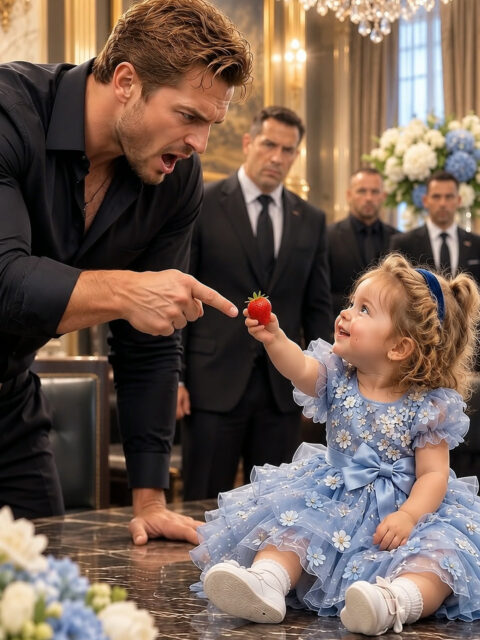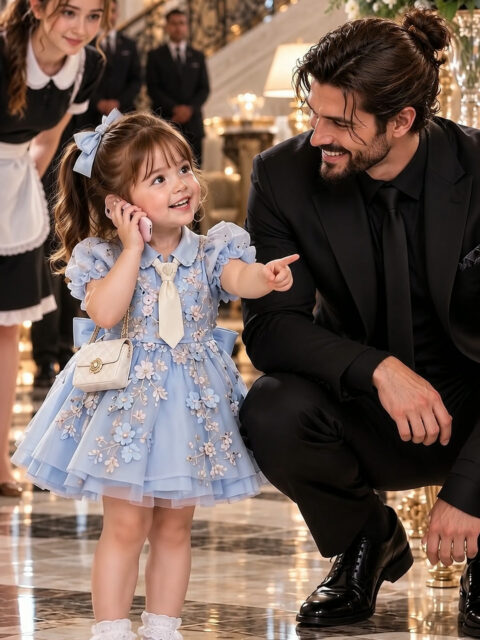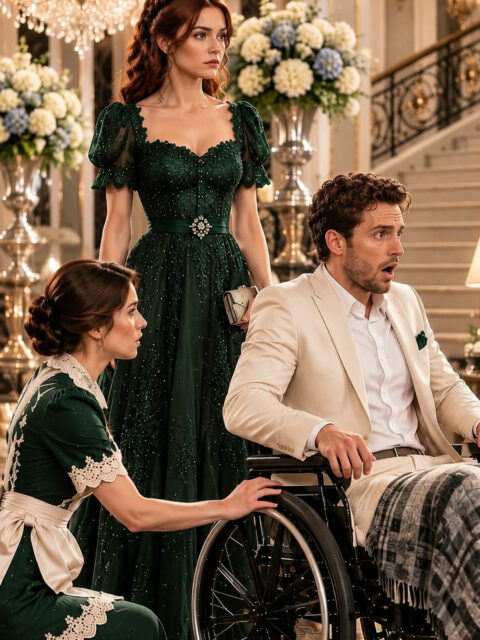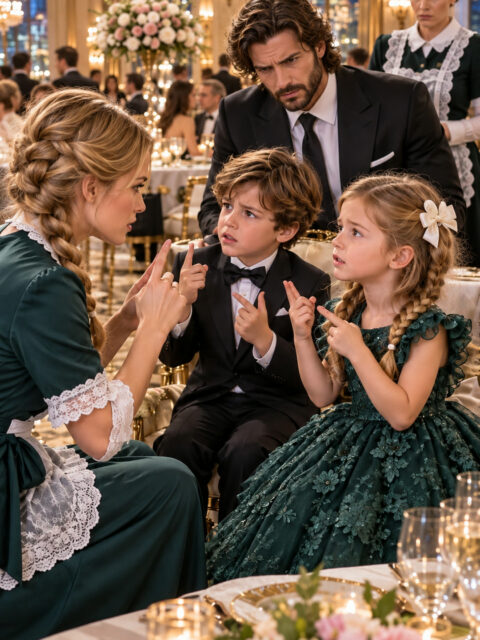
I’m Hazel Dunn, and I came home three days early to surprise my husband, only to find a baby asleep on my pillow.
We didn’t have a baby. A year ago, we lost the only one we ever expected. Eric had refused to even talk about adoption. Yet there he was, sleeping beside an infant as if the child belonged there. I was sure I knew what it meant. Then the blanket slipped, and I saw something on that tiny face that should have been impossible. Read every chapter to find out whose baby it was, and who was willing to do anything to take him.
“Some secrets are kept to hurt you. Some are kept until you are strong enough to hold them.”
Chapter 1: The Baby on My Pillow
My plane landed in San Diego at 12:10 a.m., three days before Eric expected me.
I didn’t call him. I didn’t text. I wanted to surprise my husband.
The New York deal had taken three exhausting weeks. Every morning, Eric had texted the same small things.
“Good luck today. Eat something. Call me when you’re back at the hotel.”
Ordinary words. But when a marriage has become a house full of closed doors, ordinary kindness feels like proof something is still alive.
At 1:04 a.m., I slipped off my heels in the foyer of our house in La Jolla.
The Pacific shimmered silver beyond the windows. I carried my shoes down the hall so I wouldn’t wake him.
The bedroom door was already open. That was the first thing that felt wrong.
Eric never slept with the door open. Not once in nine years.
I pushed it wider. Moonlight stretched across the bed.
I passed our wedding photo in the hall. In it, Eric was laughing against my temple. We looked certain. Like two people love could protect from becoming strangers.
Eric was asleep on his side, one arm under the pillow. Relief hit me first. I almost smiled.
Then my eyes moved to my side of the bed.
There was a baby lying on my pillow.
Not a photograph. Not a bundle of laundry. A real infant, with tiny fists and soft dark hair, wrapped in a pale blue blanket.
My shoulder struck the doorframe. The small sound seemed deafening.
On the nightstand sat a half-full bottle, a yellow pacifier, and a folded burp cloth. Someone had prepared for this baby to be here.
Eric had no siblings. No nieces. No cousins. He grew up in foster homes in Ohio with no family left to find.
My first thought came so fast I hated myself for it.
Another woman.
Eric’s eyes opened. For half a second he looked confused. Then he saw me, and every trace of sleep vanished.
“Hazel?” He sat up fast. “What are you doing here?”
Not “you’re home.” Not “I missed you.” What are you doing here?
“Who is that?” I whispered.
Eric said nothing. The baby stirred between us.
Instantly, Eric lifted one hand.
“Keep your voice down,” he said.
Chapter 2: The Unfinished Nursery
Of all the things he could have said, that was what came out of his mouth.
A broken laugh escaped me. “You’re worried I’ll wake him?”
“Hazel, please…”
“Don’t say my name like I’m the one creating a problem.”
“It’s complicated,” he said.
One year earlier, I had been pregnant. For eleven weeks, we lived in a terrified kind of happiness.
Eric bought parenting books and hid them in his office. “Reading too early might jinx things,” he’d said.
One Sunday I found him alone in the empty room across from ours, one hand on the wall.
“What are you doing?” I had asked.
“Trying to figure out where the crib goes,” he said, embarrassed.
“You’re ten months early.”
“Nine,” he corrected. “I like being prepared.”
Three weeks later, there was no baby to prepare for. The hospital lights were too bright. Eric drove us home without the radio on.
We never finished the nursery.
Months later, I suggested adoption. He sat with me at the kitchen island while I showed him an agency website.
He even smiled at a photo of a toddler holding a red toy truck.
Then, the morning of our consultation, he canceled it.
“I can’t do this right now,” he said, unable to look at me. “I’m not ready to bring a child into this house.”
Those words had hurt. Tonight, they felt like a lie.
I noticed the overnight bag by the dresser. It was full of neatly stacked baby clothes. Enough for more than one night.
“How long has he been here?” I asked.
“Three days,” Eric said quietly.
“Three days. While I was gone.” My voice shook. “Is this your child, Eric?”
“No,” he said.
“Were you with another woman?”
“No.” The answer came fast. Too fast.
“Then whose baby is this?”
The baby made a small sound. Without thinking, I stepped closer.
The blanket had slipped from his face. Moonlight touched his cheek.
I once read about a baby with a birthmark who revealed a whole family’s secret. I never imagined I’d live it.
Because just below his left ear was a tiny crescent-shaped mark.
I had the same crescent. So did my mother. So did her mother.
My knees gave way beside the bed.
This baby didn’t belong to Eric’s blood.
He belonged to mine.
Chapter 3: The Crescent Birthmark
Eric came around the bed and caught my elbow before I hit the floor.
“I’m sorry,” he whispered. “I wanted to tell you. I promised I wouldn’t.”
“Promised who?” I asked.
He took a long breath. “His name is Theo. He’s Brooke’s son.”
Brooke. My little sister. I hadn’t spoken to her in four years.
“That’s not possible,” I said. “Brooke doesn’t talk to us.”
“She doesn’t talk to you,” Eric said gently. “She’s been talking to me since February.”
I sat on the edge of the bed. Theo’s chest rose and fell beside me.
Four years ago, our stepmother Pamela had discovered forged checks on Dad’s account. Forty thousand dollars.
“It was Brooke,” Pamela had sobbed at the kitchen table. “She took advantage of your sick father.”
Brooke screamed that she hadn’t. Nobody believed her. Not Dad. Not me.
Dad died that winter believing his youngest daughter was a thief.
Brooke didn’t come to the funeral. Pamela told everyone it proved her guilt. I believed that too.
I had sent my sister one text in four years. It said only, “Happy birthday.” She never answered.
“She called me when she was seven months pregnant,” Eric said. “Alone. Scared. The father was gone.”
“Why you?”
“Because she knew I grew up with no one,” he said. “She said I’d understand.”
“All those late-night calls outside the room,” I said slowly.
“Brooke,” he said. “Doctor appointments. Rent. A car seat.”
“And the adoption consultation?”
He looked at his hands. “Theo was due in six weeks. I thought he might need us. I couldn’t promise a child to an agency and then…”
“Where is she now?” I asked.
“Scripps Memorial,” Eric said. “Emergency surgery three days ago. Her appendix ruptured. She’s recovering.”
“She asked you to keep him?”
“She begged me,” he said. “And she begged me not to tell you.”
That hurt worse than anything. “Why?”
Eric hesitated. Then he looked straight at me.
“Because she thought you’d hand Theo to Pamela,” he said. “And Pamela has been calling her every day since he was born.”
“Pamela?” I whispered. “Why would Pamela want a baby?”
“I don’t know,” Eric said. “But yesterday she showed up at the hospital with a lawyer and guardianship papers.”
Chapter 4: The Hospital Bracelet
At 7:00 a.m., I walked into room 412 at Scripps Memorial with Theo in my arms.
Brooke was pale against the white pillows. A plastic bracelet circled her thin wrist.
She saw me and went rigid. “Eric promised…”
“He kept his promise,” I said. “I came home early. I found Theo on my pillow.”
Her eyes filled. “Please don’t take him to Pamela.”
“I’m not here for Pamela,” I said. “I’m here for my sister.”
I placed Theo in her arms. She pressed her lips to his crescent birthmark.
“He has Mom’s mark,” she whispered.
“I saw,” I said. My voice cracked. “Brooke, I’m so sorry.”
“For what?”
“For believing her,” I said. “About the checks. About everything.”
She stared at me for a long time. “I never took that money, Hazel.”
“I know that now,” I said.
“How?”
“Because you raised this little boy alone and still asked for nothing,” I said. “Thieves don’t do that.”
She cried. I cried. A nurse peeked in and quietly closed the door.
“Eric was amazing, you know,” Brooke said, sniffling. “He drove me to every appointment. He sang to Theo on the first night.”
“He sings?” I asked.
“Badly,” she said, and for a second we both laughed like girls again.
“Tell me about yesterday,” I said finally.
Brooke wiped her face. “Pamela came at 4:00 p.m. With a man in a gray suit.”
“What did she want?”
“Temporary guardianship,” Brooke said. “She said I was on pain medication and couldn’t make decisions.”
“Did you sign?”
“No,” she said. “So she leaned over the bed and whispered something.”
“What?”
“‘Sign, or I’ll call child services and tell them you’re an addict and a thief. Who do you think they’ll believe?'”
My hands curled into fists. “Why does she even want him?”
Brooke shifted Theo carefully against her chest.
“Dad’s trust,” she said. “Did you ever read it? All of it?”
“Pamela handled everything,” I admitted. “She said there was nothing for us.”
“Read paragraph nine,” Brooke said quietly.
Chapter 5: Paragraph Nine
I called Martin Ogle from the hospital parking lot. He had been my father’s attorney for thirty years.
“Hazel,” he said warmly. “It’s been a long time.”
“Martin, I need a copy of Dad’s trust,” I said. “The whole thing.”
“Pamela asked me not to send it to you girls,” he said. “She said it would upset you.”
“I’m asking now,” I said. “As a beneficiary.”
“Then come to my office at eleven,” he said. “Bring coffee. You’ll need it.”
At 11:00 a.m., Martin set a thick document on his desk and opened it to page six.
“Paragraph nine,” he said. “Your father added it the year your mother died.”
He read aloud. “‘Upon the birth of my first grandchild, the Rancho Santa Fe residence and the remainder of the trust shall pass to a new trust for that child’s benefit.'”
I stared at him. “Pamela lives in that house.”
“Only until a grandchild is born,” Martin said. “Then she has ninety days to vacate.”
“Unless?” I asked.
“Unless she becomes that grandchild’s legal guardian,” Martin said. “The guardian manages the child’s trust.”
I sat back. “So if she gets Theo, she keeps the house. And the money.”
“Roughly four million dollars,” Martin said. “Yes.”
I thought of Pamela at Dad’s funeral, dabbing her eyes beneath a black hat. I thought of her moving her tennis trophies into Mom’s old sewing room.
I’d once read about an evicted heiress who won back what was stolen from her. I’d never thought my family had anything worth stealing.
“Martin, the forged checks four years ago,” I said. “Who investigated them?”
He frowned. “No one, really. Pamela said she’d handled it privately. Your father didn’t want police.”
“Does the bank still have the originals?”
“Banks keep images for seven years,” he said. “Why?”
“Because Brooke says she didn’t write them,” I said. “And I believe her.”
Martin studied me over his glasses. “If you’re right, someone else did.”
My phone buzzed on his desk. Pamela’s name lit up the screen.
I answered on speaker and kept my voice light. “Hi, Pamela.”
“Darling, I heard you’re home early!” she said sweetly. “Lunch tomorrow at the club? Twelve-thirty?”
“What’s the occasion?”
“It’s about your poor sister,” Pamela said. “And that sweet little baby she can’t possibly raise.”
Chapter 6: The Club Lunch
At 12:30 p.m. the next day, Pamela was waiting at a corner table in white linen.
“Hazel, darling,” she said, kissing the air near my cheek. “You look exhausted.”
“Long flight,” I said, and sat down.
I had promised Eric I would stay calm. I had promised myself I would listen.
“I’ll be direct,” Pamela said, stirring her iced tea. “Brooke is unstable. You know her history.”
“Remind me,” I said.
“The checks, darling. Forty thousand dollars from your dying father.” She sighed. “And now a baby with no father.”
“What do you suggest?”
She slid a folder across the table. “Temporary guardianship. Just until Brooke is well. I’d care for Theo at the house.”
“That’s generous,” I said.
“And you, sweetheart,” she added softly, “after your loss… I didn’t think you could bear it.”
I let that one pass. It cost me something. But I let it pass.
Under the table, my phone was face down in my lap. Eric was parked across the street, waiting in case I needed him.
“Brooke won’t sign,” I said. “But a family member’s statement might help, right?”
Pamela’s eyes lit up. “Exactly. Martin would accept a statement from you.”
“Then let’s write it together,” I said. “Right now. In your handwriting, so it’s clear you’re the one requesting custody.”
I pushed a blank notepad and pen toward her.
“I’ll sign underneath,” I said. “Write that Brooke stole Dad’s money and can’t be trusted with a child.”
Pamela smiled and began writing in her elegant, slanted script.
“Brooke Corbin has a documented history of theft,” she wrote. “Including forty thousand dollars in checks…”
She signed it with a flourish. “There. Now you.”
I signed below her. Then I folded the page and put it in my purse.
“I’ll take it to Martin myself,” I said.
“Wonderful,” Pamela said. “Your father would be so proud.”
I drove straight to Martin’s office. A handwriting examiner was already waiting with the bank’s check images.
He laid Pamela’s note beside the forged checks and studied them for twenty minutes.
Then he looked up at us.
“The capital B,” he said. “The slant. The looped D. These were written by the same hand.”
Martin’s phone buzzed. He read the message and went very still.
“That was the bank,” he said. “They found one more document Pamela signed for your father. Two weeks before he died. A new will.”
Chapter 7: The Social Worker’s Clipboard
Detective Ines Duarte from the elder fraud unit met us in Martin’s conference room that evening.
“Forged checks on a sick man’s account,” she said, reading the examiner’s report. “Then she blamed the daughter.”
“And the will?” I asked.
“Cut Brooke out completely,” Martin said. “Witnessed by Pamela’s tennis partner. Your father was heavily medicated that week.”
“We’ll be talking to the tennis partner,” Duarte said dryly.
Brooke was discharged the next morning. Eric carried her bag. I carried Theo.
We brought them home to La Jolla. To the unfinished nursery.
Eric assembled a crib in two hours. He didn’t even swear once.
“Where does it go?” he asked, grinning at me.
“You tell me,” I said. “You’ve been planning it for a year.”
At 9:15 p.m., the doorbell rang.
Pamela stood on our porch with a woman holding a clipboard.
“This is Ms. Dana Yates from child services,” Pamela said loudly. “I’ve reported that an unstable mother is caring for an infant here.”
Ms. Yates looked tired but kind. “Ma’am, may I come in?”
“Of course,” I said, stepping aside.
She looked at Theo asleep in his new crib. She looked at the stocked shelves, the bottles, the car seat.
She spoke with Brooke for twenty minutes. Brooke handed her the hospital discharge papers.
“Ms. Corbin’s records are clean,” Ms. Yates said. “No substances. A healthy, well-cared-for baby.”
“She’s a thief!” Pamela snapped.
“Actually,” said a voice behind her, “that’s the part we need to talk about.”
Detective Duarte stepped onto the porch. Martin stood beside her.
“Pamela Corbin,” Duarte said. “You’re under arrest for forgery and financial abuse of an elder.”
It was 9:31 p.m. Theo slept through the whole thing.
Pamela looked at me as the handcuffs clicked. “You signed that note with me!”
“I did,” I said. “Right under your handwriting.”
Later, when the house was quiet again, Eric sat beside me on the nursery floor.
“There’s something else I never told you,” he said. He handed me a folder.
It was from the adoption agency. And on top was a photo of a toddler holding a red toy truck.
Chapter 8: The Sealed Envelope
“You canceled that consultation,” I whispered.
“I canceled it because I was terrified,” Eric said. “I grew up in seven foster homes. I thought I’d fail a child the way I was failed.”
“And now?”
“Brooke trusted me with Theo,” he said. “I fed him. I walked him at 3:00 a.m. And I didn’t fail.”
He touched the photograph. “His name is Sam. He’s still waiting. I called the agency yesterday.”
I couldn’t speak. I just held on to him.
“Brooke said you’d understand,” I finally said. “She was right. I’m the one who didn’t.”
“You understand now,” he said. “That’s what counts.”
Pamela’s lawyer tried for months to delay the case. He blamed Dad’s medication. He blamed Brooke. He even blamed the bank.
Then, in March, Pamela’s tennis partner sat down with Detective Duarte.
“She told me Richard had agreed to the new will,” the woman said. “She paid me two thousand dollars to sign as a witness.”
That was the end of it.
I sat beside Brooke on the hard courtroom bench the day Pamela pleaded guilty. Brooke held my hand so tightly it ached.
I once read a story about proof in the courtroom that freed an innocent family. I never expected to watch it happen to mine.
“Ms. Corbin,” the judge said, “you stole from a dying man and let his daughter carry the shame. Four years in state prison. Full restitution.”
Pamela didn’t look at us once. She stared straight ahead in her orange jumpsuit, her white linen gone for good.
The forged will was thrown out. Dad’s real trust stood.
On the courthouse steps, Brooke turned to me. “Four years,” she said. “Same as she stole from us.”
“We’re not losing any more years,” I said.
Martin came down the steps behind us. He was holding a cream envelope, yellowed at the edges.
“Your father gave me this a month before he died,” he said. “He told me to open it only if you two ever came to me together.”
Brooke and I looked at each other.
“Well,” I said, “here we are.”
Chapter 9: The Red Toy Truck
We read it on a bench beneath a jacaranda tree.
“My girls,” Dad had written in shaky handwriting. “If you are reading this together, then the truth found its way home.”
“Brooke, I never believed you took that money. I was too sick to fight Pamela, so I did the one thing I could. I wrote paragraph nine.”
“The house was always meant for your children. Not for her.”
Brooke folded the letter against her chest and cried. So did I.
“He knew,” she whispered. “All this time, he knew.”
“He protected you the only way he could,” I said. “And Eric protected you when I didn’t.”
“You’re here now,” she said. “That’s what counts.”
Paragraph nine did exactly what my father intended. The Rancho Santa Fe house went into a trust for Theo, with Brooke as trustee.
Brooke sold it and bought a little yellow bungalow ten minutes from us. The rest went into Theo’s college fund and her nursing school tuition.
Martin handled everything and refused his fee. “Your father would’ve wanted me to,” he said.
Eric and I finally painted the nursery a soft sea green. Brooke stenciled tiny crescent moons along the ceiling, one for every person in our family.
Detective Duarte got a commendation. Ms. Yates got a handwritten thank-you card and a box of Brooke’s lemon bars.
And in October, after home visits and paperwork and one very long wait, Sam came home.
He was three years old, shy, and serious. He held Eric’s finger the whole way from the agency to our car.
He arrived holding the same red toy truck from the photograph.
“Is this my room?” he asked, staring at the finished nursery.
“It’s your room,” Eric said, kneeling down. “I’ve known where your bed goes for a long time.”
A year later, I flew home from another business trip. Three days early again.
I didn’t call. I wanted to surprise my husband.
At 1:02 a.m., I pushed open our bedroom door.
Eric was asleep on his side. Sam was curled against his back with the red truck.
And on my pillow, Theo was sleeping, crescent mark and all, while Brooke snored softly in the armchair.
“Hazel?” Eric murmured, opening one eye.
I climbed in carefully among all of them.
“Keep your voice down,” I whispered, smiling. “Our family’s asleep.”