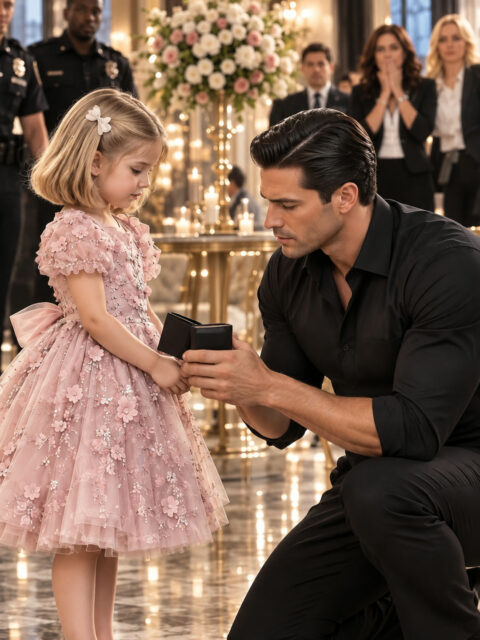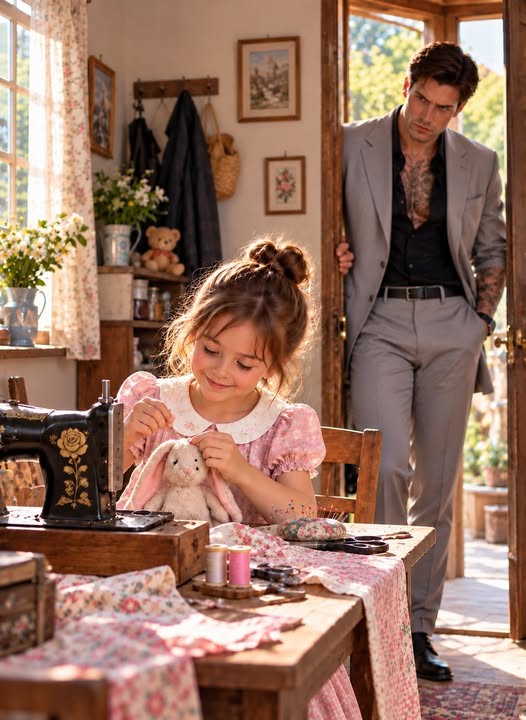
“A man who measures justice only by the ink on a lease will eventually find himself collecting coin from the hands of starving children. But when a sovereign discovers that the blood on the floor belongs to the ghost of his own past, his empire either collapses under shame or rises to redeem the world.”
Table of Contents
- Chapter 1: The Three Months of Unpaid Rent
- Chapter 2: The Needle and the Bleeding Hand
- Chapter 3: The Silver Rose on the Iron Base
- Chapter 4: The Voice Behind the Closed Door
- Chapter 5: Thirty Years of Buried Sacrifices
- Chapter 6: The Landlord’s Reckoning on 4th Street
- Chapter 7: The Master Suite of the Moretti Estate
Chapter 1: The Three Months of Unpaid Rent
The stairwell of 814 South Carpenter Street smelled of damp concrete, boiled cabbage, and forty years of deferred maintenance. It was nine o’clock on a freezing Tuesday morning in Chicago, and the sleet blowing off Lake Michigan rattled against the dirty wired-glass windows of the landing. I was forty-two years old, wrapped in a bespoke black cashmere overcoat that cost more than the annual property taxes on the entire building, accompanied by two of my senior enforcers whose hands remained buried inside their leather pockets.
My name is Nathan Moretti. Across the Southside and the freight docks of the Calumet River, my name was synonymous with an iron fist. I had built Moretti Property Management into a thirty-block empire through relentless discipline, precise bookkeeping, and an absolute, non-negotiable rule: debts got paid on time, or the keys were surrendered. I did not run a charity. The banks in the Loop did not grant extensions on municipal development bonds, and I did not grant extensions to tenants who fell behind.
Apartment 4B was ninety days overdue. Twelve hundred dollars in back rent. My property manager, Arthur Cross, had informed me that the tenant had stopped answering calls and had repeatedly ignored thirty-day vacate notices. I had decided to inspect the unit personally to instruct Cross on the proper procedures for a formal physical lockout.
I reached the fourth floor. The green paint on the steel door of 4B was blistering with age. I rapped my knuckles sharply against the wood—three heavy, hollow cracks that echoed down the quiet hallway.
From inside, there was no sound of packing crates, no panicked footsteps. Only a faint, rhythmic mechanical click: thump-click, thump-click, thump-click.
The brass latch turned slowly. The door creaked open four inches on a tarnished brass safety chain. Standing in the opening was not an evasive deadbeat or an angry boyfriend. It was a little girl who could not have been older than seven years of age.
She wore an oversized, moth-eaten brown woolen cardigan that swallowed her small wrists, a faded plaid cotton skirt, and worn woolen socks without slippers. Her dark brown curls fell in messy tangles across an exhausted, pale face with luminous hazel eyes. But what immediately arrested my gaze were her hands: her delicate small fingers were covered in tiny red pinpricks, with dried specks of blood staining the cuffs of her sleeves.
“Where is your mother?” I asked, keeping my voice firm but measured.
“Mama is sick,” the child whispered, her voice scarcely louder than the wind outside the hallway window. “She’s sleeping in the back.”
“Are you alone?”
She nodded once, her small fingers tightening around the edge of the doorframe. “I’m Lily. Are you the landlord?”
Chapter 2: The Needle and the Bleeding Hand
“I am Nathan Moretti,” I answered. “I own this building. Your apartment owes twelve hundred dollars. Where is the envelope?”
Lily did not flinch, nor did she cry. Instead, she unlatched the safety chain with small, trembling fingers and pushed the door open. “Wait here, please.”
I stepped across the threshold, motioning for my two guards to remain in the hallway. The apartment was immaculate, but painfully bare. There was no television, no couch, only a small drop-leaf table with two mismatched chairs, a few empty cans of chicken broth neatly washed by the sink, and a shelf crowded with half-empty prescription bottles. In the corner beneath the gray daylight of the window stood an ancient cast-iron, foot-pedal treadle sewing machine—a relic from the early twentieth century mounted on an intricately carved walnut cabinet.
Lily walked to the kitchen counter and returned holding a crumpled white business envelope. She handed it to me with both hands, her hazel eyes looking straight up into mine with solemn, desperate pride.
I opened the envelope. Inside were two crumpled twenty-dollar bills and three worn copper pennies. Forty-three dollars and three cents.
“This is forty-three dollars, Lily,” I said softly. “The rent is twelve hundred.”
“I know,” she replied, her lower lip quivering for a fraction of a second before she clamped it tight. “I’m making the rest. Mrs. Gable on the second floor gave me three pairs of winter work trousers to hem. She said she’ll pay me two dollars for each pair if I finish them before noon. And Mr. Henderson at the corner grocer has four aprons that need new straps.”
Before I could speak, the seven-year-old child turned, hurried over to the wooden stool before the cast-iron machine, and climbed up. Her small legs struggled to reach the heavy cast-iron foot pedal, but she braced her back against the wooden chair and pumped with all her might. The heavy flywheel spun with a rhythmic whir. She took a thick strip of blue denim and guided it beneath the gleaming steel needle.
Thump-click, thump-click, thump-click.
She leaned in close, squinting through the dim light. Suddenly, her foot slipped on the treadle. The denim jerked. The sharp steel needle drove straight down, punching directly through the fleshy tip of her left index finger.
Lily flinched, gasping sharply as tears sprang to her eyes. But she didn’t scream. She clamped her teeth together, yanked her hand free from the presser foot, wiped the bright crimson bead of blood against the hem of her woolen sweater, and reached for the denim to start again.
“Stop!” I barked. The command tore from my throat with such raw, thunderous authority that the flywheel rattled to a halt.
Lily looked at me, terrified. “I have to finish, Mr. Moretti! If I don’t give Mr. Cross the money by noon, he said the police will come and put Mama on the sidewalk in the snow! Mama has pneumonia! If she goes in the cold, she’ll die!”
Chapter 3: The Silver Rose on the Iron Base
Something deep inside my chest cracked. In my twenty years in the Chicago underworld, I had seen warehouse ambushes and broken men begging for their lives without feeling a single tremor of sympathy. But watching a seven-year-old child bleed over a cast-iron sewing machine to save her dying mother dragged me thirty years backward in time.
I was twelve years old again, huddled in a cold tenement basement on Taylor Street, watching my own mother bend over a treadle machine at midnight, her fingers raw and bleeding as she stitched coats for eight cents a garment to pay our landlord, while we pretended the stale bread in hot water was beef stew.
I stepped over to the stool. I knelt down beside the machine, reached out, and took Lily’s small, shivering hands into my large, scarred palms. I withdrew a clean white linen handkerchief from my breast pocket and gently wrapped it around her bleeding index finger.
“You are not sewing another stitch today, Lily,” I said, my voice dropping into an uncharacteristically gentle murmur. “The rent is paid. In full.”
Lily blinked, looking at me with round, disbelieving eyes. “Paid? But I only have forty-three dollars…”
“The debt is settled,” I repeated firmly.
As I reached down to help her off the wooden stool, my eyes fell upon the curved walnut arm of the sewing machine. The wood was darkened by age, polished smooth by decades of resting wrists. But there, carved into the lower corner of the cabinet face, was a detail that made the air freeze in my lungs.
It was a three-quarter-inch inlay of sterling silver: a single wild rose with two thorns, inlaid into the walnut grain with German silver solder.
My breath stopped.
That was not a factory trademark. It was a custom maker’s mark. In 1994, my late father, Antonio Moretti, had hand-carved that silver rose into his mother’s heirloom Singer machine as a wedding gift before he died. When my mother fell ill with cancer in 1996, our family had been on the verge of ruin. To pay for her hospital oxygen, my high-school sweetheart, Sarah Vance, had taken that very sewing machine to an antique pawnbroker on Wabash Avenue, selling her own grandmother’s jewelry alongside it to save my mother’s life.
And two weeks later, Sarah had disappeared from Chicago without leaving a letter, a forwarding address, or a single trace.
For thirty years, I had searched for her. For thirty years, I had believed she had abandoned me because she feared the violent shadow of the Moretti name.
Now, her sewing machine was sitting in Apartment 4B.
Chapter 4: The Voice Behind the Closed Door
My fingers traced the cold silver rose. The solder was identical. The fine gouge where my father’s chisel had slipped on the second leaf was still there. There was only one machine like this in the entire world.
I stood up. Standing over six feet two inches tall, my shadow fell across the small room. My gaze moved slowly toward the closed bedroom door at the end of the narrow hallway.
“Lily,” I asked, my voice trembling with an emotion I hadn’t felt in three decades. “Where did your mother get this machine?”
Lily held my linen handkerchief against her finger. “Mama says it’s our family treasure. She said it belonged to the only man she ever loved, and that as long as we had the silver rose, we were never truly alone.”
The room seemed to spin on its axis. I took two slow, heavy steps toward the bedroom door. Lily darted forward, throwing herself against my knees, her small arms wrapping around my overcoat.
“No, please!” Lily pleaded, tears spilling over her lashes. “Mama made me swear! She said if Mr. Moretti ever came to this building, I couldn’t let him see her! She said he would hate her if he knew!”
“Hate her?” I whispered.
Before Lily could answer, a loud thump sounded from inside the bedroom, accompanied by the sound of glass shattering on the linoleum. Then, through the thin hollow-core door, drifted a faint, ragged cough, followed by a voice that made every nerve in my body stand on end.
“Lily…?” the voice was weak, raspy with fever, but carrying a melodic, haunting cadence that had lived in my dreams for thirty years. “Lily, who is in the front room? Is that… is that Nate…?”
Nate.
In thirty years of running commercial syndicates and waterfront unions, nobody had ever called me Nate. To the world, I was Mr. Moretti, Boss Moretti, or Nathan. Only one human being in the history of my life had ever called me Nate.
I placed my hand on the doorknob. With a gentle twist, I pushed the door open.
Chapter 5: Thirty Years of Buried Sacrifices
The bedroom was freezing. The radiator hissed weakly, spewing cold water onto a metal pie tin. Lying beneath two thin, threadbare blankets on a rusted iron cot was a woman. Her face was hollowed by sickness, her cheekbones sharp against translucent skin, her dark brown hair streaked with silver and damp with fever sweat. But as she turned her head toward the doorway and her hazel eyes met mine, thirty years collapsed into a single second.
“Sarah…” I breathed, dropping to my knees beside the low cot.
Sarah looked at me. Her lips parted, trembling, as tears began spilling unchecked down her sunken temples into the pillow. “Nate… oh God, Nate… you weren’t supposed to find us here.”
“Why did you leave?” I demanded, taking her burning, skeletal hand in both of mine, bringing her cold fingers to my lips. “I searched every state in the country for you! I had private investigators in New York, in California, in Europe! Why did you vanish into the dark?”
Sarah’s chest heaved with a ragged, painful cough. When she caught her breath, she pointed weakly toward a small tin box resting on the bedside chair. “Look inside the cedar box, Nate. Read the letter your uncle Vincent left on my pillow thirty years ago.”
I opened the tin box. Inside lay a yellowed, water-stained piece of letterhead bearing the crest of the Moretti Family Council, dated October 14, 1996.
The handwriting was unmistakable: my late uncle Vincent, the ruthless tyrant who had ruled the family before I wrested control from him a decade later. The letter was a direct, vicious death threat. Vincent had warned Sarah that if she did not abandon Chicago and surrender all contact with me, his enforcers would ensure that both she and my dying mother would be executed in a staged hospital fire, so that I could be forced into a dynastic marriage with the daughter of a New York boss.
“He told me that if I loved you,” Sarah whispered, her voice breaking into sobs, “I had to let you rise without an anchor dragging you down. He told me that my presence would get your mother killed. So I ran to Milwaukee. I lived in church basements. I took the sewing machine because it was the only piece of your mother and you that I had left in the world.”
I squeezed my eyes shut, an agonizing fury roaring through my veins. My own blood, my own uncle, had torn the love of my life away from me to preserve his syndicate chess board.
“And Lily?” I asked, looking back toward the doorway where the seven-year-old girl was watching us with wide, tearful eyes.
Sarah looked at her daughter, a radiant, sacred smile touching her cracked lips. “Lily is my niece, Nate. My younger sister died of tuberculosis three years ago. I took Lily when she was four days old. She has no one else in this world. I came back to Chicago six months ago because my lungs were failing, and I wanted to be in the city where you were, even if I was just another ghost living in your shadows.”
Chapter 6: The Landlord’s Reckoning on 4th Street
The sound of heavy, arrogant boots echoed in the hallway outside. The apartment door was kicked open without a knock.
“All right, kid!” Arthur Cross’s shrill, grating voice barked from the front room. “Noon has struck! Where is the twelve hundred, or are you and your sick mother ready to taste the sidewalk?”
I stood up. The grief and nostalgia vanished instantly, replaced by the terrifying, lethal composure of the sovereign of the Southside. I walked out of the bedroom, closing the door softly behind me.
Arthur Cross was standing in the kitchen, wearing a greasy camel-hair coat, holding a pair of heavy master padlock chains and a pair of bolt cutters. Standing behind him were two hired private repo thugs. Cross had a sneer on his lips—until his gaze locked onto me standing in the hallway.
The sneer vanished so violently it looked as though someone had struck him with a lead pipe. Cross stumbled backward, his knees smacking into the edge of the dining table, knocking over a chair. The padlock chains slipped from his fingers and crashed to the linoleum floor with a heavy, ringing clang.
“Mr… Mr. Moretti…?” Cross stammered, all color draining from his face until he resembled a corpse. “Sir… what… what are you doing in this building? I was just… I was just executing the standard eviction procedure—”
“You threatened to throw a dying woman with pneumonia onto the frozen pavement, Arthur?” I asked softly. My voice was scarcely more than a conversational murmur, but Dante and Marco, standing in the open doorway behind Cross, immediately blocked the exit with drawn weapons.
“Sir, she was three months behind!” Cross whimpered, raising his hands in front of his chest. “The company policy you set—”
“Company policy does not allow property managers to extort seven-year-old children,” I interrupted, stepping forward until I was inches from his face. I picked up the small business envelope containing forty-three dollars and three pennies from the counter. “This child has been sewing work trousers until her fingers bled through her clothes because you told her you would call the police on her dying mother.”
I reached into my overcoat, took out a sealed ledger that Marco had handed me earlier that morning, and tossed it into Cross’s chest. “You’ve been pocketing the rent subsidies from the city housing authority for eight buildings on this block, Arthur. You recorded Apartment 4B as vacant six months ago and have been collecting off-the-books payments from these tenants while threatening them with violence.”
Cross fell to his knees on the linoleum, clutching the ledger to his stomach. “Mr. Moretti, please! I have a family! I’ll pay it back—every dollar!”
“You will pay it back from a federal penitentiary,” I stated coldly. I looked over at Marco. “Call Detective Rossi at the financial crimes division. Have them impound Cross’s vehicles, his bank accounts, and his home. And take these two hired thugs down to the docks until the authorities arrive.”
Within sixty seconds, Cross and his men were dragged down the stairwell, their muffled pleas fading into the freezing Chicago morning.
Chapter 7: The Master Suite of the Moretti Estate
By three o’clock that afternoon, an executive private medical ambulance had transported Sarah Vance to the premier pulmonary care unit at Northwestern Memorial Hospital, where our private medical foundation secured the top specialists in the state. By evening, her fever had broken, her lungs were clear of fluid, and she was resting in an opulent private suite overlooking Lake Michigan.
Down on South Carpenter Street, two Moretti logistics vans arrived outside Apartment 4B. Under my direct supervision, four movers in white cotton gloves carefully wrapped the antique walnut sewing machine with the silver rose in heavy felt blankets, loading it into my personal vehicle.
Three days later, Sarah was discharged into my care. We drove north to the Moretti Estate in Lake Forest—a magnificent limestone manor surrounded by eighty acres of century-old oaks and private gardens.
As Sarah stepped into the grand library, supported on my arm, she stopped dead. Placed in the center of the bay window, overlooking the snow-covered grounds and bathed in the warm amber glow of a roaring fireplace, sat the antique sewing machine. The silver rose had been polished until it gleamed like a mirror, and resting on the walnut surface was a bolt of the finest imported Italian velvet, accompanied by a small gold box containing a pair of silver thimbles fitted for both Sarah and Lily.
Lily ran across the Persian rug, spinning in a circle in her new wool dress and shiny patent-leather shoes, before climbing up onto the polished stool and running her fingers over the silver rose.
“It’s home, Mama!” Lily cheered, her eyes shining with pure, radiant joy. “Mr. Nate brought our treasure home!”
Sarah turned to me, her eyes brimming with tears of overwhelming gratitude and redemption. She reached up, placing her gentle hand against my scarred cheek. “You gave us a life, Nate. After thirty years in the wilderness, you brought us back.”
I wrapped my arms around Sarah, pulling her close against my chest, and held out my hand to Lily, who leapt down from the stool and threw her arms around my neck.
“I didn’t bring you back, Sarah,” I replied softly, kissing her brow and then kissing Lily’s forehead under the firelight. “Your daughter walked into my dark world with forty-three dollars and a bleeding finger, and she reminded me that an empire is only worth the people you are willing to protect. As long as I draw breath, no one will ever knock on your door with a debt again.”