For five years, I worked exhausting rotational shifts as a senior offshore structural engineer in the North Sea, wiring between $2,500 and $3,200 every single month to my mother Evelyn in Austin, Texas, to provide a privileged life for my teenage daughter Maya after my wife died. When my mother called me in an indignant fury claiming Maya was a reckless, spoiled brat who had wasted an extra $1,800 laptop transfer, I booked the earliest flight home, determined to confront my daughter for taking my hard work for granted.
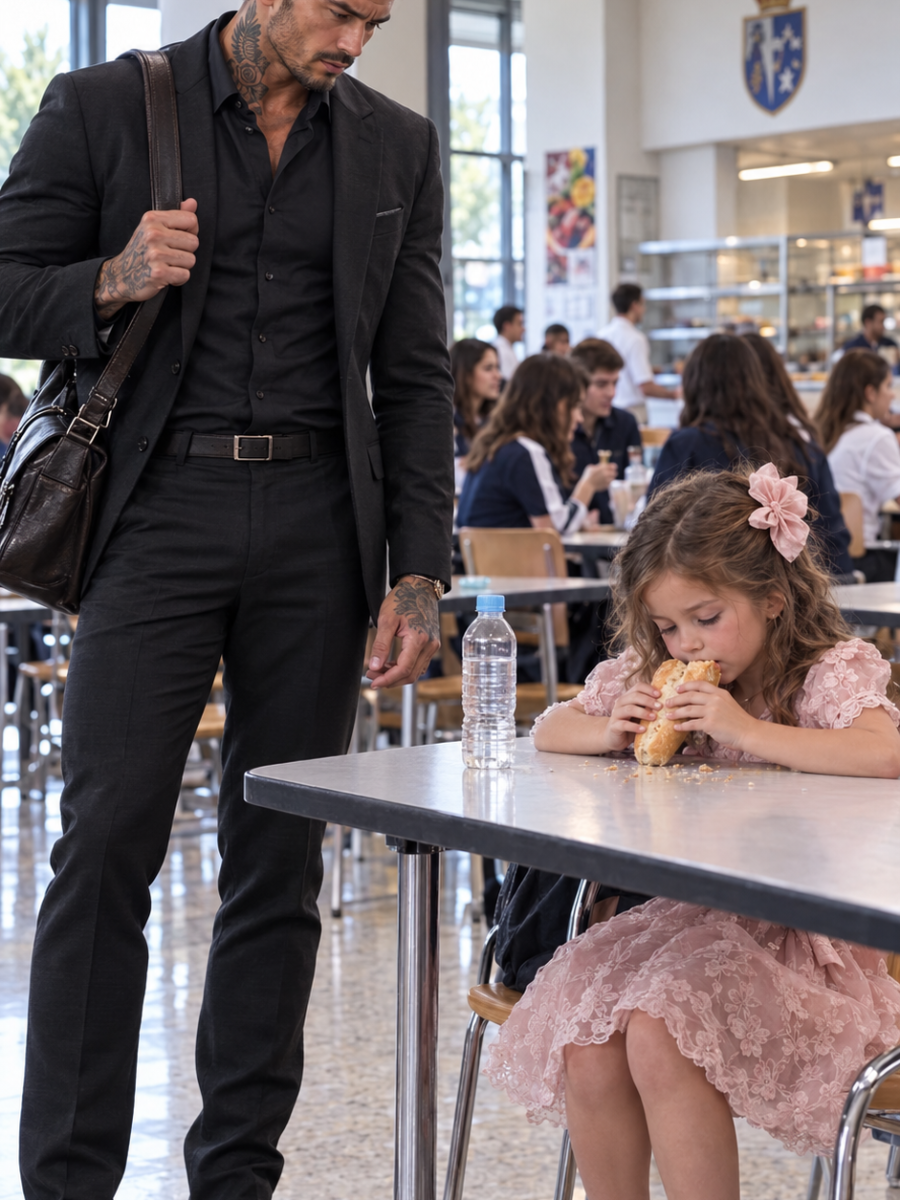
I arrived at Maya’s high school unannounced, expecting to catch an entitled teenager flaunting expensive clothes. Instead, I found my fifteen-year-old daughter sitting alone on a stone bench in worn-out sneakers and an outgrown hoodie, eating half of a stale dinner roll for lunch and saving the other half in a napkin. When I marched into the guidance office, the school counselor revealed an appalling reality: for five straight years, Maya had been enrolled in the public low-income lunch program because my mother had filed official sworn affidavits claiming I provided zero financial assistance—while pocketing over $160,000 of my child support to fund her own lavish lifestyle.
Chapter 1: The Midnight Call from Austin
The shrieking arctic gales and the colossal swells of the North Sea slamming against the rig pilings had been my constant companions for five long years. As a lead offshore structural engineer, I worked fourteen-hour shifts on four-week rotations, climbing frozen steel gantries so my daughter Maya would never feel the biting edge of financial hardship.
When my wife Clara passed away from aggressive lymphoma when Maya was only ten, the astronomical hospital deductibles and specialized therapies had nearly bankrupt us. To extinguish that eighty-thousand-dollar debt and build Maya an unshakeable future, I took the hazardous, high-paying North Sea contracts. My mother, Evelyn Vance, offered to care for Maya in her comfortable suburban home in Austin. It seemed like an ideal family haven.
On the first of every month, my automated wire transferred $2,500 into my mother’s account. When school started, sports seasons opened, or medical needs arose, I wired an additional $800 to $1,500. Over sixty uninterrupted months, I never missed a single transfer. My bank ledgers confirmed that I had wired over $164,000 directly for Maya’s care.
Yet every weekly phone call with my mother was a draining litany of complaints.
“Jason, that girl is becoming impossible,” Evelyn would sigh dramatically. “She demanded a three-hundred-dollar pair of designer boots. She turned her nose up at the roast beef I spent three hours cooking. She is lazy, ungrateful, and acts like your salary is her personal allowance. I have to spend my own savings just to keep food on the table.”
Then, on a Tuesday at midnight, Evelyn called me in an absolute fury.
“Jason! Your daughter has completely lost her mind! That eighteen hundred dollars you wired last Friday for her AP physics laptop? She blew every penny on designer cosmetics, fast fashion, and joyriding with boys! When I questioned her, she slammed her bedroom door and told me to get out! If you don’t fly home and put that girl in line right now, I am putting her in a disciplinary boarding school!”
A blinding surge of anger shot through my chest. I thought of myself working in sub-zero spray and howling blizzards while my fifteen-year-old daughter treated our sacrifices like pocket change. Without even waiting to hear Maya’s voice, I arranged an emergency relief engineer on the platform, packed my bag, and caught the morning helicopter to Aberdeen, boarding the first transatlantic flight to Austin.
I touched down at Austin-Bergstrom International Airport at 1:30 p.m. on Thursday. I didn’t notify my mother. I rented a sedan and drove straight to Westlake High School, determined to confront my spoiled daughter face-to-face.
Chapter 2: The Stale Roll in the Courtyard
The bright Texas sun shone down on the stone courtyard of Westlake High School. The fourth-period lunch bell had just rung, and crowds of energetic teenagers spilled into the patio tables. I stood by the stone archway near the administration office, scanning the crowds for the tall, athletic girl with auburn hair who looked so radiant in the photos my mother emailed me.
It took me nearly ten minutes to find her. And when I did, the breath was knocked clean out of my lungs.
Sitting alone on a cracked concrete retaining wall near the bike racks was Maya. She wasn’t wearing stylish brand-name clothes. She wore an oversized, threadbare navy hoodie with frayed sleeves and faded jeans that were clearly two inches too short. Her sneakers were beat-up canvas shoes with split rubber soles, wrapped with silver duct tape around the left toe.
My daughter was painfully thin. Her collarbones showed beneath her collar, and she looked exhausted, her shoulders hunched against the breeze.
I took two steps forward, ready to call her name, but froze.
Maya reached into her faded canvas backpack and pulled out a small brown paper bag. She carefully unwrapped a single, cold, hard dinner roll. With slow, hesitant bites, she ate half of it. No sandwich. No juice. No fruit. Just half of a dry roll.
Then, with heartbreaking precision, she wrapped the remaining half in a paper napkin and zipped it securely into the side pocket of her backpack.
A cold dread seized my chest. Just five days earlier, I had wired an extra two thousand dollars into my mother’s account for Maya’s spring wardrobe and organic groceries.
I watched as Maya walked across the street toward a corner sandwich shop behind three classmates who were ordering footlong subs and sodas. Maya stood at the counter, dug into her pocket, and produced two dimes and a nickel. She stared at the hot soup warmer, bit her lower lip, quietly shook her head, and walked back out into the sun with empty hands.
The righteous anger that had carried me across the Atlantic Ocean dissolved into pure, paralyzing horror.
Chapter 3: The Counselor’s Yellow File
I walked straight through the double glass doors of the school, pushed past the student reception counter, and entered the administrative suite. A security officer stood up, but the look on my face stopped him in his tracks.
“I need to see Maya Vance’s guidance counselor immediately,” I said, my voice dead and cold. “I am Jason Vance. Her father.”
The receptionist made a quick call. A moment later, Mrs. Angela Ortega, a senior academic counselor with thirty years of experience, stepped into the lobby.
“Mr. Vance?” She looked at me in disbelief, adjusting her spectacles. “You’re… Maya’s father?”
“Yes, ma’am,” I said, presenting my passport and engineering credentials. “Why are you looking at me like I’m a ghost?”
Mrs. Ortega led me into her office and closed the door. She opened a locked lateral filing cabinet and pulled out a thick yellow dossier labeled VANCE, MAYA — STUDENT AID & COUNSELING RECORDS.
“Mr. Vance, Maya has been enrolled at this school for three years,” Mrs. Ortega said gently. “In all that time, we were informed that you had abandoned her and provided zero support.”
“Abandoned her?” I felt the room tilt sideways. “I am an offshore marine engineer! I work rotational shifts in the North Sea! I wire nearly three thousand dollars every month to my mother for Maya’s private tutoring, food, clothing, and health care!”
Mrs. Ortega turned the dossier around. Sitting on top was a certified state document titled Texas Department of Human Services School Lunch & Fee Exemption Affidavit.
“Mr. Vance, Maya has been receiving free school lunches, fee waivers for AP exams, and subsidized school supply packets since the eighth grade. Her legal guardian signed this affidavit under penalty of perjury, certifying that Maya receives zero financial contributions from her father.”
I looked at the document. Typed under the parental contribution line was: “Father deserted child after spouse’s demise; offers no financial assistance.”
At the bottom was my mother’s signature: Evelyn Vance, Legal Custodian.
Chapter 4: The Three Altered Digits
A suffocating pressure clamped around my lungs. With shaking hands, I opened my banking app on my phone and laid the glowing screen directly onto the Texas state assistance form.
“Look at this,” I said, my voice cracking with unshed tears. “Two thousand five hundred on January first. Three thousand two hundred on August fifteenth for back-to-school shopping. Eighteen hundred last Friday for an AP physics laptop! Over thirty-two thousand dollars in the past twelve months alone! Where did everyone think this money was going?”
Mrs. Ortega’s eyes filled with tears as she examined the wire confirmations. “Mr. Vance… Maya has never seen a single dollar of this. Every Friday afternoon, Maya comes to my office to collect two cans of soup and a jar of peanut butter from our backpack pantry program so she has food to eat over the weekend!”
“Why didn’t anyone call me?” I demanded, my voice shaking with agony. “My phone number was on her emergency card!”
Mrs. Ortega turned to the emergency registration page. She pointed her finger at the primary contact line.
My name was printed clearly: Jason Vance (Father). But the phone number read: (512) 555-8492.
My actual phone number was (512) 555-8429.
The last two digits had been deliberately swapped. Just enough to ensure that every attendance text, medical inquiry, or counselor message would reach an automated ‘number not in service’ recording—while looking like an innocent clerical slip if anyone ever checked.
“Her grandmother wrote this card out personally,” Mrs. Ortega whispered. “Whenever we tried to ask Maya about you, she would break down and say: ‘Grandma told me Daddy is exhausted from work, that I’m too expensive to take care of, and that I shouldn’t bother him with my problems.'”
Through the office window overlooking the study hall, I saw Maya. She had retrieved the wrapped half of the stale dinner roll. She had poured hot water from the cooler into a paper cup and was crumbling the hard bread into the water, stirring it with a plastic straw so she could eat it without cutting her gums.
I dropped my head onto Mrs. Ortega’s desk and wept like a child.
Chapter 5: The Bank Statements and the Unopened Envelopes
For the next hour, school resource officer Detective Marcus Davis and Principal Dr. Henderson reviewed the documents. Detective Davis took photographs of my wire receipts, comparing them with the state welfare forms.
“Mr. Vance, this is felony state assistance fraud, forgery, and grand larceny,” Detective Davis said with cold clarity. “Your mother took state benefits reserved for destitute children while pocketing over a hundred and sixty thousand dollars of your support.”
I asked Mrs. Ortega to bring Maya into the room.
When Maya walked through the door and saw me standing there in my work jacket, she froze in terror. She backed up against the wall, clutching her faded backpack like an animal expecting a blow.
“Dad?” she whispered, trembling. “Did Grandma call you? Did I do something wrong? I swear I didn’t lose the laptop money! I never saw any laptop! Grandma told me you were flying home to send me away…”
I crossed the floor in two steps, dropped to my knees, and pulled my daughter into my arms. I buried my face in her shoulder, holding her so tightly she could feel the trembling in my chest.
“No, baby,” I sobbed. “No, my sweet girl. You did nothing wrong. Daddy is so sorry. Daddy is so sorry for leaving you.”
It took half an hour of holding her, showing her my phone, and showing her my wire transfers for Maya to realize that her father had never abandoned her. For five years, my mother had told Maya that she was an unwanted financial burden. Whenever I wired thousands for clothing, Evelyn bought herself luxury designer outfits at The Domain and handed Maya fifteen dollars to buy used shirts at Goodwill. The eighteen-hundred-dollar laptop wire? Evelyn had used it three days earlier to book a luxury spa retreat in Scottsdale with her social club.
We walked out of the school together. I took Maya straight to Austin’s premier steakhouse. I watched my hungry daughter eat prime filet mignon, buttered asparagus, fresh hot rolls, and warm apple pie until color returned to her cheeks and a true, radiant smile lit up her face.
Then we went to the Apple Store, bought her the top-tier MacBook Pro and iPad for her AP courses, and stopped at three boutiques to buy four bags of brand-new designer sweaters, coats, and sneakers.
Now, it was time to visit my mother.
Chapter 6: The Showdown on Westover Hills Blvd
At 5:45 p.m., we pulled up in front of Evelyn’s manicured limestone home on Westover Hills Boulevard. Parked in the driveway was a brand-new Mercedes SUV that my mother claimed her ‘humble investments’ had financed.
Inside, the aroma of pot roast and apple cobbler filled the hallway. My mother was arranging flowers in crystal vases. Sitting on the leather sofa was my thirty-two-year-old brother, Darrell—a perennial trust-fund loafer who had never held a real job and lived off our mother’s ‘generosity.’
When the front door opened, Evelyn emerged from the kitchen wiping her hands on an embroidered apron. She smiled, but when she saw me standing beside Maya—with Maya holding bags from Apple and Nordstrom—her face instantly turned white as paper.
“Jason!” Evelyn stammered, clutching her pearl necklace. “What are you doing here? You were supposed to be in Scotland! And why did you buy her all those expensive things after the way she behaved?”
Darrell looked up from his video game, frowning. “Hey bro. What’s going on?”
I walked into the dining room, pulled out a chair, and slammed the thick yellow dossier onto the glass table. Inside were sixty months of bank wire receipts, certified copies of the Texas welfare fraud affidavits, and the transposed emergency contact cards.
“Sit down, Mother,” I commanded in a voice of ice.
“Jason, don’t you dare speak to me like that in my home!” Evelyn shrieked, trying to reassert control.
“I paid for this home, Mother,” I replied, staring directly into her soul. “And I paid for Darrell’s Mercedes. And I paid for your trip to Scottsdale next week.”
Evelyn’s knees buckled. Darrell dropped his game controller.
“For sixty months, I froze on North Sea oil rigs in seventy-mile-an-hour blizzards, believing my money was giving my daughter a beautiful life,” I said, pointing at Maya. “Instead, I found my child soaking stale bread in hot water in the high school courtyard so she wouldn’t starve, while you certified under penalty of perjury to the state of Texas that I was an absent deadbeat!”
“Jason, you don’t understand!” Evelyn sobbed, collapsing onto a chair. “Darrell needed startup capital for his venture! The property taxes on this house were crushing! I saved what I could for her…”
“You starved my daughter,” I said, my voice shaking with righteous fury. “You starved my motherless child so you could play the grand lady at your country club and pamper Darrell. You told her she was a burden. You made her feel unloved.”
Darrell backed away, holding his hands up. “Whoa, Jason, I didn’t know! Mom told me that money was family trust distributions!”
“Every single transfer has ‘MAYA CHILD SUPPORT & EDUCATION’ printed on the memo line, Darrell,” I said coldly. “Don’t pretend you were innocent.”
At that second, the front door opened. Two Travis County Sheriff’s deputies and Detective Davis walked into the foyer holding an official court injunction.
Chapter 7: A Father’s Sacred Promise Kept
The justice was immediate and unsparing.
Evelyn Vance was served with an emergency order stripping her of all custodial authority. To avoid a formal felony indictment for state assistance fraud and grand larceny, Evelyn agreed to transfer the deed to the Westover Hills home into a trust for Maya, liquidate her luxury assets, and repay $96,000 in restitution directly into an audited educational trust fund managed by independent fiduciaries.
I resigned from my North Sea rotation that very week. With my senior engineering credentials, I accepted a high-level executive director role at a major civil engineering consultancy in downtown Austin. I purchased a beautiful, sun-drenched four-bedroom home with a pool and oak trees in Round Rock, ten minutes from Maya’s school.
We packed all of Maya’s few belongings from Evelyn’s house in less than half an hour—giving away the faded, worn clothes and replacing them with a wardrobe fit for the brilliant young woman she was.
On our first Saturday evening in our new home, Maya and I sat by the pool under the starry Texas sky. A warm breeze rustled the oak leaves, and the aroma of barbecue drifted from the grill. Maya held a mug of hot cider, her new MacBook resting on the table as she drafted an essay for her robotics competition.
“Dad?” she asked softly, leaning against my arm.
“Yes, sweetheart?”
“Are you ever going back on the rigs?”
I kissed her forehead, holding her hand in mine. “Never again, Maya. From now on, wherever you are, that is where I am. You will never have to ration bread. You will never have to wonder if your father loves you. You are my whole world, and I will protect you for the rest of my days.”
Maya smiled, closing her eyes as a deep, unbroken peace settled over her heart.
The greatest storm was over. And our foundation was built on love that would never falter.