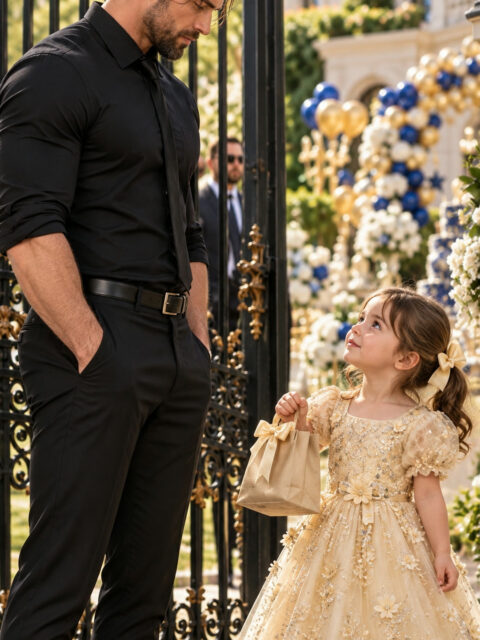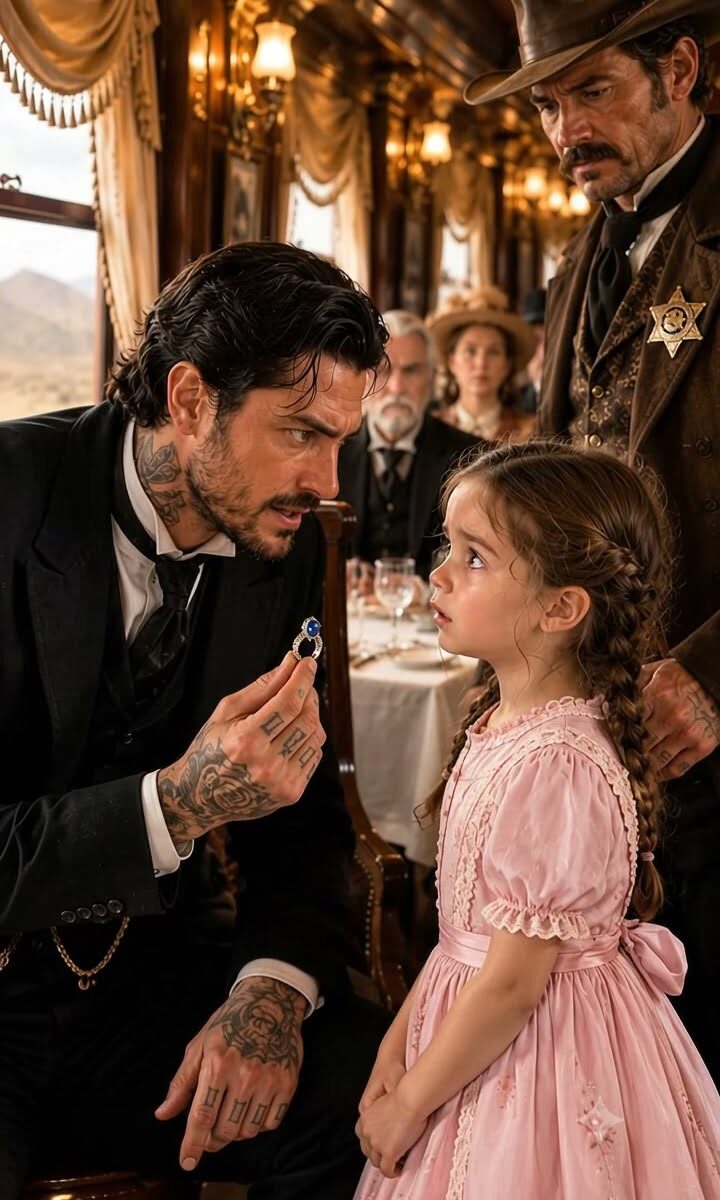
The desert sunset over the New Mexico Territory in October of 1889 was an ocean of liquid copper and blood red. Resting on a private siding near the desolate watering depot of Las Animas stood The Silver Arrow, the custom-built private parlor car of Nathaniel Crowe. Encased in polished mahogany, velvet upholstery, and stained-glass transoms, the carriage was a palace on steel rails, representing the absolute dominion of the Trans-Continental Railroad. At forty-two, Nathaniel Crowe was the undisputed king of Western steel, controlling five thousand miles of track, three shipping lines, and twenty million dollars in federal land grants.
He was a man feared from Wall Street to San Francisco—iron-jawed, cold-eyed, and completely devoid of sentiment. For nine years, ever since the tragic death of Elizabeth Vance in a Massachusetts sanitarium fire, Nathaniel had lived behind an impenetrable wall of ruthless commerce. He did not take visitors without three weeks of formal notice. He did not speak to strangers. Yet when the heavy brass latch of the observation vestibule clicked open and soft footsteps padded across the Persian wool runner, Nathaniel’s armed bodyguard did not draw his Colt revolver. Because stepping into the private dining salon was an eight-year-old child.
Table of Contents
- Chapter 1: The Folded Linen on the Mahogany Table
- Chapter 2: The Ring Buried in a False Grave
- Chapter 3: The Child with the Vanishing Eyes
- Chapter 4: The Desert Sanitarium of San Miguel
- Chapter 5: The Stolen Letters and the Dynasty’s Lie
- Chapter 6: The Confrontation on the Private Platform
- Chapter 7: The Silver Arrow and the True Heir
“A man may conquer a continent with iron rails and silver coin, but his empire is hollow if it is built upon the bones of a betrayed love. When truth resurfaces across the barren dust, it demands a reckoning that no fortune can bribe and no silence can bury.”
Chapter 1: The Folded Linen on the Mahogany Table
The little girl wore a faded calico dress that had been patched three times at the knees with coarse flour-sack sacking. Her bare feet were caked with red desert dust, and a thin grey woolen shawl was pinned around her narrow shoulders with an ordinary bent sewing needle. She stood barely higher than the arm of Nathaniel’s leather armchair, clutching a small square of stained linen handkerchief between her two hands as if it were the only anchor holding her to the earth.
Nathaniel did not look up from his telegraph dispatches. “Harris,” he murmured to his private secretary standing near the bar, “give the station agent five dollars and have him remove this child from my private car.”
The little girl did not run. She took three steady, quiet steps forward until she reached the edge of the forty-foot dining table. With small, trembling fingers, she set the folded linen handkerchief directly onto Nathaniel’s open telegraph sheet. She slowly peeled back the frayed corners of the fabric.
Resting in the center of the linen was an antique ring. Set in hand-wrought platinum filigree was an eight-carat Burmese star sapphire, deep midnight blue, within which floated a sharp, six-pointed star of brilliant white light. Surrounding the center gem were twelve old-mine rose-cut diamonds, each catching the amber glow of the train’s brass lamps.
Nathaniel’s breath seized in his throat. The fountain pen in his right hand slipped from his fingers, rolling across the mahogany and splattering black ink across a fifty-thousand-dollar bond agreement. His face drained of every drop of color until his skin was as grey as gypsum dust.
He knew that ring. He knew every microscopic flaw in the sapphire’s pavilion. He had designed it himself in Paris ten years ago for Elizabeth Vance. And nine years ago, in the family mausoleum at Mount Auburn Cemetery in Boston, he had placed that exact ring onto the cold finger of Elizabeth’s shrouded body before the copper casket had been sealed forever.
Chapter 2: The Ring Buried in a False Grave
Nathaniel’s hand shook violently as his fingertips touched the cool platinum band. He turned the ring over. Inside the inner curve, nearly worn away by years of wear, was the secret inscription he had ordered engraved in cursive script: “Forever, N.C. to E.V. — May 1879.”
“Where did you steal this?” Nathaniel’s voice was a harsh, gravelly rasp that startled his bodyguard into stepping forward. His eyes burned with an agonizing blend of fury and resurrected torment. “Speak, girl! Who gave you this ring?”
The little girl did not flinch, though a large tear rolled down her dusty cheek. “I didn’t steal it, mister. It belonged to my mother. She wore it around her neck on a leather bootlace under her apron every single day.”
Nathaniel rose slowly from his chair. At six feet two inches, his broad frame towered over the child, his shadow swallowing the parlor table. “Your mother? Who is your mother?”
The little girl swallowed hard, her small hands twisting into the fabric of her faded dress. “Her name was Elizabeth. Elizabeth Vance. But she told me… she told me that on paper in Boston, her real name was Mrs. Nathaniel Crowe.”
The dining car fell into a suffocating, ringing silence. Outside, the steam locomotive let out a long, mournful blast of its whistle as water pumped into the boiler. Harris dropped his clipboard, the papers scattering across the velvet carpet. The bodyguard stared at his employer in stunned disbelief.
Nathaniel dropped to both knees on the Persian rug. For the first time, he looked directly into the child’s face. He saw the high, delicate bridge of her nose. He saw the distinctive blue-grey irises with dark rings around the pupils—eyes that had haunted his dreams every night for nearly a decade. He saw the tiny cleft in her chin that had belonged to his own mother.
“Elizabeth is alive?” Nathaniel choked out, grabbing the child’s small shoulders with hands that felt completely numb. “Where is she? Take me to her right now!”
The child shook her head slowly, her chin quivering as fresh tears tracked through the desert dust on her cheeks. “The angels took her last Tuesday, mister. She had the red fever. The gravedigger put her on the hill behind the water tank. Before she closed her eyes, she gave me the ring and ten cents. She said, ‘Ruthie, wait by the siding until the private train with the silver eagle comes. Go inside. Show the ring to Nathaniel. Tell him… tell him I never stopped loving him.'”
Chapter 3: The Child with the Vanishing Eyes
A cry tore from Nathaniel’s throat—a raw, guttural sound of grief so immense that it brought his hardened bodyguard to tears. He pulled the dusty, barefoot eight-year-old into his chest, burying his face into her thin woolen shawl, his shoulders shaking with violent, uncontrollable sobs. For nine years, he had believed Elizabeth was dead. For nine years, he had visited an empty tomb in Boston, unaware that the love of his life had been living in poverty in the desert, raising his child alone.
“I’m here, Ruthie,” Nathaniel whispered against her hair, his tears soaking into her dress. “Daddy is here. You’re never going to be cold again. You’re never going to be hungry again.”
After several minutes, Nathaniel stood, his tears wiped away, replaced by an icy, lethal composure that terrified everyone who knew him. He looked at Harris. “Call the station master. Bring the local doctor. And find the magistrate who handles the records for this territory.”
Within thirty minutes, the station master of Las Animas—a nervous, balding man in ink-stained sleeve garters—was brought into the private dining salon. Beside him stood Dr. Samuel Thorne, the only physician within fifty miles.
“Tell me about Elizabeth Vance,” Nathaniel commanded, pouring a glass of warm milk for Ruthie and setting a plate of roasted beef and buttered rolls before her.
“Mr. Crowe, sir,” the station master stammered, pulling off his sweat-stained bowler hat. “She arrived here eight years ago on the westbound immigrant train, pregnant and carrying an envelope with five hundred dollars. She took a room behind the laundry shed. She never took charity. She washed shirts for the rail crews, twelve hours a day, six days a week, just to buy medicine and books for little Ruthie. She was a saint, sir. But she lived in constant terror. Every time a private carriage stopped at the siding, she hid Ruthie in the water cistern.”
“Terror of what?” Nathaniel asked, his eyes narrowing into cold slits.
“Terror of the men from Boston,” Dr. Thorne interjected quietly. “She told me on her deathbed that if a man named Baron Thaddeus Crowe ever found out she was alive, he would take her baby and have her locked in an asylum for the criminally insane.”
Chapter 4: The Desert Sanitarium of San Miguel
The name of his own father—Baron Thaddeus Crowe, the patriarch of Boston banking—struck Nathaniel with the force of an artillery shell. His father had died three years ago, lauded in the newspapers as a pillar of New England aristocracy. Now, the horrifying reality of his father’s cruelty uncoiled before him like a nest of vipers.
Nathaniel walked with Dr. Thorne down the wooden steps of the parlor car into the desert night. They walked past the water tower to a small adobe shack behind the railroad telegraph depot. On a crude pine table in the corner sat a locked tin dispatch box Elizabeth had kept under her mattress.
Nathaniel broke the tin clasp with his pocketknife. Inside lay a bundle of yellowed letters—nearly a hundred of them—tied with blue silk ribbon. Every single letter was addressed to Nathaniel at his Boston corporate headquarters. Not a single one had ever been delivered.
He opened the top letter, dated September 1881. Elizabeth’s elegant handwriting was blurred with dried tears: “My beloved Nathaniel, your father’s men arrived at the clinic with two doctors who threatened to declare me insane if I did not sign a paper releasing you from our marriage. They told me you had already agreed to marry Abigail Sterling for the railroad merger. When I refused, they dragged me into an unmarked carriage and put me on a cattle car to the western territories. They swore that if I ever returned to Massachusetts, they would ensure our unborn baby never took its first breath. Nathaniel, I know in my heart you could not have ordered this…”
Nathaniel closed his eyes, his fists clenching until his knuckles popped. In 1881, his father had shown him an official death certificate signed by the chief coroner of Boston, stating that Elizabeth had perished in an accidental sanitarium fire alongside twelve other patients. His father had even arranged a closed-casket funeral in the family vault. It had all been an elaborate, psychopathic fabrication designed to break Nathaniel’s spirit and force him into a transactional marriage to secure the Western Continental Railroad franchise.
Chapter 5: The Stolen Letters and the Dynasty’s Lie
Nathaniel gathered the letters against his chest. He walked up the small hill behind the water depot, where a fresh mound of red desert earth was marked by a simple wooden cross carved with the initials E.V.C.
He knelt in the dust beside the grave of the woman he had loved with all his soul. The desert wind blew soft and warm, carrying the scent of sage and distant rain. He touched the wooden cross, his head bowed in solemn penance.
“You kept your vow, Elizabeth,” Nathaniel whispered, his voice steadying into a solemn promise. “You bore the exile. You protected our daughter in the shadows while I conquered an empty world. But your exile is over tonight. You will rest where you belong, under the marble canopy of the Crowe name. And our daughter will inherit every mile of track, every engine, and every dollar this family ever stole from our happiness.”
He stood up and walked back down to The Silver Arrow. Inside, Ruthie had finished her meal. She was curled up on the velvet sofa, her small hand clutching the antique sapphire ring, sleeping with the deep, exhausted peace of a child who had finally found sanctuary.
Nathaniel looked at Harris. “Telegraph my attorneys in Denver and New York immediately. Order a special private train to Las Animas with a bronze hermetically sealed casket. We are returning Elizabeth to Boston with full honors as the legal matriarch of the Crowe family.”
“And what about the board of directors, Mr. Crowe?” Harris asked nervously. “Your cousin Julian and the Sterling trustees are convening in Chicago tomorrow to vote on the merger.”
Nathaniel’s eyes flashed with lethal determination. “Tell the engineer to stoke the boilers. We are steaming for Chicago at maximum pressure.”
Chapter 6: The Confrontation on the Private Platform
Forty-eight hours later, The Silver Arrow steamed into the grand terminal of the Chicago Central Depot, its silver eagle crest gleaming beneath the soot-stained glass vaults. Waiting on the private VIP platform was an entourage of thirty lawyers, banking trustees, and Nathaniel’s cousin Julian Sterling—a smug, immaculately dressed aristocrat who had spent ten years waiting to absorb Nathaniel’s rail shares.
“Nathaniel!” Julian called out, stepping toward the carriage doors with an outstretched hand and an artificial smile. “You missed the board meeting in New York! The trustees were about to declare your absence a forfeiture of the voting trust!”
The vestibule door opened. Nathaniel stepped onto the platform. But he did not walk alone. Holding his right hand was eight-year-old Ruthie. She had been bathed, her golden-brown hair brushed into glossy ringlets tied with blue silk ribbon. She wore a bespoke navy velvet traveling coat with pearl buttons and polished patent-leather boots. On her small finger, adjusted by a master jeweler in Denver with an invisible platinum sizer, sat the eight-carat star sapphire ring.
Julian’s smile vanished. His eyes dropped to the ring, then to the girl’s face. The color drained from his cheeks as if he had seen a phantom rise from the grave.
“What… who is this child, Nathaniel?” Julian stammered.
Nathaniel stepped to the center of the platform. His voice boomed across the marble arches of the terminal, silencing every conversation. “This is Ruthie Elizabeth Crowe. She is my legitimate daughter, the sole surviving heir of the Crowe family, and as of nine o’clock this morning, the fifty-one percent majority shareholder of the Western Continental Railroad.”
He threw a thick legal dossier onto Julian’s chest. “Contained in that folder are the original marriage certificates, baptismal records, and the handwritten confession of your late father’s private investigator detailing the kidnapping of Elizabeth Vance. Every asset the Sterling family thought they held in my company is revoked for gross fraud. You have forty-eight hours to vacate your offices before the United States Marshals seize your personal accounts.”
Chapter 7: The Silver Arrow and the True Heir
Six months later, spring had returned to the high desert of New Mexico. Where the lonely water tank of Las Animas had once stood in the dust, a magnificent stone station and children’s academy now stood, built with white limestone and stained oak timbers, bearing the brass nameplate: The Elizabeth Vance Crowe Memorial Sanctuary.
On the siding rested The Silver Arrow, its brass fittings gleaming in the warm desert sun. In the rear observation salon, Nathaniel sat at the mahogany desk. For the first time in his life, the ledger sheets and bond agreements were pushed aside. He was smiling as he watched through the wide bay windows.
Down on the grassy platform, Ruthie was laughing joyfully as she tossed bread crumbs to a flock of desert doves, her blue velvet dress bright against the red earth. On her finger, the star sapphire caught the high mountain sunlight, gleaming with a fierce, eternal brilliance that no lie could ever extinguish.
Ruthie turned, caught her father watching, and ran up the brass steps of the carriage into the salon. She threw her arms around Nathaniel’s neck, hugging him tight. “Daddy! The station master said the new school library opened today!”
“It did, butterfly,” Nathaniel said softly, kissing her temple and lifting her onto his lap. “And it belongs to every child who ever felt forgotten in the dark.”
He held his daughter close against his heart, looking out across the endless plains where his iron rails stretched toward the horizon. Nathaniel Crowe had spent twenty years believing that power was measured in miles of steel and vaults of gold. But as he looked into Ruthie’s bright, laughing eyes, he knew the greatest truth of all: an empire means nothing without the courage to honor the ones you love, and the greatest legacy a man can leave behind is a child who knows she is cherished beyond all measure.